Most teams believe that any cable with the word “flexible” in the name can be used within a drag chain or energy carrier. When using a standard flexible control cable in continuous-motion applications, the cable is likely to break, the jacket will wear away and machines will have unexpected downtimes in as little time as months rather than years. In this article, the engineer, maintenance manager or procurement specialist will be able to compare the construction, stress profile and failure mode of drag chain cable to flexible cable to make an informed decision that will help keep the equipment on the job site and lower the total cost of ownership.
There are more than 20 years of experience at Hulk Electric in producing both types and serving customers who took the plunge and found out “flexible” does not mean “continuous-flex.” The distinction is based on specialization in the stranding, the design of the core and the compounds used in the jacket that are designed to sustain millions of bends.
Defining the Two Cable Types in Real-World Terms
What Is a Standard Flexible Cable?

Routine flexible cables are constructed for the control and power transmission applications that require limited movement. Typically they employ fine-stranded conductors of copper, PVC or like insulation and a general purpose jacket. These cables are great for some bending, like opening a control cabinet door, connecting handheld tools or making changes during installation.
They are affordable, easy to route and work well for static or low cycle applications, but are optimized for these types of applications. Their design assumes that the cable will not lose much during initial flexing.
What Is a Drag Chain / Continuous-Flex Cable?
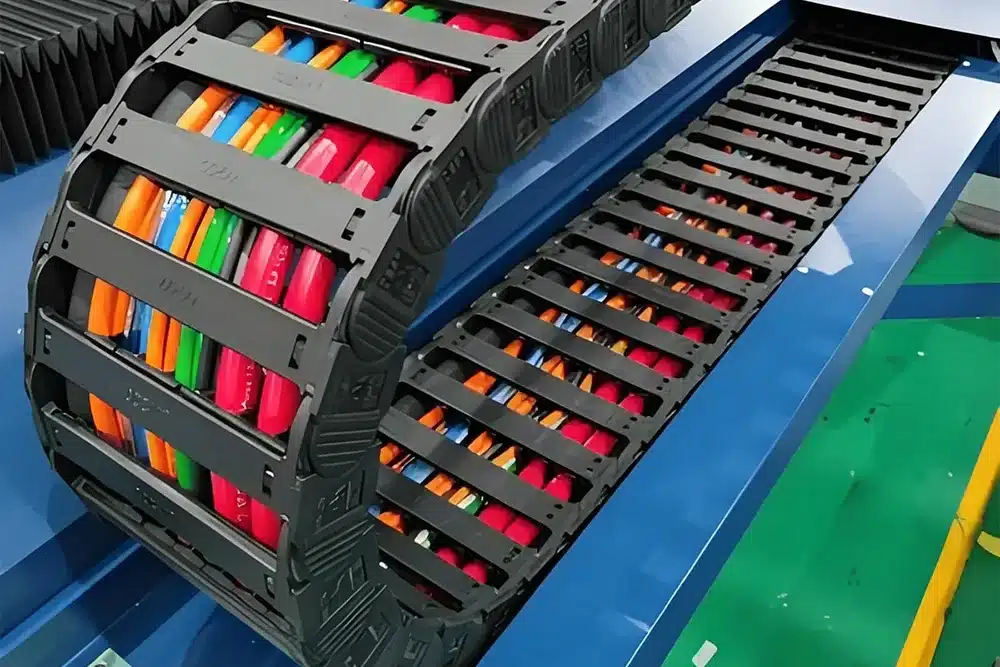
Energy chains are designed for drag chain cables, also called continuous-flex or high-flex cables. They are subjected to repeated tight radius bending, high travel speeds and millions of cycles and are electrically intact at the same time.
Among the advantages are extra-fine copper stranding, optimized core lay-up (which frequently utilizes a central tension member), and pressure-extruded insulation and jackets, as well as compounds that are harder on abrasion, such as PUR or specialty grades of TPE. These cables are engineered to prevent corkscrewing, fatigue and degradation of the cables from a constant dynamic load.
How Mechanical Stress in Drag Chains Destroys Standard Flexible Cables
In a cable carrier, the cable is subjected to constant bending throughout, as well as compression, tension and rubbing against other cables or chain links. The mechanical stress due to acceleration, speed and tight bend radii are multiplied many times over by what standard flexible cables are designed for.
Continuous Bending, Tight Radii and High Cycle Counts
In CNC machine, robotic arm or automated assembly line, the typical drag chain system works continuously with the bend radius as small as 7.5-10 times the cable outer diamete. A regular flexible cable may last for a couple of thousand cycles, but after millions it will work-harden and break the copper strands. Fatigue causes cracking of Insulation and Jackets.
Typical Failure Modes When Using Standard Cables in Chains
In all factories, we have seen the same happenings:
- Single conductor strands break, resulting in open circuits or intermittent loss of signals.
- The “corkscrews” of cable inside the jacket twisted the internal geometry, thus inducing position errors in servo systems.
- Abrasion of jackets makes them conducive to EMC noise and communication problems.
- A typical example of this is a CNC axis with ordinary flexible cable in the drag chain that, after 6 months of three-shift operation, lost the encoder feedback, causing scrapped parts and emergency service calls.
These failures are not only costly due to replacement parts, but also due to loss of production time.
Inside a Continuous-Flex Drag Chain Cable: Design Choices That Extend Life

True Continuous-flex Cable tackles each stress point deliberately.
Conductor, Core and Center Element Design
Extra-fine stranding ensures even bending stress. Pulling forces are distributed and localization is avoided by special lay-up techniques and by a central tensile element. This construction significantly reduces strand breakage and corkscrewing even after millions of cycles.
Insulation, Jacket Compounds and Layering
Smooth low friction surfaces that are also very fatigue resistant are produced by pressure extrusion. Inside the chain, they are able to resist coolants, lubricants, and abrasion with the help of advanced compounds (PUR, oil-resistant TPE). Roundness and protection of internal geometry during repeated motion is maintained by fillers and tapes.
Electrical and EMC Performance Over Time
With modern automation, there is a critical need for signal integrity as well as mechanical durability.
Maintaining Impedance, Shield Continuity and Low Noise
With fieldbus, Ethernet, encoder or servo cables, it is crucial that the pair geometry is consistent and the shield coverage is the same. Motion causes standard flexible cables to internally change impedance, produce crosstalk and ground noise. Continuous-flex designs maintain a stable structure throughout its lifetime, ensuring data transmission reliability across the service life.
Why Intermittent Faults Are Costlier Than Hard Failures
Any partial strand breaks or damaged shields will create random errors, such as an axis fault or a loss of communication or unexpected reset that can take many hours to diagnose. Correctly-designed drag chain cables reduce these hidden costs and provide predictable machine performance.
Cost, Lifetime and Total Cost of Ownership Comparison
While many customers are looking at the initial price, other customers are looking at the lifetime value and the total cost of ownership.
Upfront Price vs Lifetime in Cycles
The flexible cable is cheaper up front, but it breaks down after a very small percentage of the number of cycles a continuous-flex cable lasts in the same application. The cost of repeated replacement, labor and downtime over the years far outweigh the cost of the correct cable.
Downtime, Scrap and Service Calls
If one cable on a packaging line or robotic cell fails, the line stops, the product is considered a scrap and overtime is needed for repair. Since their inception, OEMs and plant operators have recognized design or retrofit with a set of genuine drag chain cables as a way to minimize risk and profitability.
When Is a Standard Flexible Cable Still Acceptable?
Continuous-flex doesn’t have to be used in every application.
Low-Duty, Short-Travel and Occasional Motion Scenarios
Standard flexible cables are suitable for short stroke, low speed, infrequent cycles or manual adjustment. They can be safely utilized in budget-sensitive projects where low levels of motion are required.
Simple Rule-of-Thumb Triggers for Continuous-Flex
Use drag chain cables in circumstances where:
- Power lines or electricity cables.
- High cycle counts (hundreds of thousands to millions)
- Tight bend radii
- Running around the clock/day, or multiple shifts.
- Servo, Encoder or high speed data signals
- If any of these are true, the default of continuous-flex is safer.
Use this Practical Sourcing Checklist to ensure you select the right type of cable for your project.
Practical Sourcing Checklist for Choosing the Right Cable Type
Questions to Ask Your Cable Supplier
- What is the rated cycle life and minimum bend radius of this cable, when used in a drag chain?
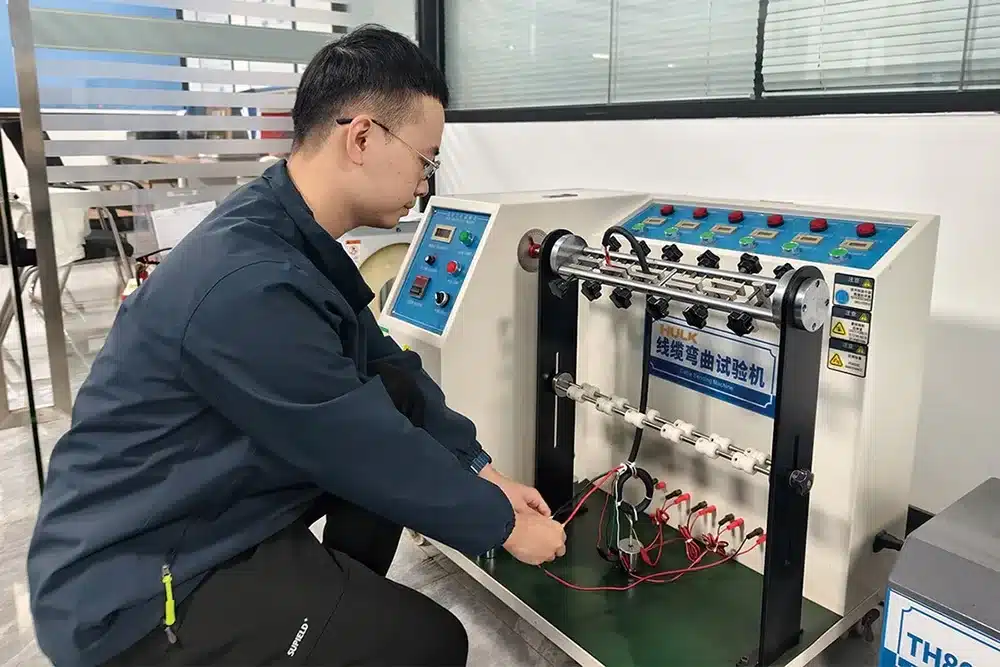
- Which mechanical and endurance tests have been done?
- What types of jacket and insulation compounds used; how they behave in oils and coolants?
- Do you have references of motion profiles or examples of applications?
- Are you able to provide customisation for our travel, speed and environmental needs?
With a good manufacturer like Hulk Electric, sending in the application data ensures you’re not sending a generic “flexible” product.
Choosing the right cable type from the outset avoids expensive problems down the road. The engineering and procurement teams can specify the right solution for their motion applications, knowing the real difference between drag chain cable and flexible cable, to ensure long-term reliability.