Cables are subject to an extreme stress when used in high cycle motion systems. In cable carriers, robotic arms and automated machinery, flexible cables are frequently damaged or wear out more quickly from repeated bending, twisting, rubbing and environmental stress. To reliably deliver millions of cycles of motion control, the flexible cable must be matched in construction, material and rating to the motion profile, travel parameters, and operating environment of the industrial application.
This guide takes engineers and technical buyers on a practical, step-by-step journey to picking the right cables. No matter if you are designing CNC machines, designing robotic cells, designing gantries or designing material handling systems, you can see that taking these steps can help ensure long-term system reliability, reduce maintenance costs and prevent downtime. The later sections connect to more in-depth resources on specific cable groups.
Step 1 – Classify Your Motion Type
The very first stage of the selection of industrial flexible cables is identifying what kind of motion the cables will have to undergo. Various motions generate different mechanical stresses, so this is a good place to begin to avoid selecting a cable family that is inappropriate.
Fixed, Occasional Flex and Cable Replacement Expectations
Standard flexible cables can be used for fixed installations or applications with limited movement prior to set up or maintenance. These are only seen to bend occasionally and generally do not offer a special high flex rating and can last for the service life of the machine. They are not however, suitable for high cycle applications. When they are not used properly in dynamic systems, they can cause unplanned downtime, such as conductor breakage, cracking of the jacket or degradation of the signal.
Continuous Flex in One Plane (Cable Carriers, Sliding Axes)
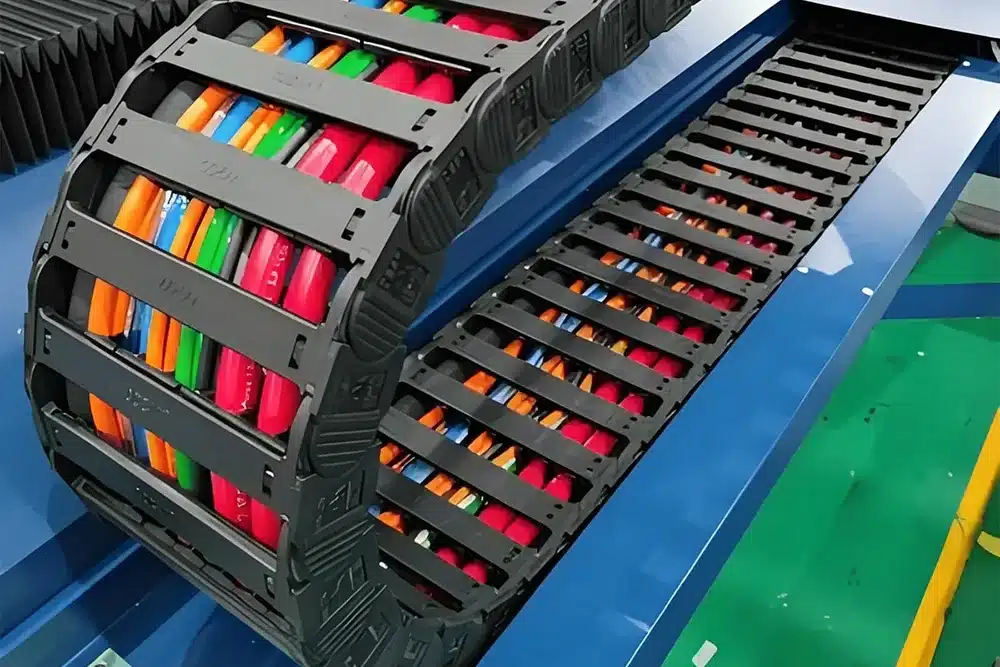
If repeated bending in one plane is performed continuously, it is called a continuous flex operation, typically in cable carriers (energy chains). Examples include linear axes on CNC machines, gantries, conveyors, and automated material handling systems. These cables need to withstand hundreds of thousands to tens of millions cycles without losing electrical integrity.
They are capped with a durable jacket and have special lay construction for continuous-flex or drag chain rated cables, which are optimized for use in continuous stress and wear without corkscrewing or internal abrasion.
Torsional and 3D Motion (Robots, Rotary Tables)
Robotic arms, rotary tables and multi-axis systems also add twist on the cable axis to the bend. Torsion-rated flexible cables are crucial here because normal continuous-flex cables result in a fast deterioration when loads and torques are combined. Six-axis robots or cobots have cables on the wrist or upper arm segments that undergo complex 3D motion that must be accommodated with specialised torsion construction.
Step 2 – Define Motion Parameters and Flex-Life Requirements
After determining the type of motion, determine the operating parameters. Here, there are a lot of assumptions leading to early breakdowns.
Travel Length, Speed, Acceleration and Duty Cycle
Record stroke length, maximum speed, rates of acceleration and duty cycle (cycles per hour or shift). Continuous 3-meter running, in this case 60 m/min, requires much higher grade cables than may be required for occasional short strokes. The faster the speed and duty cycles, the greater the heat build-up and mechanical wear, making it necessary to use high quality continuous-flex designs that incorporate low-friction materials.
Minimum Bend Radius and Torsion Angle

The minimum bend radius is a specification that cannot be compromised. Life is shortened to a fraction of the normal when the cable’s rated radius is exceeded, which varies from 7.5-12.5 times the outer diameter depending on cable type. In the case of torsion, specify the maximum twist angle per metre ±180°/m or more each joint. Carriers and robot dress packs are required to abide by these restrictions.
Step 3 – Understand Cable Construction Options
The flex life and reliability of cable construction are directly related.
Conductor Class, Stranding and Core Lay-Up
For higher flex classes, the strands are smaller (Class 5 or 6) and are laid more optimally to spread the stresses out evenly. Central fillers or strengthening elements are sometimes added to continuous-flex cables to keep them round and stop core migration after millions of cycles. For anti-twist protection, special core arrangements, and torsion rated cables are included.
The terms “high-flex” or “torsion” are not specific enough—specify continuous-flex or torsion ratings supported by test data.
Insulation, Inner Jacket and Outer Jacket Materials
Polyvinyl chloride (PVC) is used for all jacket applications; PUR provides better abrasion resistance and oil resistance than PVC; and special elastomers or silicone are used for special temperature applications. Inner jackets and designs with gussets prevent individual cores from rubbing against each other within the carrier, protecting them from damage. Select materials for exposure to coolants, chemicals or washdown in food processing or machine tools.
Step 4 – Match Cable Type to Application Category
Change your analyzed motion to the appropriate Cable Family.
Drag Chain / Energy Chain Applications
Choose continuous-flex drag chain cables for linear motion on CNC, gantries, conveyors or portal systems. They are designed specifically to be bent repeatedly in one plane and have tested flex life in excess of several million cycles. Use dedicated resources for drag chain cable installation and pairing with specific carriers for detailed instructions.
Robotic and Multi-Axis Motion Applications
For 6-axis robots and complex rotary applications, torsion-rated flexible cables are needed on the twisting portions of the application. Hybrid setups can incorporate continuous-flex cables on linear tracks, while using torsion cables on arms. Longevity also depends on the proper management of cables (dress packs and strain relief). Learn more about robot-specific cable guides and how to maintain them the best way by exploring 6-axis designs.
High-Temperature, Chemical and Special Environments
Environmental factors can often take precedence over type of motion. High-temperature silicone cables can reach up to 200°C and halogen-free or flame-resistant constructions are appropriate in safety-critical areas.
Washdown or aggressive coolant exposure requires food grade or chemical resistant jackets. Check compatibility with all operating conditions.
Step 5 – Electrical, EMC and Certification Considerations
The mechanical performance is just half of the picture – electrical and compliance requirements make up the specification.
Voltage, Current, Conductor Size and Temperature
Sizing conductors correctly with derating for bundling, enclosed areas or high ambient temperatures. There is a need to keep insulation appropriate to voltage ratings and thermal requirements, as it is prone to breakdown with time if not.
Shielding, Noise and Data Integrity
Modern systems combine power, encoders, Industrial Ethernet and fieldbus signals on the same carrier. Use overall shields, individually shielded pairs or hybrid constructions, as appropriate. Constant movement doesn’t affect signal integrity with proper grounding and termination.
Approvals and Industry Standards
Choose cables that meet the relevant certification standards (UL, CE, TÜV, RoHS, REACH, NFPA 79) to make machine certification and export to various countries easier.. Pre-approved cables minimize compliance issues for OEMs shipping globally.
Step 6 – Evaluate Manufacturer Test Data and Guarantees
Do not trust in all the marketing promises. Call for proof of performance.
Flex-Life, Test Conditions and Realism
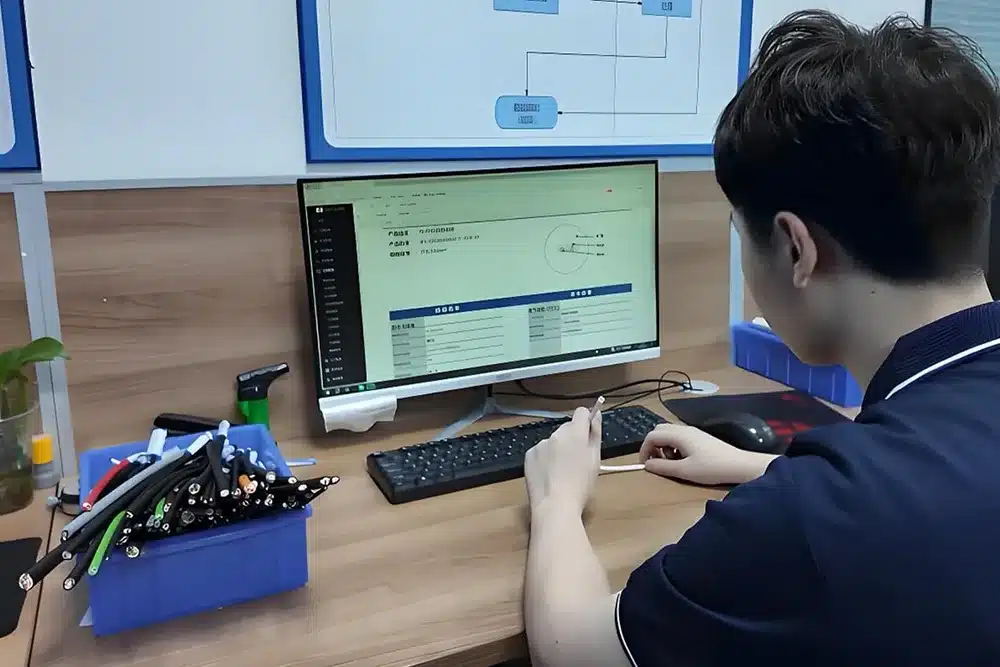
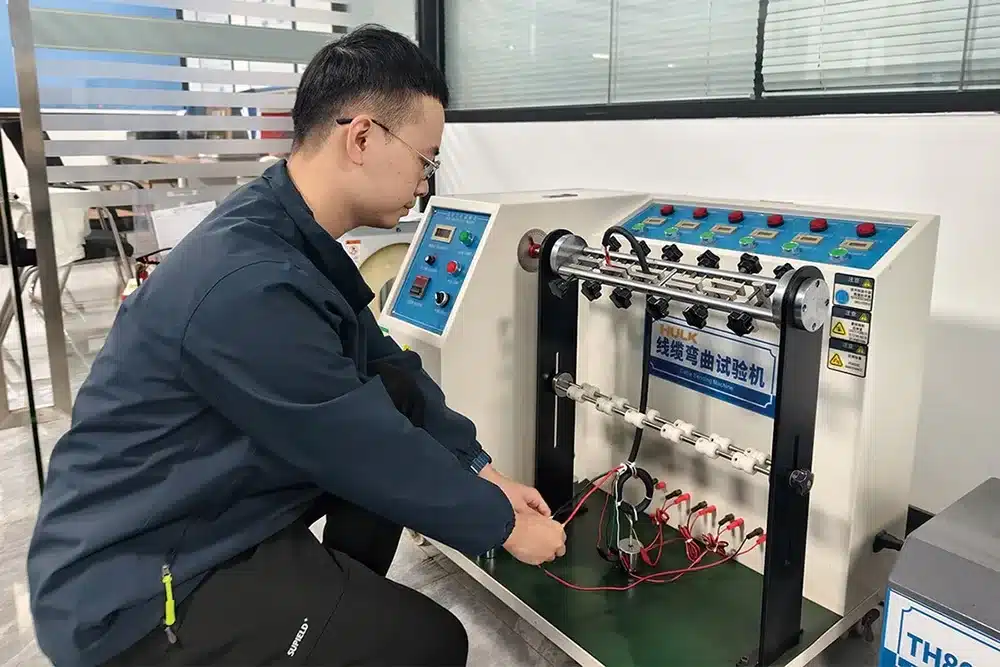
FLEX-LIFE ratings (e.g. 5-20+ million cycles) should include all of the following test parameters: bend radius, length of travel, speed, acceleration, torsion angle, and environment. Choose suppliers that have a test setup that closely resembles your application. The highest level of confidence comes from in-house C-track testers and real world validation.
Working with Specialized Flexible Cable Manufacturers
Collaborate with manufacturers that have a dedicated test laboratory, application engineering support and specialize in continuous-flex and robotic cables. When standard products don’t quite meet the requirements, suppliers who ask detailed questions about your motion profile, environment, and lifetime objectives are more likely to provide reliable solutions and custom options.
Practical Selection Checklist for High-Cycle Flexible Cables
Employ this checklist when requesting cables and/or when creating an RFQ.
Information to Define Internally
- Direction of motion (Fixed, occasional flex, continuous linear flex, torsion / 3D)
- Distance, speed, acceleration and duty cycles.
- The second is the minimum bend radius and the second are the torsion angles.
- Number of cycles per day, year and life expectancy as expected.
- Environmental Factors – temperature, oils, coolants, chemicals, washdown
- Electrical connections (voltage, current, signal types)
Questions to Ask Potential Cable Suppliers
- The questions you should ask potential cable suppliers are:
- Is this cable designed to bend or twist continuously or not?
- Available flex-life test data and how test conditions differ from my application?
- What type of stranding, jacket materials and shielding are utilized?
- What’s the minimum bend radius and minimum torsion angle that’s guaranteed?
- What kind of certifications does the cable have?
- Are you able to tailor variations if things require customization?
Chosing the right industrial flexible cable for high cycle motion applications is a systematic process, which takes into consideration the mechanical requirements, electrical performance, environmental conditions and proven durability. Specification of cables based on type of motion, quantification of parameters, application fit and validation using real test data ensures millions of trouble-free cycles.
They are special environments, and at Hulk Electric, we design and test our high flex, servo, robot torsion and industrial Ethernet cables for these tough jobs. With our in-house testing and 20+ years of experience, OEMs and integrators are able to achieve reliable automation performance. Let our team know about your project, and we’ll suggest the best cable solutions for your next project.