When purchasing custom cables for robots, servo systems, drag chains or fieldbus networks, it is easy to get caught up in the unit price in the world of industrial automation. Cheap and easy to get over the initial, meager price per metre, it can appear like a great win – until it’s unexpected downtime, regular replacements and additional maintenance create costs. Cost of ownership for custom cables considers the whole story – from design and testing to years of operation, failures and replacement. Unfortunately, the lowest quote is not always the best choice in extreme applications, as we’ve learned at Hulk Electric.
This guide explains to OEMs, engineers and procurement teams why the right design, quality and supplier support can be more cost-effective in the long term, as hidden costs lurk in “cheap” cable options.
What Total Cost of Ownership Means for Custom Cable Programs
COO for custom cables is all of the costs associated with purchasing, installing, operating, maintaining, and disposing of cables over the course of their useful life. It is more than just the invoice price, it shows you the real economic effect on your production lines.
TCO Components – Beyond the Purchase Price
There are several significant buckets that contribute to the real cost:
- Design & engineering: Custom specification, prototyping and tooling for flex, torsion, shielding and jacket compounds for your motion profiles and environment.
- The cost of unit material and manufacturing refers to the cost per meter as quoted.
- Installation and commissioning labor: Time spent routing, terminating and verifying machine cables during installation or retrofitting.
- Current maintenance and replacement: Scheduled or emergency replacement, plus downtime.
- Downtime and lost production: Hours (or days) of stoppage of an entire line due to a cable failure.
- Logistics & supplier management: Rush shipments, inventory carrying costs, requalification in case of changing suppliers.
- Failure cost – end-of-life or redesign costs, due to early failure of harnesses.
Often, the first cost of the automation system is 20-40% of the total TCO for high cycle automation applications.

Simple TCO Equation for Custom Cable Programs
A good rule of thumb around which to meditate is:
TCO ≈ Design/Engineering Costs + (Unit Cost × Volume) + Installation + Maintenance/Replacement + Downtime Costs + Logistics/Admin − Performance Savings
Downtime costs often dominate. Even a conservative estimate of $5,000–$20,000 per hour of line stoppage in mid-volume manufacturing makes cable reliability a critical variable.
Hidden Costs of “Cheap” Cables in Industrial Automation
Low-bid cables frequently meet basic electrical specs but fall short in real-world motion, environmental stress, or long-term durability.
Unplanned Downtime and Lost Production
A robot torsion cable that cracks after 2 million cycles instead of 10 million can halt a cell multiple times per quarter. One hour of downtime easily erases any upfront savings across an entire program. In continuous operations like material handling or CNC lines, these interruptions compound quickly.
Maintenance Labor, Troubleshooting and Scrap
Technicians spend hours tracing intermittent signal faults, replacing broken conductors, or dealing with jacket degradation from oils and coolants. Each intervention risks scrap from positioning errors or communication drops in Ethernet or PROFINET networks.
Emergency Logistics, Supplier Switching and Redesign Costs
When a cheap cable fails repeatedly, you face premium freight, expedited samples, and costly requalification. Switching suppliers mid-project adds engineering time and validation expense that rarely appears in the original comparison.
How Design Quality and Testing Reduce TCO
Well-engineered custom cables from experienced manufacturers like Hulk often carry a higher unit price but deliver substantially lower lifecycle costs through extended service life and fewer failures.

Matching Cable Design to Motion, Environment and Electrical Requirements
Custom continuous-flex, torsion-resistant, and properly shielded designs handle the specific demands of multi-axis robots, drag chains, and high-speed servo axes. Specialized jackets (PUR, silicone, or halogen-free) resist oils, chemicals, and temperature extremes common in food processing or machine tool environments.
Role of Robust Testing and Quality Systems in TCO
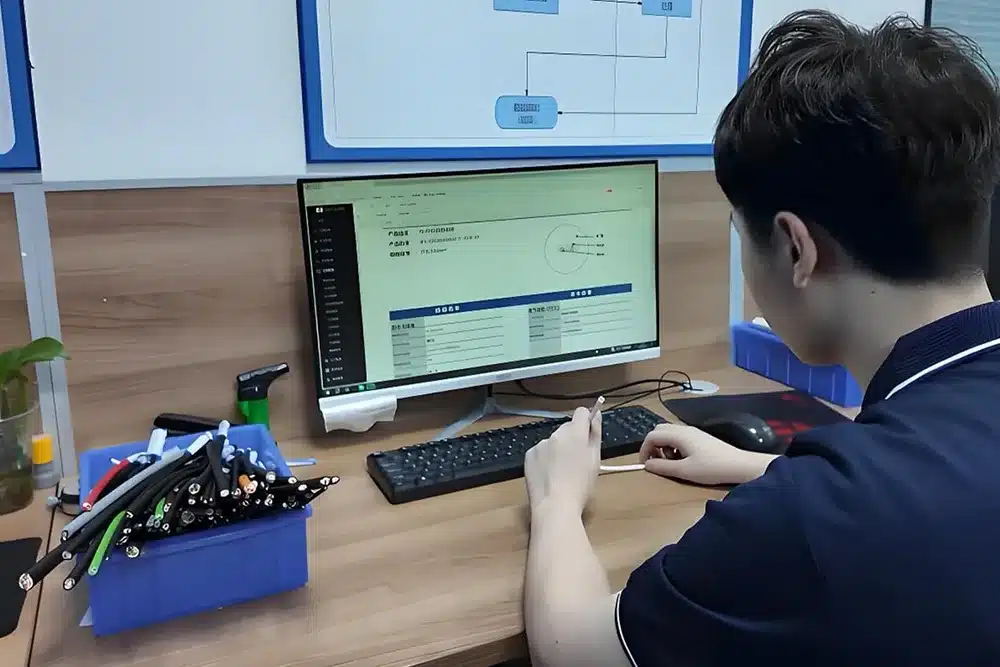
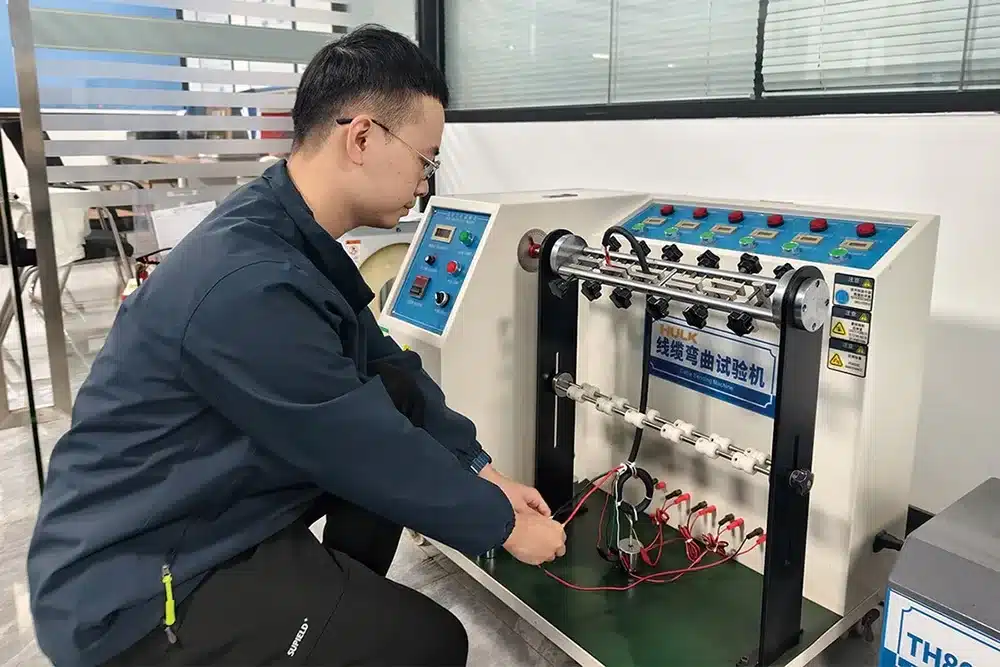
Comprehensive testing—including millions of flex cycles, torsion, thermal cycling, chemical exposure, and electrical integrity checks—catches issues before deployment. Hulk’s in-house test center performs 150+ test types annually, supporting consistent performance and traceability.
Standardization and Design Reuse Across Machines
Using proven cable families across similar machines reduces spare parts inventory, simplifies training, and speeds troubleshooting, lowering support costs plant-wide.
Comparing Suppliers on TCO Instead of Unit Price
Shift your evaluation from price-per-meter to a full TCO lens when reviewing quotes.

Mapping Supplier Offers to TCO Components
Look beyond unit price for included design support, testing documentation, warranty length, failure response protocols, and logistics capabilities. These elements directly reduce the larger cost buckets.
Questions to Ask About Reliability and Lifetime Performance
- What questions should be asked with regards reliability and lifetime performance?
- Any flex life/cycle testing data that supports this motion profile?
- What do you do when a field failure occurs or there is a premature wear claim?
- How long does it take you to replace and/or customize parts?
Solutions that prove themselves in terms of endurance and responsive support result in TCO savings. For a practical framework on how to evaluate a custom cable manufacturer across capability, testing and support, see our detailed checklist.
Using Simple TCO Estimates in Procurement Decisions
Create very rough models to compare options: estimate (Unit Price × Volume) for each option, and also estimate annual downtime, maintenance hours and logistical hours for each option. The math can often come out in favor of the more reliable solution over the course of a 3–5 year machine life.
Real-World Scenarios – When Paying More Per Cable Saves Money Overall
Robot and Drag Chain Applications
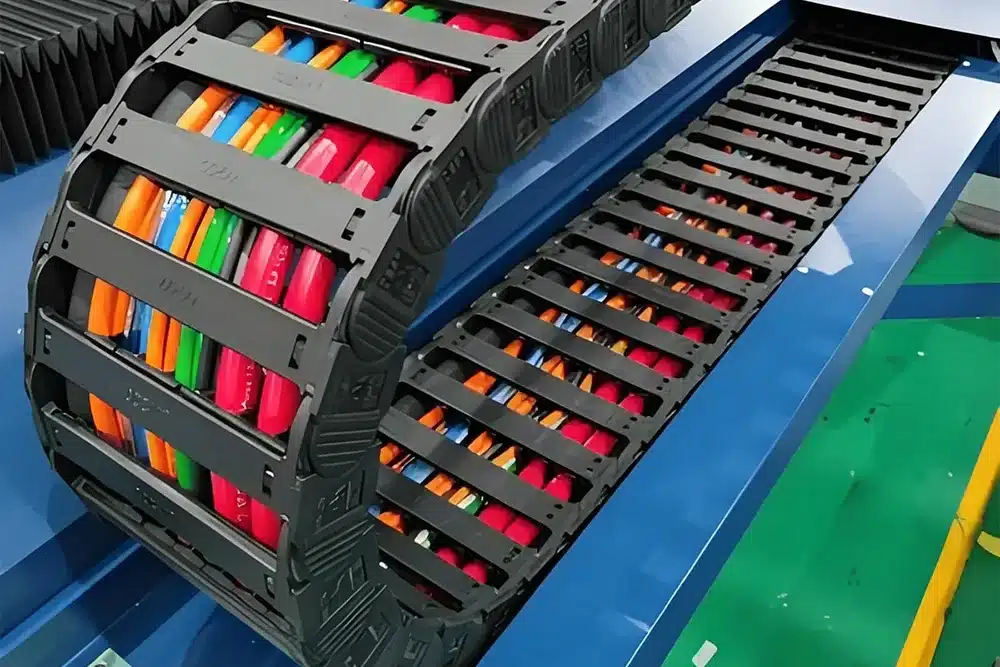
A manufacturer reported failures every 3–4 months in robot arms with high torsion. In high-torsion robot arms and drag chains, a manufacturer reported failures every 3-4 months when using generic flexible cables. The replacement frequency and downtime of the cable were dramatically reduced with the use of Hulk’s custom torsion-rated cables with reinforced shielding, and the excess cost recouped in the first year of use.
Harsh Chemical or High-Temperature Environments
Standard cables were found to be deteriorating rapidly when in close proximity to hot surfaces or in the presence of oil, and needed to be changed every quarter. With a good supplier of custom PUR or high-temperature silicone jacketed designs, the life expectancy is 2-3 times longer, which means that there will be less downtime in production and less labor.
Network Stability and Quality-Sensitive Lines
Low-cost Ethernet or Fieldbus cabling resulted in packet drops and occasional errors resulting in scrap and debugging time. These were eradicated with the use of cables which had been properly specified, certified, and optimally shielded and impedance controlled, ensuring throughput and quality.

Practical TCO Checklist for Custom Cable Decisions
Adopt this checklist in the RFQ, design review or supplier selection process:
Key Questions Before Choosing “Cheaper” vs “Better” Cables
- What is the real purpose of this cable (high flex motion, power, signal, network) and how important is it to the overall uptime?
- What is the down time cost per hour, the scrap risk, and what is the impact of failure on safety?
- How many times will each supplier need to supply a replacement over the life of the machine?
- What type of design, testing and documentation support does the supplier offer?
- What are the logistics, warranty and issue resolution conditions?
When choosing a supplier, the highest uptime application should consider reliability, test data and supplier
When to Justify Higher Upfront Cost with TCO Logic
Measure the impact: If it is determined the premium cable will have a few hours of downtime or will be able to reduce the number of times it is replaced annually, the money spent is typically worth the savings. When getting approval from within the school, include supporting test data for these calculations.
Choosing custom cables from the total cost of ownership perspective can benefit automation builders and plant operators in terms of increased reliability, seamless audits, and improved profitability. We have been in the business for 20+ years and our in-house engineering, testing facilities and worldwide certification enable us to supply cables optimized for performance and not just low initial price! Let us know your application requirements, motion profiles and environmental challenges and we will help you create solutions that help lower your actual ownership costs in the long run.