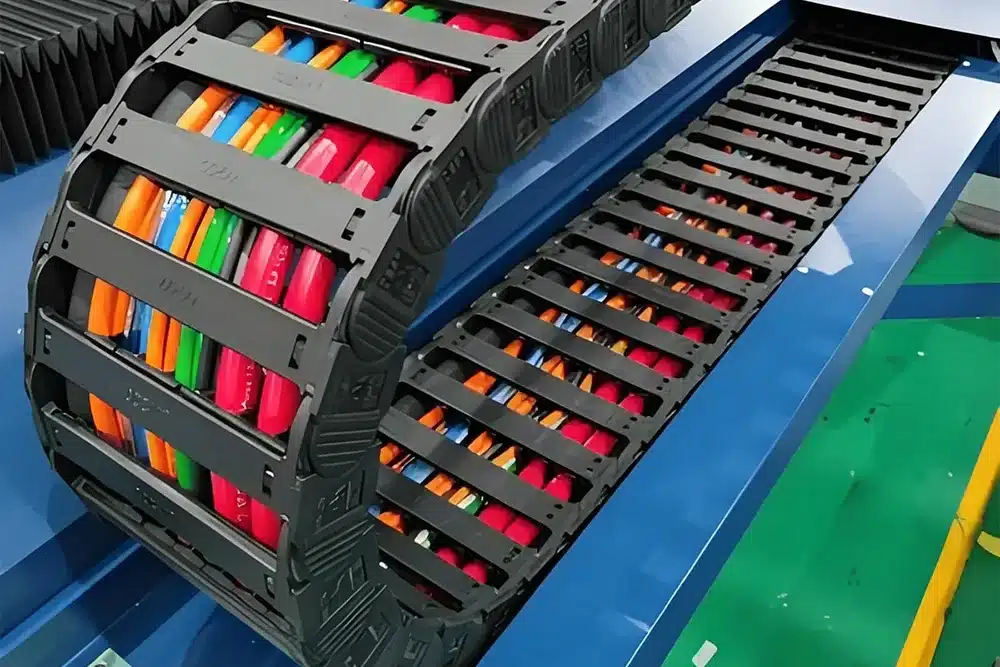
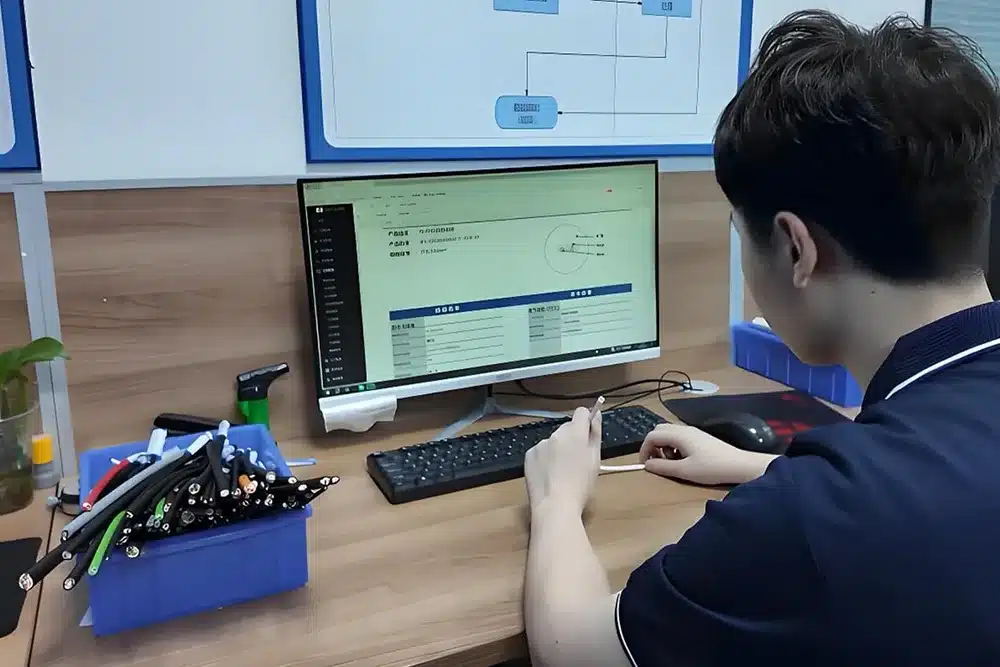
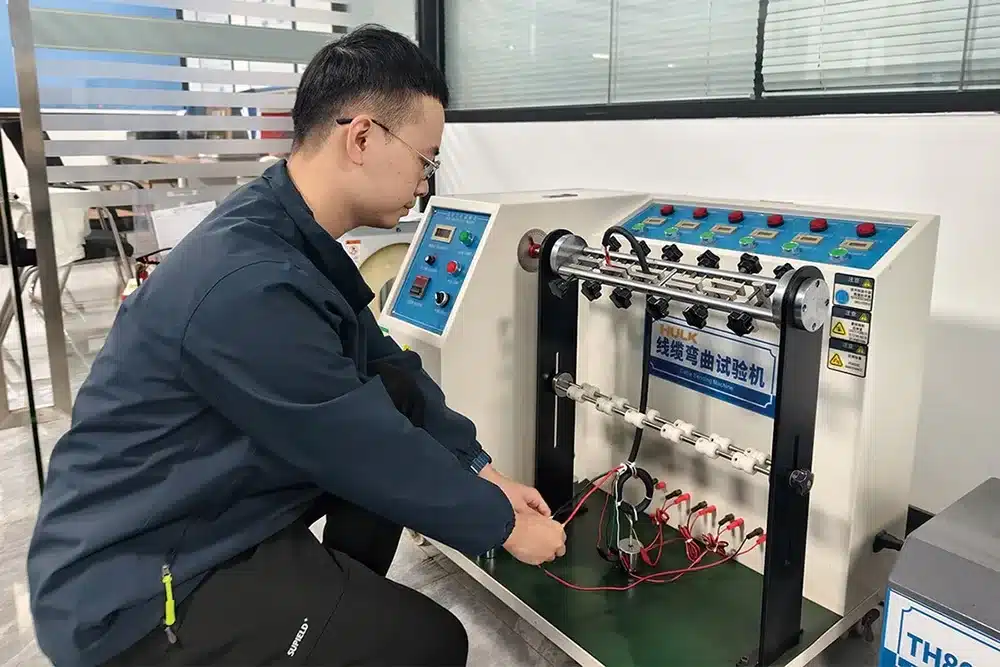
From initial design through the receipt of an RFQ, selecting the right custom drag chain cables begins long before. Many engineers find their way to this The Hard Way when they don’t have enough information about the application and are forced to request further clarification, quote late, or have cables that fail before time in service. We receive hundreds of RFQs at Hulk Electric for high flex cables for linear motion systems. The most clear and accurate proposals are always those from engineers that give full motion, geometry, environment and electrical details, upfront. This guide details which information to gather, so your custom drag chain cable RFQ provides production-ready solutions quicker and more reliably.
Defining the Motion Profile for Your Drag Chain Cable
The continuous-flex performance is very dependent on the actual motion of the cable. If the motion profile is not predefined, suppliers are forced to make best-guess estimates of stranding, shielding, and jacket requirements. If you can take these parameters at an early stage, you won’t under or over-engineer.
Travel Length, Stroke, and Routing Path
Record the total distance travelled by active travel and the overall length of the chain. If a combination of horizontal and vertical, please identify which is dominant.If horizontal and vertical, please state which is predominant (common in gantries and material handling). Add any special routing as cable sag, glide rails or multi-layer chains.
For example, a horizontal stroke of 2 m in a packaging gantry produces different stresses than a 10 m long axis in a long travel crane. These details directly impact the type of conductor, lay length, and flex life you can expect in your custom drag chain cables.
Speed, Acceleration, and Duty Cycle
Log typical speed (m/s), maximum speed (m/s), acceleration / deceleration rates (m/s²), operating time per day and shifts per week, and the planned duty cycle (cycles of operation per target life). The packaging lines or automotive welding cells that are used for high speed require higher level of strength when compared to that of low duty lab equipment. One of the most frequent causes of unexpected failure of continuous-flex cables is under-estimating duty cycle.
Capturing Drag Chain and Installation Geometry
The best cable utilized isn’t going to deliver the best performance if it is not connected to the physical carrier and installation.
Chain Type, Dimensions, and Minimum Bend Radius
Give the manufacturer, model (if known) of the chain drag, and the inner dimensions and the minimum bend radius specified for the chain. Specify if chain is open, closed or if it has internal partitions. The diameter and stiffness of the cable should not be increased beyond these dimensions because exceeding the bend radius will significantly shorten flex life.
Fill Level, Cable Count, and Segregation
Record the quantity of cables and hoses, approximate fill level (60-80% preferred), and their physical layout. When possible, power, control, data and pneumatic lines should be separated to reduce mechanical damage and electromagnetic interference. Easy sketches or pictures of the existing layout guide suppliers on the recommended inside the chain cable diameters and on the ordering optimization.

Environmental and Chemical Conditions Around the Drag Chain
Insulation and jacket materials are selected on the basis of actual exposure.
Temperature Range, Inside and Outside the Chain
Note ambient, operating high or low temperatures, and any hot spots from nearby processes or cold spaces in refrigeration areas. Add temperature fluctuations to cleaning cycles. This information helps you choose the PVC, PUR, TPE or high-temperature silicone compounds for your custom drag chain cables.
Oils, Coolants, Chemicals, and Contaminants
Identify sources of dust, welding sparks, cleaning fluids, hydraulic liquids and cutting oils. Record if contact is Splash, Occasional or Continuous. There are different challenges for each of three areas: CNC machines, food processing lines, and welding cells. Chemical data can be provided with accuracy to help the supplier recommend compounds that are proven to be long term resistant.
Electrical and Signal Requirements of the Custom Drag Chain Cable
It is common for electrical specifications to be incomplete, resulting in the use of the wrong conductor size or too little protection.
Voltage, Current, and Conductor Sizing
Define rated voltage (AC/DC), maximum current per conductor, and the combination of power, control and signal functions. Specify the length of the cables, if there is any voltage drop. An existing cable spec can be useful, but must always be checked if any operating conditions have changed.
Signal Types, EMC Considerations, and Shielding Needs
Specify or describe the requirements for digital I/O, analog signals, feedback from the encoder, or industrial Ethernet/fieldbus. Identify nearby VFDs, high current lines or welding equipment that pose EMC problems. Specify the preferred combination of twisting, foil, braiding and hybrid shielding and termination for the pairs.
Mechanical Constraints, Connectors, and Space Limitations
Interface details stop cables that are too challenging or big for machines.
Connectors, Glands, and Termination Details
Include connector types (M23 servo), pinouts, gland thread sizes and any harness and/or junction box requirements. Photos and datasheets of terminations aid suppliers in creating the right strain relief and outer diameters.
Space Constraints and Minimum Allowed Cable Diameter
Take cable entry, routing and clamp spacing measurements. With tight machine frame concentricity, sometimes it’s necessary to sacrifice the maximum outside diameter for enough bend radius and mechanical protection.
Documenting Lifetime Expectations and Performance Targets
Optimized design can only be achieved by suppliers when they are aware of the service life required.
Flex Life Targets, Operating Hours, and Safety Margins
State desired minimum cycles (e.g., 5-20 million), operating schedule and acceptable safety margin. A 3-shift automotive line requires a different level of engineering than equipment used for occasional applications.
Acceptable Failure Modes and Maintenance Strategy
Explain if replacement is foreseen as a preventive action or if the cables should be the same overall machine life. Note inspection frequency and criticality of downtime. This can affect the toughness of the jacket, the choice of strain relief and the conservative bend radius.
Preparing a Clear RFQ Package for Custom Drag Chain Cables
Handle the data gathered in an organized manner, to reduce the amount of back-and-forth.
Checklist of Application Data to Include in Every RFQ
- Motion profile: Travel distance, speed, acceleration, duty cycle
- The various chain details that can be dragged: model, dimensions, bend radius, and fill factor.
- All components of the environment: temperature, oils, chemicals
- The necessary level of voltage, current, signals and shielding for electrical requirements.Electrical requirements – voltage, current, signals, shielding.
- Connectors, space requirements.
Supporting Documents and Media: Drawings, Photos, and Layouts
Include motion diagrams, chain layout drawings, photos of existing installations, and existing cable specifications. The use of visuals can sometimes help to explain complex routing better than words.
Example of a Poor RFQ vs. a Well-Specified One
Bad RFQ: “Need flexible cable for drag chain 4 cores 1.5 mm².”
This is a well-specified RFQ: “Custom drag chain cable for 2.5 m horizontal travel for a gantry, 1.5 m/s, 3 m/s2, 24/7 duty, chain 45×100 mm, min bends 75 mm, 65% fill with power + Ethernet, ambient 40°C, cutting oil exposure, 12 million cycles, cable type M23 connectors.”
The second version provides quicker, more precise and truly comparable proposals.
Final Guidance – Treat Your Custom Drag Chain Cable RFQ as an Engineering Document
A full RFQ makes your cable suppliers technical partners. Project risk is minimized, lead times are shortened, and engineers and automation teams at the OEM can receive custom drag chain cables that will perform reliably in the trying conditions of continuous-flex applications because they are collected in a systematic manner and collect the motion, geometry, environmental, electrical, and lifetime data. Here at Hulk Electric, our engineers apply this same knowledge to create solutions you can have a lot of flexibility with, which are tested and certified worldwide.
Tell us about your project and we’ll help you fine-tune your specifications for the next one.