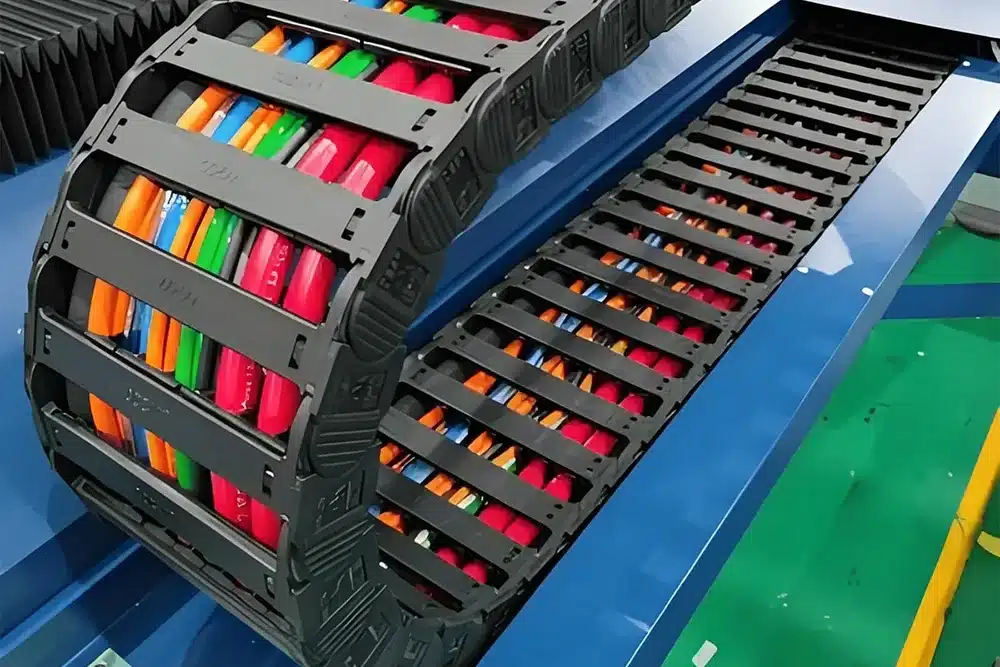
To ensure that each of the axes moves smoothly in millions of cycles, reliable drag chain cables are integral to the performance of CNC machines and modern machine tools. A drag chain cable for CNC must be able to withstand continuous bending and flexing, coolants, chips, small bend radii and the combination of high power servo lines and the sensitive encoder signals, without breaking or causing positioning errors or downtime. The right cable can have a significant influence on machine uptime, maintenance costs, and long-term reliability.
This guide explains a practical selection process for CNC, laser cutter, grinders and other equipment. Based on experience in providing cables for machine tool manufacturers, it emphasizes how to select the right cable construction for the actual motion profile, environmental stresses, and electrical requirements, to ensure that you specify with confidence and that you don’t fall into common pitfalls.
Understand the Motion Profile of Each CNC Axis First
The first thing to consider for cable selection is the mechanical fact of how each axis is moving, not general catalog ratings. Requirements along different axes can be very different for the same machine, otherwise over- or under-specifying would be avoided.
Travel Distance, Speed, Acceleration and Duty Cycle
Far more tension is applied to the cables during long travel moves such as gantries or high speed linear axes than is put through the cables during short auxiliary moves. For instance, a flex-rated cable can be used for a 0.5-meter X-axis stroke at slower speeds, but a cable rated for a high number of flex cycles may be required for the higher-speed X-axis stroke of 3 meters, with the axis undergoing rapid accelerations.
Conductors get tired because of repeated accelerations and direction changes. Estimate life of the machine and select cables with a flex life sufficiently above the amount of cycles. This move alone will prevent a lot of the early failure problems that occur in retrofit or high duty applications.
Bend Radius and Cable Carrier Geometry
The minimum bend radius of the cable should be suitable for or greater than the drag chain bend radius. Failure to abide by this means copper work hardening, cracking of the jackets and failure of the shields and conductors. In actual use, it is common to see that such a cable with a higher recommended bend radius will last many times longer, particularly in machines with 5-axis’s or higher speeds where there is repeated cable tight bending.
Check on the manufacturer’s recommendations of the chain and never twist or exceed the manufacturer’s design specifications for cable routing. Adequate fill and separation also help to prevent abrasion within the chain.
Match Cable Construction to CNC Environmental Stress
Cables don’t like machine tool environments. Standard wiring is rapidly destroyed due to coolants, cutting oils, hot chips, abrasive dust, vibration and temperature fluctuations. Drag chain cables for CNC should not only provide continuous flex performance, but withstanding these hazards as well.
Jacket Materials for Coolant, Oil and Chip Resistance
The longevity of the jacket is very important. Industrial PVC is flexible and economical, but can swell and crack in response to certain highly aggressive emulsions and oils found in CNC coolant systems. PUR (polyurethane) or special TPE Jackets typically offer the best resistance to oils, hydrolysis, abrasion and chip impact, thus the preferred material for exposed axes.
A tougher PUR jacket and closed or chip resistant drag chain design dramatically cut wear in chip heavy applications. If an internal axis is protected, a well formulated PVC can be used and can help to control costs.
Temperature, Abrasion and Mechanical Protection
Localized high temperatures and continuous impact of chips may occur in spindle areas and cutting zones. Choose cables that are suitable for the particular temperature range near the application—the majority of CNC drag chain cables are suitable for temperature ranges from -40°C to +80°C or more, but check suitability near hot parts.
Some other measures to consider are routing the cable away from the swarf paths, choosing cables with an abrasion resistant outer lining or cable sleeve and selecting drag chains that have smooth inner sides and adequate dividers.
Electrical Requirements: Power, Servo, Feedback and I/O in CNC Machines
Most often, a CNC drag chain will have several types of cable on it: servo power, spindle power, encoder/feedback, I/O signals, and industrial network. Both require different electrical requirements, and the same mechanical flex requirements.
Servo and Spindle Power Cables in Drag Chains

Low capacitance insulation, proper conductor cross-sections for current loads and strong continuous-flex stranding are all necessary for servo motor drag chain cables. These power lines are frequently placed next to fragile signals that are also in the same line, so they must be designed in such a way as to significantly reduce the risk of electromagnetic interference, using proper geometry and, if necessary, shielding.
High flex construction assures protection from conductor breakage during repeated bending, and oil resistant jackets assure protection against intrusion of coolant which could cause degradation of conductor insulation and conductor to conductor shorts.
Feedback, Encoder and Data Cables
The encoder cables on CNC drag chains and other feedback lines are particularly at risk. They must be able to be pair twisted, provided with impedance control and have a high degree of shielding that will not crack or degrade over millions of flex cycles. The most common problem expression is generally not mechanical failure, but rather intermittent alarms, positioning drift, or communication failures.
Signal integrity in the chain needs to be maintained with the constant motion of industrial Ethernet or with fieldbus cables. Search for cables that are engineered to withstand continuous flex with the required category (CAT 5e-CAT 7A) and strong jacketing.
Shielding, EMC and Cable Layout Inside the Drag Chain
When high-power drives are placed in close proximity to low-power signals, electromagnetic compatibility is important. The mechanical rating of the cable is important, but so is the shielding and physical arrangement within the cable carrier.
Shield Types and When to Use Them
Tinned copper braid is ideal for dynamic applications, particularly in servo motor drag chain cables and encoder lines, due to its great flexibility and ability to provide excellent coverage. For extreme EMC performance, foil-plus-braid combinations or individually shielded pairs offer more protection. Target high percentages of coverage (85% or more) that can be effective with repeated flexing.
Never assume that the shielding construction is configured to be used continuously, not statically.
Separating Power, Signals and Pneumatics in the Carrier
Ideally, power cables need to be separated from signal cables, preferably in separate sections of the drag chain or by using dividers, and best practice notes this. Avoid overfilling the chain (usually not more than 60% of the cross-section), which will minimize abrasion and permit unrestricted chain motion.
Careful layout inside the drag chain minimises crosstalk, simplifies troubleshooting and increases cable life. If a pneumatics/hydraulics carrier is used, ensure that pneumatics/hydraulics are separated from electrical lines to prevent added mechanical stress or contamination risk.
Verifying Flex Rating, Standards and Manufacturer Testing
There are many different marketing claims. To ensure that a drag chain is suitable for the job, one needs to delve deeper into the test conditions that go beyond the numbers.
How to Read Flex Life and Test Conditions on Datasheets
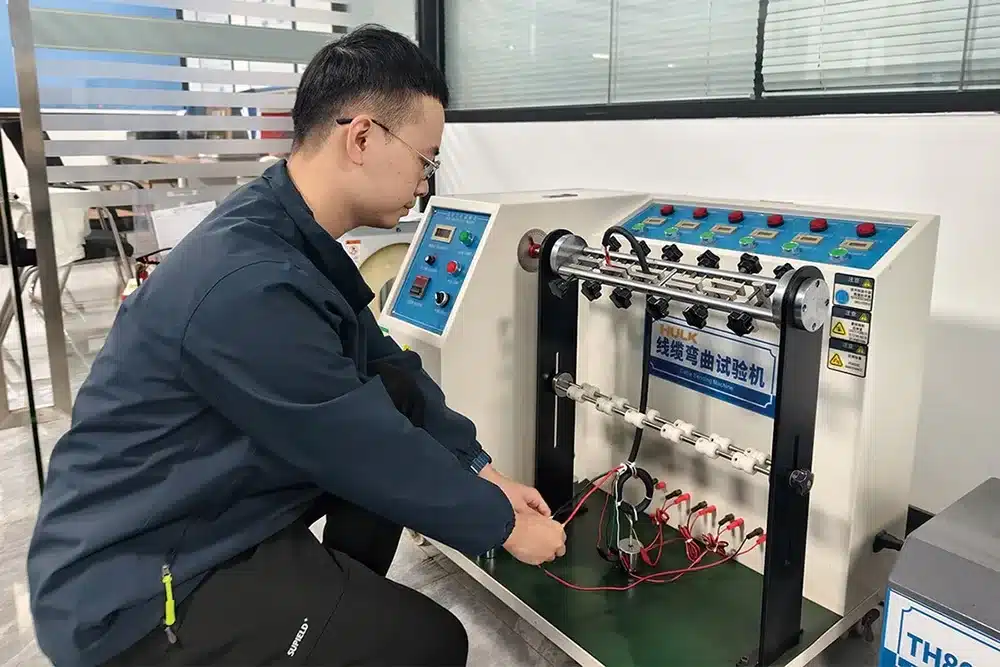
Always request detailed test data including the number of cycles, bend radius, speed, acceleration and test layout. A cable with a generous bend radius of 150 mm and 10 million cycles might not work for you if your application has a 75 mm bend radius and high acceleration. Your own parameters can be used to compare side by side the different options and not be fooled by working only under ideal lab conditions.
Approvals and Certifications for Global Machine Tool Exports
If your machine is intended for export to other countries, make sure that the drag chain cables used have the appropriate certifications for the country to which they are being exported, such as UL/cUL for North America, CE compliant, RoHS, REACH and more. This makes the entire machine certification process simpler and deployment quicker.
Practical Selection Checklist for CNC Drag Chain Cables

Before sending out an RFQ or finalizing a specification, gather the following details for each axis:
- Motion profile: Travel distance, speed, acceleration, expected duty cycles, lifetime.
- The minimum distance from the point of the bend of the cable carrier.
- There are several factors to consider when it comes to environment: type of coolant used, exposure of chips, temperature range, abrasion risks.
- Cable types needed: servo power, spindle, encoder/feedback, I/O, fieldbus/Ethernet
- Electrical parameters such as voltage, current, signal types, shielding requirements.
- If any special requirement such as oil resistance, flame retardancy, halogen-free etc. are required, please indicate this.
- Achieve target approvals and standards of compliance
Discussing your needs with an OEM cable expert will enable him to help you translate your needs into the most efficient construction, balancing performance, cost, and availability.
Choosing the proper drag chain cable for CNC machines is a matter of “knowing the actual operating conditions, not the generic conditions. Systematically analysing motion profiles, environmental stresses, electrical requirements and layout can significantly minimise cable failures and ensure machines continue to operate productively.
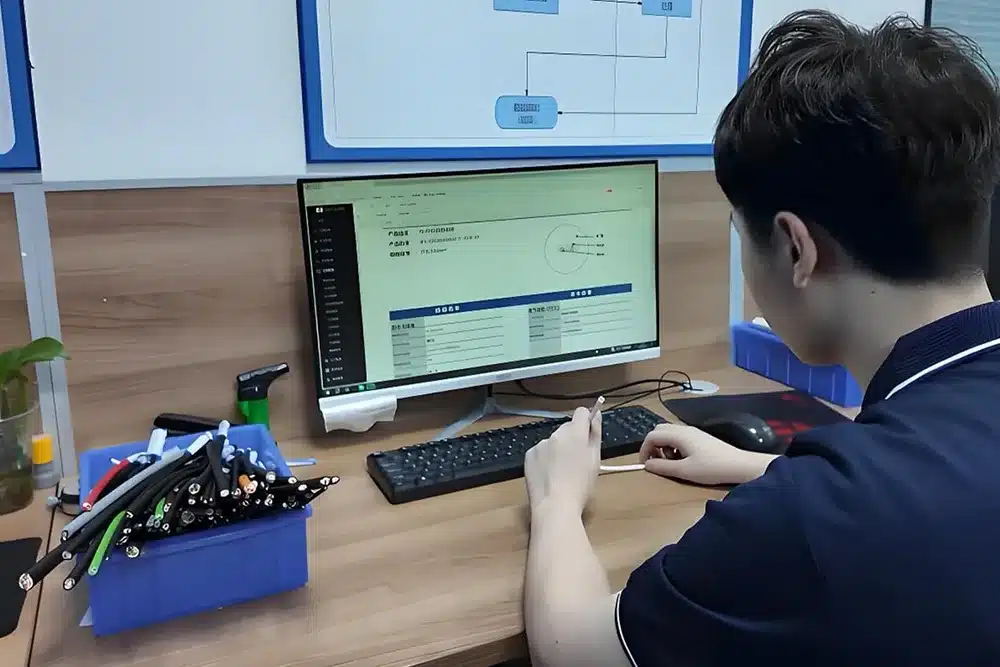
Whether you’re designing new equipment, retrofitting existing equipment or just seeking reliable, constantly flexible solutions for your CNC application, our team at Hulk Electric is ready to assist. Our extensive experience in high flex industrial cables and comprehensive testing facilities enable us to offer drag chain cables specifically engineered to meet the requirements of your machine tool application.