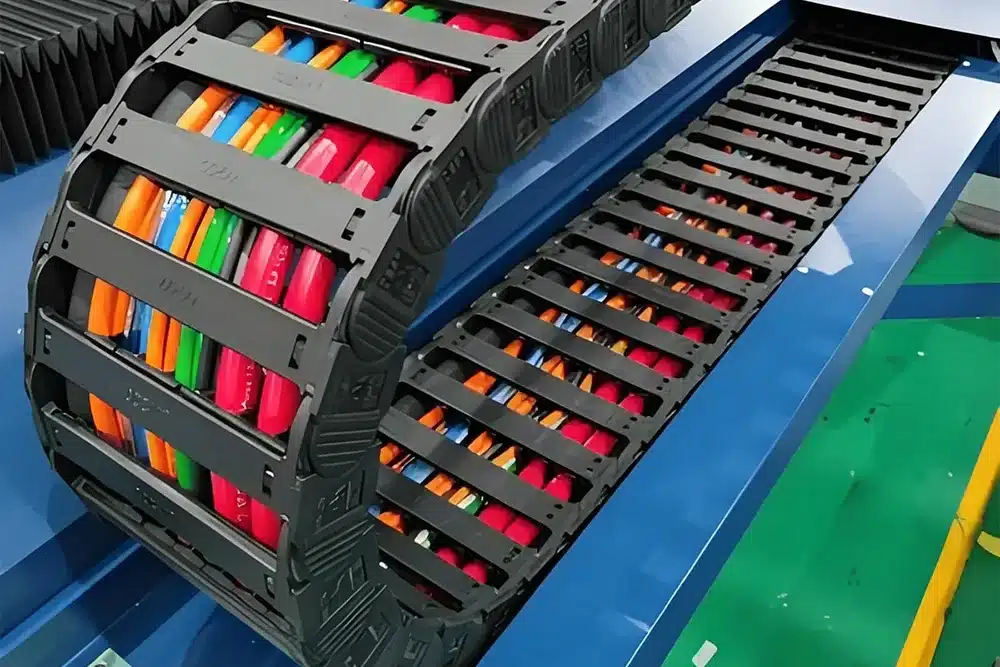
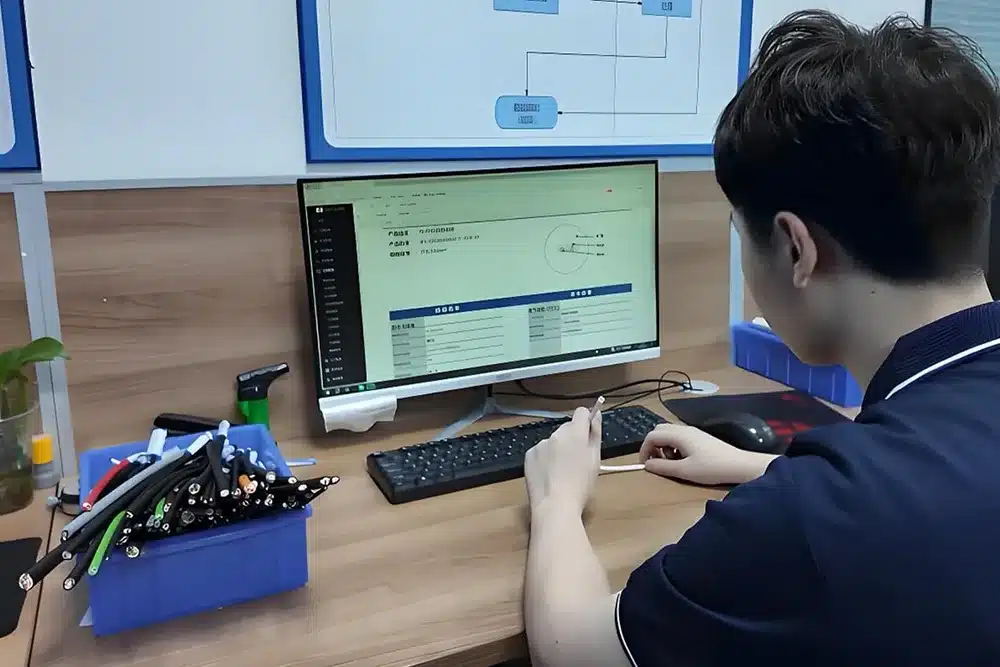
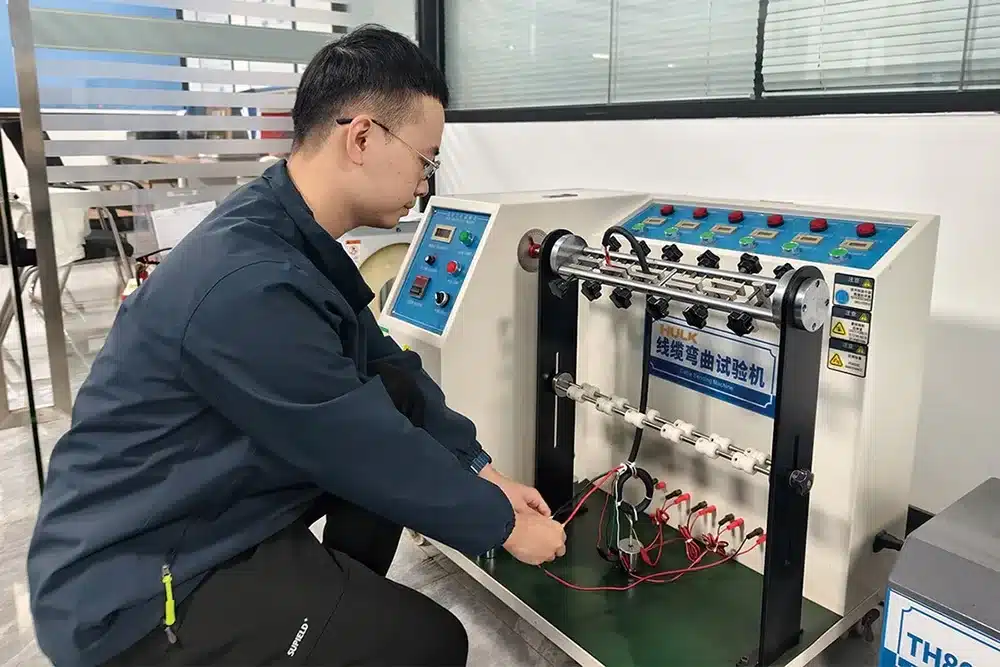
No matter how good the drag chain is, if it is not installed properly, it will not last long. Over the years, we have seen too many situations where the cable has been laid out incorrectly or the tension is too tight or too loose, or some other handling error, and jacket wear, conductor breakage or chain jamming occur. By getting the drag chain cable installation right, service life can be doubled and the machines can run longer between shutdowns.
The guidance provided in this book is a collection of rules that have proven themselves in practice and are used by many experienced technicians every day in CNC machines, robotic arms, gantries, and material handling systems. Follow them and you will eliminate many failure modes as well as maximize your continuous-flex cables.
Plan the System Around Bend Radius and Chain Geometry
The very first crucial component of a dependable drag chain is ensuring the cable fits the carrier that will be used. This causes repeated bending stresses which soon cause conductors to break or jackets to crack.
Respect Minimum Bend Radius and Add a Safety Margin

Be sure to adhere to the minimum bend radius specified by the cable manufacturer for continuous flexing. The inner radius of the drag chain should be at or greater than this—with an additional 10% safety margin for installation tolerances and dynamic stresses in the real world.
Use the size of the chain radius for a multiplet of cables as determined by the stiffest or largest cable in the multiplet. A uniform, broad radius all throughout the system prevents excessive fatigue, thus resulting in a considerably longer service life for the drag chain cable.
Check Travel Length, Fixed and Moving Ends
Adjust the fixed end and moving end so that the chain is working within its natural bend. The upper run should be free of restriction and should not have fixed points set too far away from the neutral position so as to be constantly pulled.
Carefully measure the total distance travelled. Cables should be sufficiently clear for space to allow them to move without stretching or squeezing at either end of their range of motion. This correct geometry here would prevent unwanted stress which would reduce the life of the cables.
Follow Filling Rules: Clearance, Separation and Symmetry
Cables can be quickly abraded and unevenly loaded in the carrier due to overcrowding or improper arrangement.
Clearance and Fill Factor Limits
Always leave plenty of room around each cable – usually the outside diameter plus 10% is sufficient for standard cables and 15-20% for hoses. Do not exceed approximately 60% of the inside cross section of a chain. This clearance enables the individual lines to move slightly in relation to each other without chafing or rubbing against the chain walls.
While tight packing may seem safe in the beginning, it ensures that there is abrasion and limited motion, which will lead to increased wear.
Using Separators and Keeping Unlike Lines Apart
Use vertical separators or shelves when passing power cables next to signal cables or where using different types of power cable jackets. Separators eliminate smaller cables from running on top of larger ones, and from forming corkscrews.
Distribute the weight evenly on both sides to prevent uneven wear and noise. These basic actions can greatly enhance long term reliability for the installation of cables in drag chains.
Avoid Twist: Handling Cables Correctly Before Installation
An invisible killer of drag chain applications is built-in twist. Cable entering the carrier twisted will struggle with the twist and will fail much sooner than anticipated.
Proper Uncoiling from Reels or Rings
Don’t unwind cable off a reel sideways, like you would unwind string. Rather, have the reel roll free or unroll the cable in a figure eight pattern across the ground. The method is one that will untwist the cable without applying any torsion.
If the cable is in a ring, let it ring on its own as you feed it into the chain. These additional minutes invested in the installation saves hours in troubleshooting later.
Visual Checks for Twist Before Clamping
Place each cable on the floor and see if it is flat and not kinked or rolling on its own. Gently twist the cable about its length before final clamping to eliminate twist.
Do not clamp a visibly twisted section between two points. One of the most effective – and rewarding – drag chain best practices is to fix the twist ASAP.
Length, Slack and Strain Relief at Both Ends
Cables fit naturally in the carrier and connectors have the proper length and strain relief to prevent destructive tension.
Allowing the Right Amount of Slack
Pull the length of cable not so tight as to cause sagging or stretching. An easy trick is to include approximately 10% of extra length to allow for some leeway for movement. For each machine position, ensure that the cables are not tight between the first clamp and the closest chain link.
Too little play will convey motion directly to connectors, and too much play will form a loop which can grab and abrade.
Designing and Positioning Strain Relief
Clamp each cable, one at a time, at both ends, close to the cable entering the chain. Use clamps which distribute pressure evenly across the outer jacket, but do not crush the jacket.
Do not place more than one cable between a single wide clamp as flexing forces are applied to the connectors and frequently conductors break at the terminal blocks or pins are loose; do not put more than one cable between a single wide clamp as flexing forces are applied to the connectors and often, the conductors break at the terminal blocks or the pins are loose. Long-lasting performance demands individual strain relief for drag chain cables.
Routing, Alignment and Avoiding External Interference
The overall routing, even if the chain is fully loaded, will result in wear if side loads are applied or cables are exposed to damage.
Keeping the Chain Straight and Supported
Adjust the fixed and moving mounting points so that the chain runs in a neat, straight line. Use guides or support channels for longer journeys otherwise there will be sagging or sideways forces.
Ensure that the upper run is not rubbing against other machine parts, covers or machine frames. Many teams do not properly align cables until issues arise, and it is an integral aspect of cable carrier installation requirements.
Protecting Against Chips, Dust and Foreign Objects
Exposed jackets are easily damaged by chips and debris in machine tool situations. Think about closed style chains in heavy chip zones, and arrange for a regular cleaning. Cover or bellows can keep critical areas protected, while maintaining mobility.
Simple measures, such as maintaining clear space around the chain, can go a long way in avoiding foreign object damage (FOD) which reduces cable life.
Inspection and Maintenance Routines to Preserve Cable Life

Installation is just the starting point in getting good. Frequent monitoring can identify problems before they can lead to unexpected downtime.
What to Check During Visual Inspections
These are some indicators to watch for during routine maintenance:
- Abrasion marks (typically from overfill or missing separators) or jacket flats
- Exposed shielding braid
- Coolants or oils can cause discoloration.
- Tangled chain links or cable droop
- Tightening cable pulls at end positions
Each is a symptom of a particular installation or alignment problem and can be corrected early.
When to Adjust, Re-Clamp or Replace
Re-distribute cables, add or move separators or adjust strain relief if minor wear is observed. Replace individual lines that are damaged before spreading.
It’s much more cost-effective to identify issues at scheduled inspections than a failure during a shift while production is on the go. Good drag chain cable installation is converted to many years of service with consistent maintenance routines.
Ensuring cables are installed properly in drag chains is a job that needs attention to detail but can pay off in a number of ways including maintenance reduction and increased system uptime. Respecting bend radii, ensuring proper clearance and separation, avoiding twist, ensuring adequate strain relief and following disciplined inspection practices helps you to invest and maintain your automation equipment in optimal working order.
At Hulk Electric, we design high-flex drag chain cables to withstand these practical situations. If you have layout drawings or want to discuss certain application problems our team is always available to look at them. Tell us about your project and we will help you achieve the maximum possible service life through solutions.