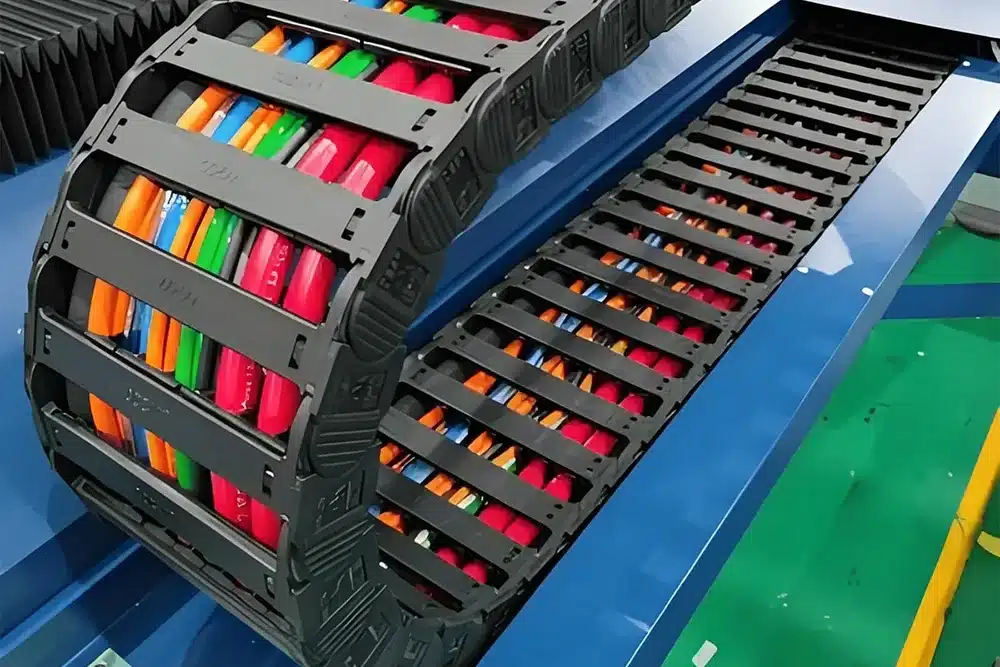
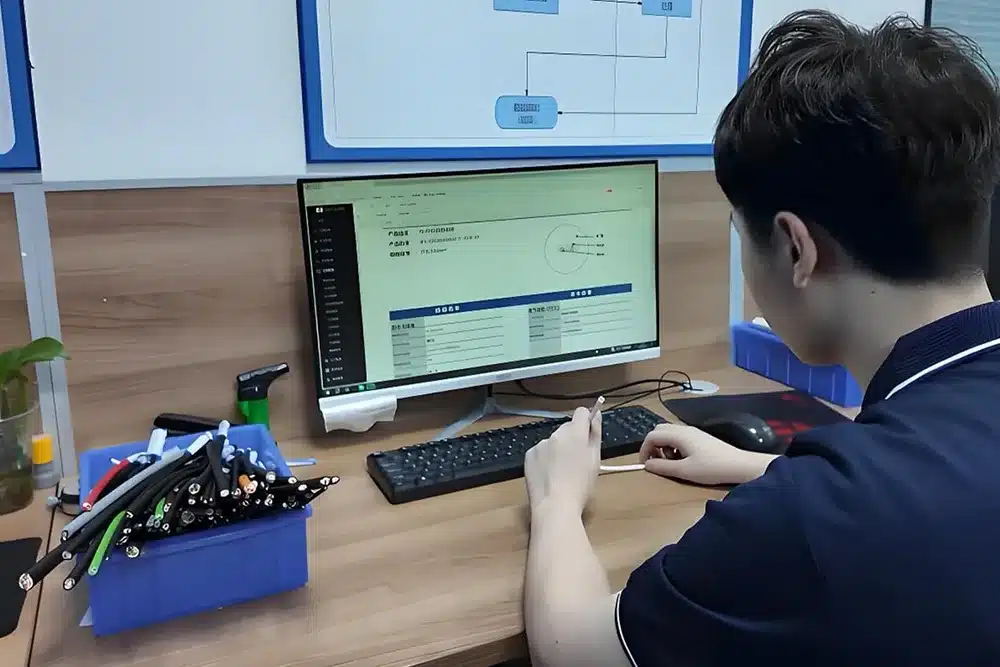
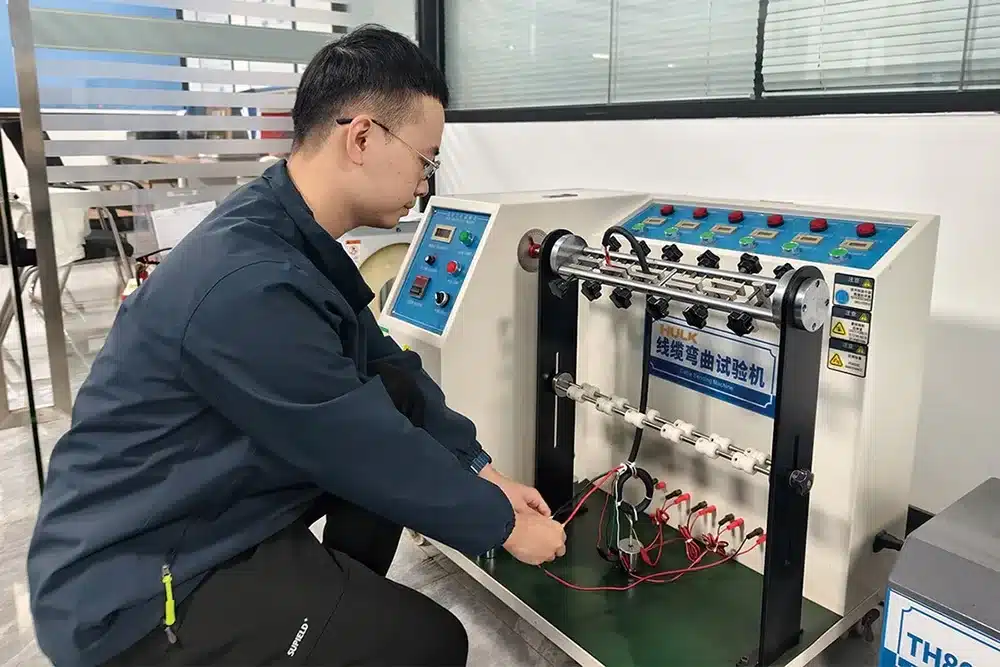
One that is not always obvious but definitely an expensive source of cable failure in motion control systems is poor cable and cable/hose segregation inside the drag chains. Even high quality flexible cables can wear out the jacket, corkscrew and fatigue the conductor when they are allowed to jostle freely with other neighbors in a high cycle, automation environment. Here at Hulk Electric, we’ve assisted numerous engineers who have found that inside arrangement frequently stretches the life of the cables far past their expected service time.
This guide explains why segregation is important, how segregation is prevented from occurring, and how to design and maintain drag chain interiors that keep your cables and hoses safe, day after day.
What “Segregation” Means Inside a Drag Chain—and Why It Matters
Segregation is a method to arrange and physically separate cables and hoses in a limited space inside a drag chain (also known as energy chain or cable carrier). It is not just about stuffing a conduit in; it’s about combining them by diameter, function and jacket material and ensuring there is sufficient clearances clear to allow each one to move freely over millions of flex cycles.
The industry’s leaders stress that the quality of the parts is not the answer to a poor interior distribution. Contact, roll, stacking and entanglement are a source of mechanical chaos when segregation fails. The result? Runaway degradation that transforms a system that’s well specified into a costly source of downtime. Proper segregation guarantees that each cable has uniform bending radii and support, the key to reliability in robotics, machine tools and material handling.
Key Segregation Rules from Energy Chain Manufacturers
It brings theory to practice in a reliable way by following a distribution guidance from the leading chain producers.
Clearance and Fill Rules
The individual cables/hoses require clearance: 10% for round electrical cables and 20% for hydraulic hose. The above clearances are all per conduit and contribute to the overall chain fill factor (which is typically 60-80% depending on the manufacturers, typically lower). The objective is to stop crushing during movement, but to ensure smooth sliding during crushing.
Different Diameters and Jacket Materials Must Be Separated
Large hoses and small signal cables should never be in the same open compartment without barriers. Likewise, cables that have two different jacket materials (such as PVC and polyurethane) are likely to stick together or wear at different rates. This can be addressed by using modular separators which provide dedicated lanes.
Vertical Clearance and the “1.5 × Diameter” Rule
Similar cables should be grouped vertically no higher than 1.5 times the cable’s diameter. A taller stack of books becomes messy when the car starts to accelerate.
D1 + D2 Rule for Separation
If the sum of two adjacent conduit diameters (D1 + D2) equals or is less than 1.2 times the inner height then use a shelf or separator. This basic one can help avoid larger elements rolling over smaller elements while travelling.
How Poor Segregation Causes Premature Cable Failures
Violation of these rules immediately activates well known failure mechanisms in the continuous-flex application.
Increased Jacket Abrasion and “Rub-Through”
Unseparated cables are continually sliding and rolling together rather than running parallel. Localized rubbing presses hard surfaces together, stripping away the outer jackets and exposing the inner shields or insulation. This results in shorts, signal dropouts or complete cable failures, and sometimes much sooner than the cable’s flex cycles.
Corkscrewing and Core Migration
Even bending support occurs only when the chain is positioned randomly within the chain. Some cables find themselves in smaller bends or twisted routes along which they become distorted into a spiral, or corkscrewed, and the conductors move inward. Such problems escalate quickly for high-speed lines.
Unexpected Tension and Localized Fatigue
The jamming hoses force cables to go out side-to-side against adjacent cables, creating axial tension and pinch points that were not originally designed for at the time of installation. Fatigue of conductors or of the braids occurs at unpredictable sites, increasing the likelihood of sporadic failures and EMC issues.
Specific Scenarios Where Poor Segregation Causes Failures
The risks are made real with the use of real world examples.
Mixing Large Hoses and Small Cables in One Compartment
Suppose that you have a large hydraulic hose running next to a sensitive encoder or sensor cable. The lateral movement of the hose causes it to roll over the smaller lines and hold them under the hose. Consequent effects: heavy abrasion, kinked bends and premature conductor breaks, mainly in the areas of contact.
Stacking Cables Without Horizontal Separation in High-Speed Applications
It is particularly hazardous to stack several cables vertically on one another without dividers in high cycle setups. Each stroke raises the temperature, rubs and stresses the stack well beyond the rated values due to acceleration.
Flat and Round Cables Laid Together Without Separators
The combination of flat motor cables and round control cables results in the formation of contact unevenness. The round cable could “saw” out flat surface and the localized wear strip, deformation, failure will occur where the two parts contact each other.
Distribution and Segregation Rules – What They’re Trying to Prevent
These guidelines are being put in place to remove unwanted stress. Untwisted routing avoids any internal torsion. Side-to-side and radial unrest to achieve even bending. Symmetric weight distribution stops chain tilting. And the proper barriers keep cables from getting in the way of each other. Each conduit is used in the way intended, instead of battling against the unpredictable.
Best Practices for Proper Cable and Hose Segregation
Consider interior layout a fundamental engineering decision.
Plan Interior Layout by Function, Diameter and Material
Separate group power, signal and fluid lines. Group similar diameters together and separate out outliers. Don’t combine different jackets which might adhere or rub. Modular separators and shelves put this plan into reality.
Use Vertical and Horizontal Separation Strategically
Large hoses are separated from small cables with vertical dividers. Controllable tiers are generated with horizontal shelves, without infringing on height limits. This creates well-controlled, predictable movement.
Maintain Symmetrical Load across Chain Width
When possible, place heavier lines on the outside and lighter lines in the middle. This will eliminate tilting and uneven pressure which can cause excess wear to one side of the tires.
Inspection Tips – Spotting Segregation Problems Before Failures
Routine visual maintenance checks are a worthwhile investment:
- Check that there are no cables that cross compartments or jump separators.
- Check for early flattening, rubbing or twisting of the jacket.
- Ensure that new additions meet separation requirements.
- Look for knots or unwanted twists which increase tension.
Early detection means that cables can be simply rerouted or additional cable separators can be installed, rather than the entire cable replacement.
Design for Serviceability – Segregation That Simplifies Maintenance
Easier to troubleshoot with well-partitioned chains. Each cable can be replaced separately without disturbing other cables. In some teams, even a multi-core cable is split up into compartments to decrease risk and quicken repairs. Upfront good segregation reduces downtime and maintenance issues.
Final Guidance – Segregation Is a Design Variable, Not an Afterthought
Inside drag chains, due to poor cable and hose segregation, a precision motion system can turn into a random stress generator directly resulting in cable failure. In such a way, engineers can design cable separation intentionally, basing it on the validation done at installation and re-evaluated during service, thus ensuring long cable life and smooth operations.
We build high flex drag chain cables at Hulk Electric (Dongguan) Co., Ltd. that are tough enough for tougher segregated layouts. Our servo, motor and torsion cables are designed to handle the true stresses of industrial automation. Tell us your chain requirements and uses and we’ll find you or design you the right (or wrong) solution to withstand years of use.