Common problems with servo cables include periodic alarms, erratic motion, and unexpected system downtime in CNC machines and automated systems. Often a single damaged conductor or compromised shield will cause symptoms that are similar to a motor or drive or encoder failure, resulting in costly unnecessary replacement of said parts. Servo cable failures in CNC and automation systems are common and by employing a systematic diagnostic procedure maintenance personnel can accurately and safely determine the exact cause of failure in a timely manner.
In our practice working with automation engineers in many industries we have seen how most of the common faults are repeated due to incorrect cable selection, routing and inspection. You’ll gain the hands-on knowledge from the field to identify failures, conduct safe diagnostics, and take preventive action to keep your lines up and running.
Why Servo Cable Faults Are Easy to Misdiagnose
Servo cables connect the drive with the motor and transmit high power currents, sensitive feedback signals, brake power and sometimes hybrid data. They tie together several important components, so it’s common for issues with the cable to be confused for issues elsewhere in the system.
One Cable Fault Can Create Several Types of Alarm
Faulty power conductors can give rise to overcurrent, imbalance or stall alarms. Following errors, position deviations, or commutation faults occur often when the issues occur in the feedback or encoder lines. Brake circuit issues can result in an axis being locked or enable failures; shielding issues create EMI which causes intermittent errors.
Dynamic Motion Makes Intermittent Faults More Likely
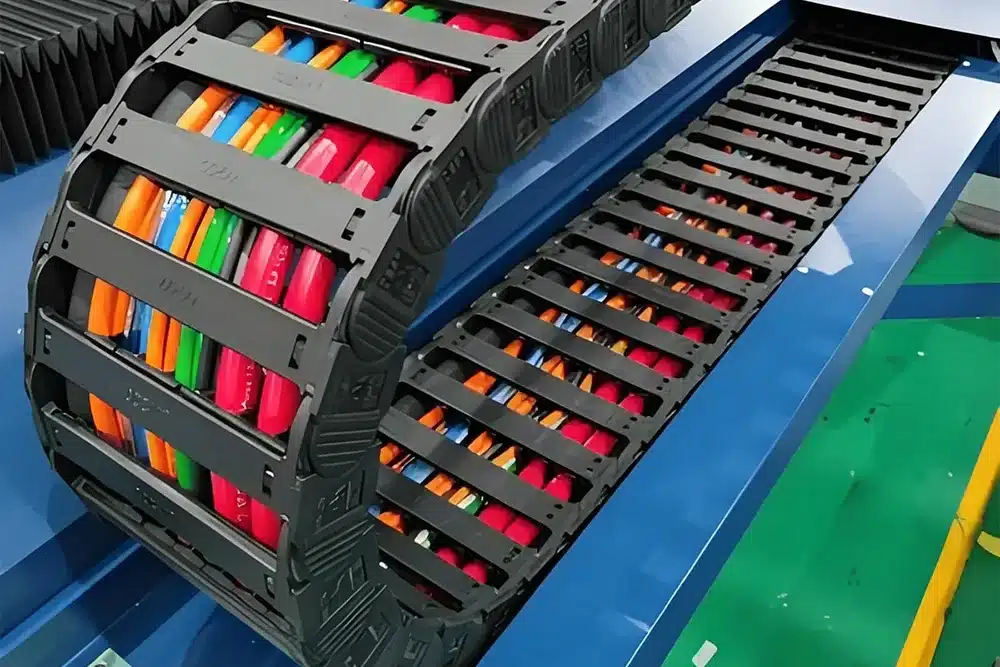
Cables can be flexed, twiddled, vibrated and rubbed numerous times in drag chains, robot dress packs, and moving CNC axes. These stresses can cause internal strands to break even before there is any sign of damage to the outside of the jacket. Often faults appear only at certain positions, speeds, or temperatures, making it difficult to repeat these conditions without knowing this information.

Common Servo Cable Failure Modes and Their Symptoms
Identifying patterns can help determine if it’s the cable.
Broken or Fatigued Power Conductors
High cycle applications can cause conductor strands to break with repeated flexing, resulting in partial opens and/or higher resistance. Symptoms include intermittent axis movement, overcurrent alarms during certain travel segments or unusual heating of connectors. These faults are usually only found if the cable is bent inside the carrier to a specific shape.
Damaged Insulation, Shorts and Ground Faults
Insulation may be damaged by abrasion, coolant penetration, crushing or heat, causing shorts, ground faults, or leakage. Search for trips, spikes in the current or progressive degradation. Do not test insulation resistance of equipment through a drive.
Feedback or Encoder Cable Failure
Low voltage encoder lines are particularly susceptible to fatigue, connector damage or noise. Loss of encoding, jerks, position errors or unstable motion. The faults may disappear when connecting once but reappear on motion.
Shield, Grounding and EMI-Related Failure
Inadequate shielding or poor routing in proximity of power lines permits interference. The symptoms are that feedback alarms occur intermittently when equipment is operating nearby or when operating at higher speeds. It is important to separate and terminate properly.

Connector, Crimp and Terminal Failures
Repeated mating, vibration, or loose pins cause crimps to loosen or contamination. Faults that appear after movement and/or service work can be a warning sign and often happen repeatedly. Check for bent pins, corrosion, and inadequate strain relief when reviewing servo motor OEM pinouts and connectors.
Brake and Auxiliary Conductor Faults
The brake wires can be damaged, which results in the failure to release or overload conditions. Symptoms are humming without movement, and holding without reason. Test according to manufacturer’s safety guidelines.
A Safe Step-by-Step Workflow for Diagnosing Servo Cable Faults
Make safety and evidence collection priorities. Use and practice lockout/tagout (LOTO) procedures and follow equipment manuals.
Step 1: Record the Alarm, Axis and Operating Condition
Record the exact alarm code, axis affected, timing (after warm up, specific position, startup), speed, load and changes. If faults repeatedly occur at specific locations, there is likely to be a problem with the cable or routing.
Step 2: Inspect the Entire Cable Path Before Disconnecting Anything
Find a path from the drive to the motor. Look for abrasion, pinch, tight bends, oil saturation, crushed sections, loose clamps, connector condition. Focus on fill, transitions and strain relief points of the drag chain.
Step 3: Isolate Power and Perform Basic Cable Checks
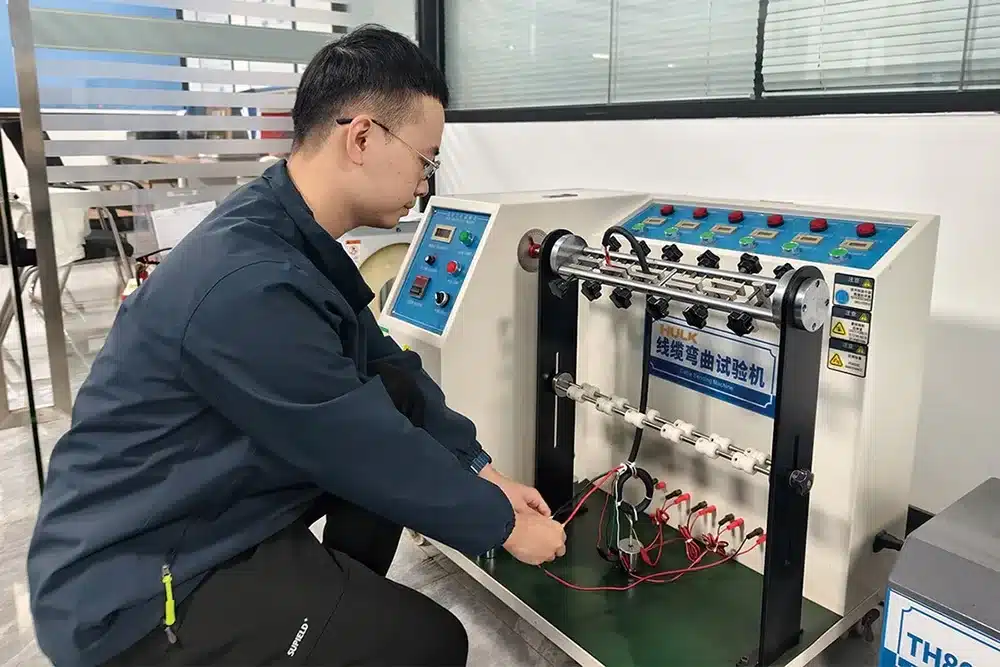
Once the equipment is isolated, test continuity end to end, measure phase to phase resistance (comparing phases), and see if there are grounds. Test intermittent problems with a multi-bend orientation. Before performing insulation resistance testing, disconnect motor leads.
Step 4: Separate Cable, Motor and Drive Variables
Measure and compare drive-side and motor terminals. When safe and documented, substitute with known cables. Only vary one factor at a time, otherwise you will mask the underlying cause.

Step 5: Check Feedback Signal Integrity and EMC Conditions
Check encoder voltage, check shield continuity and routing according to OEM specifications. Check for correlation with ambient noise sources. Do not make any uncontrolled modifications to ground.
How to Tell a Cable Problem From a Motor, Drive or Mechanical Fault
Signs That Point Toward a Cable Fault
- Consequently, there are resistance anomalies at the cable end, but not at the motor terminals.
- Carpet or floor is damaged, showing signs of wear.
- Substituting with known good cables is the solution to the problem
- Signs that indicate something other
- Mechanical binding, misalignment due to loading.
Signs That Point Elsewhere
- Mechanical binding or misalignment under load
- Winding imbalance measured directly at motor terminals
- Persistent faults after cable replacement
- Brake hardware or bearing issues
Preventive Practices That Reduce Servo Cable Downtime
Match Cable Construction to Motion and Environment
Choose the continuous-flex, torsion-resistant or hybrid cables depending on required actual bend radius, travel, speed, torsion, temperature, and exposure of oils or chips. Hulk Electric’s specialty is custom-made servo and motor cables designed for high-end CNC and robotics applications, protected with the proper shielding, jacketing and certifications
Protect the Cable Route and Terminations
Proper bend radius, don’t rub or overcrowd in carriers, quality glands and strain relief, separate feedback cables from power cables — follow best practices for installing cables in drag chains so routing itself does not recreate the faults above. Protection from chips, coolant, sharp edges.
Make Cable Inspection Part of Planned Maintenance
Regularly inspect high-cycle routes for visual and thermal issues, document alarm patterns and schedule proactive replacements before the issues arise.

When to Escalate the Problem
In cases of long runs, high speed, repetitive EMI or safety circuits, gather as much information as possible, including part numbers, alarm history, measurements, photos, motion profiles, etc. before contacting the machine builder, drive manufacturer or cable specialist.
The staff at Hulk Electric will help OEMs and maintenance departments answer their custom servo cable, drag chain, and application-specific engineering needs. Share your machine parameter and we will help you to set up reliable cables that perfectly fit your motion and environment requirements.