Although intermittent faults in industrial automation servo drives, encoders, sensors, and fieldbus networks are often blamed on software, the problem can originate when custom cables do not withstand EMI and noise effectively. The choice of braided, foil, or hybrid shielding can mean the difference between a stable system and one affected by jitter, packet loss, and expensive troubleshooting. Our custom cable design services help engineers select and implement the right shielding structure for demanding motion-control, robotics, and networking applications.
Understanding EMI in Industrial Automation – Where Noise Comes From
Rapid voltage and current changes from variable frequency drives (VFDs), servo drives, large motors, contactors, and switching power supplies produce substantial broadband noise. Engineers working with servo cables in VFD and inverter-driven systems should account for noise coupling to nearby cables through capacitive, inductive, and radiated paths—especially in dense control panels or shared cable trays. Welding equipment and relays can create additional transients.
Low-level analog signals, high-speed encoder pulses, and data lines are especially susceptible to noise. If a feedback cable runs parallel to a motor power lead for several meters, it can pick up enough interference to cause encoder miscounts or servo alarms. Custom cables for high-precision servo and motion control systems can help preserve feedback integrity through appropriate shielding and layout from the outset.

Shielding Fundamentals – What Foil, Braided and Hybrid Shields Do
Foil shielding is a process employing a thin layer, typically of aluminum or copper with possibly a drain wire, and provides almost 100% optical coverage. Very good at rejecting high-frequency electric field noise typical of data and twisted-pair cables. Foil, however, is susceptible to cracking, or degradation, with repeated flexing, making it less suitable for high motion applications.
Braided shielding is made of interwoven copper wires and it performs well against low frequency magnetic field from motors and drives and has high mechanical strength. It is flexible and durable for dynamic environments, and can provide coverage of 80-95% is generally achieved according to braid angle and density.
Hybrid shielding is a combination of foil and braid (usually foil over braid), providing overall protection. This is a structure that is robust against high frequency and low frequency interference and flexing installations.

Matching Shield Type to Signal and Environment
For the power cables of servo motors, strong overall shielding is required to suppress the motor’s self-radiation, and for the feedback cables (encoder/resolver), the twisted pairs to be individually shielded and the overall shielding are both required. Feedback running close by the power conductors provides best hybrid shielding in high flex applications.
When specifying custom industrial Ethernet and fieldbus cables for PROFINET, EtherCAT, CANopen, PROFIBUS, or DeviceNet, follow the applicable protocol and shielding specifications. In quiet, non-dynamic environments, foil may be sufficient; in drag chains or near drives, braided or hybrid shielding may be necessary to maintain signal integrity.
Analog sensors and mixed bundles containing analog and power conductors require careful design. Understanding shielded vs unshielded sensor cables helps engineers determine when twisted pairs need individual protection from power groups, typically using individual foils with an overall braid or hybrid shield.
Shield Termination, Grounding and Layout – Where Good Designs Go Wrong
Even the best shielding will be ineffective if the ends are not suitably terminated. Use conductive clamps/connectors that will ensure continuous shielding; avoid pigtails as they become an antenna at higher frequencies and reduce performance.
For grounding, the following should be used as a guide to the manufacturer’s recommendations: Single-end grounding generally results in a loop-free system in many instances and may be appropriate for some instances where low frequencies are used, but both-ends may be appropriate for other low-frequency cases. Document decisions clearly.
Cable routing is also important. Follow servo motor cable routing best practices by keeping sensitive signal cables away from high-current motor leads, minimizing parallel runs, and using separate trays or conduits where possible. A good layout significantly reduces the shielding burden.

When to Choose Foil, Braided or Hybrid Shielding – Practical Scenarios
For mostly static control cabinets or short sensor runs with low noise, foil shielding (pair or overall) is frequently found to be adequate and cost effective. These requirements can be fulfilled by many of the standard catalog cables.
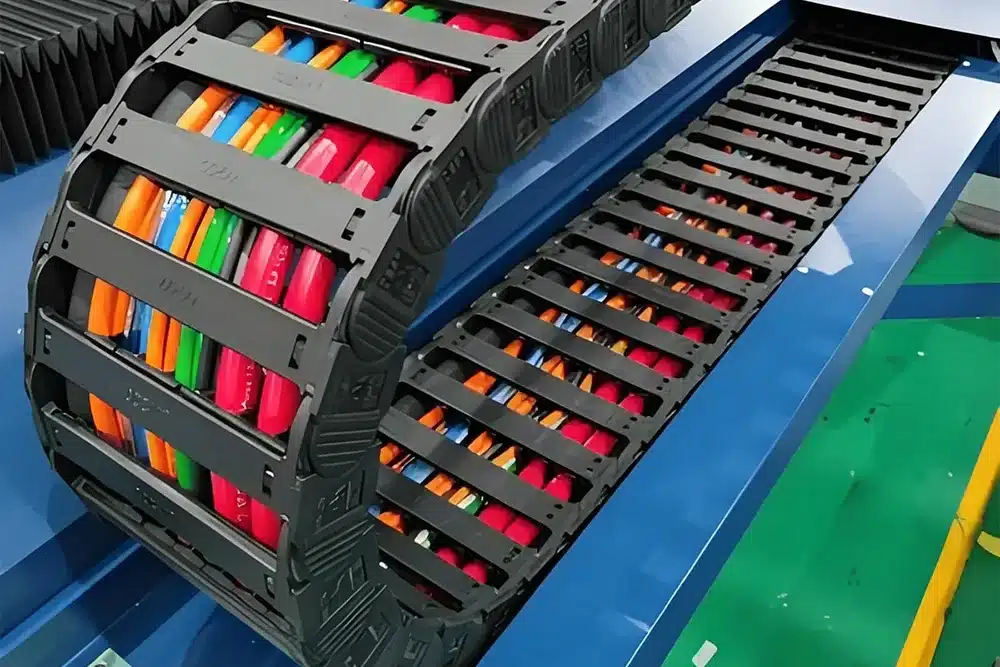
Braided or hybrid shielding provides mechanical protection and magnetic-field rejection for high-flex drag chains and robotic arms near servo or VFD power leads. High-flex cable engineering combines suitable shielding with fine-stranded conductors and flexible jackets to support long service life.
Fieldbuses and Ethernet signal transmission through noisy plant floors is aided by hybrid shielding or well-specified shielded twisted pairs (STP) that are fit for protocol.
Common Shielding Mistakes—and How to Avoid Them
Without checking coverage, flex rating or shield construction, field failures often occur when using general purpose “shielded” catalog cables. Always ask for detailed drawings and test data for motion applications.
Shields that are not terminated properly—because they are cut too short or use pigtails, for example—can add noise rather than reduce it. Apply grounding and shielding strategies for fieldbus cables in high-EMI environments and use consistent hardware and procedures for project terminations.
One approach fits all signals is ignoring frequency specific needs. Correlate shielding to signal frequencies: foil is good for high frequency data, braid provides strength to low frequency noise from motors.
Practical Shielding Checklist for Custom Cable Projects
Consider the following questions before specifying shielding:
- What are the signals carried by the cable (power, analog, digital, Ethernet/fieldbus, feedback)?
- What are the predominant noise sources close by and their frequencies?
- Are static, flexing, torsion or drag chain motion present in the cable?
- Are there manufacturers/equipment or protocol requirements for shielding?
- What is the plan for installing shields at the end?
With your custom cable manufacturer discuss the following:
- Type, coverage, and foil/braid/hybrid layers of shields recommended.
- Mechanical performance data of flex/torsion with the selected shielding.
- Acceptable termination hardware and connector suggestions.
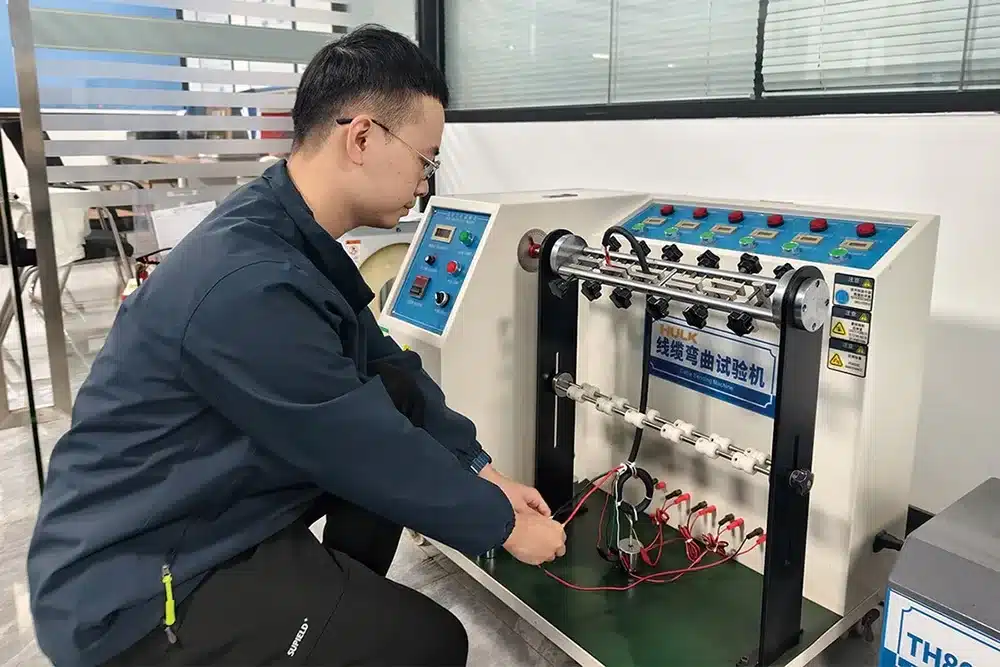
- Examples of application results or test reports from similar applications, supported by an industrial cable testing laboratory.
Hulk Electric specializes in custom shielded cable design with optimized shielding structures for servo, robotics, Ethernet, and fieldbus requirements. Our in-house testing and real-world experience help ensure reliable EMI and noise control from prototype through full production.