Selecting the right custom servo motor cable is critical for reliable performance in motion control systems. The cable must handle the correct voltage and current while providing proper shielding against EMI and the flexibility or torsion resistance demanded by your specific motion profile—whether static panel wiring, linear drag chain travel, or multi-axis robotic movement. At Hulk Electric, we’ve helped countless engineers avoid overheating, signal noise, and premature failures by matching these three pillars to real-world applications.
This practical guide walks you through a step-by-step process to evaluate electrical requirements, shielding needs, mechanical demands, and environmental factors so you can specify servo cables that deliver long-term reliability and uptime.
Step 1 – Define the Electrical Requirements: Voltage, Current and Insulation Rating
Start every servo cable selection with the drive and motor specifications. Ignoring these fundamentals leads to insulation breakdown, excessive heat, or voltage drop that can trigger faults or reduce system efficiency.
Matching Voltage Rating to Drive and Motor
Servo systems typically operate at 300 V, 600 V, or 1000 V ratings. Choose a cable whose voltage rating meets or exceeds the maximum system voltage, including any peaks from regenerative braking. For most industrial servo drives and motors, 600/1000 V cables with robust insulation provide a safe margin and longer service life under dynamic loads.
Conductor Size, Current Capacity and Thermal Behavior
Select conductor cross-section based on the motor’s continuous and peak current ratings, cable length, duty cycle, and applicable servo motor cable voltage and current limits. Undersized conductors cause heating and voltage drop, especially on long runs or high-acceleration axes. Always reference manufacturer current-carrying capacity tables and factor in ambient temperature derating.
Considering Safety Codes and Standards
Verify that your chosen servo cable complies with relevant standards such as UL, CSA, or CE as required by your market and panel design. Compliance supports certification of the entire machine and reduces liability risks.

Step 2 – Assess Shielding Needs and EMI Environment
Servo drives generate significant electrical noise, and feedback signals are highly sensitive. Proper shielding prevents EMI-related errors, false positioning, and drive trips.
When Shielding Is Essential and When It’s Optional
In quiet, short-run benchtop setups, basic cables may suffice. However, in typical factory environments with VFDs, welders, or long cable runs, shielded servo cables are essential to maintain signal integrity.
Types of Shielding: Foil, Braid and Hybrid
Foil, braid, and hybrid EMI shielding serve different requirements: foil shields offer excellent high-frequency coverage, while braided shields provide durability and low-impedance grounding. Hybrid foil-plus-braid designs deliver the best overall EMI/RFI protection for demanding servo motor and encoder cables.
Grounding and Routing Considerations
Terminate shields properly at the drive end using clamps or glands. Route feedback cables separately from high-power lines to minimize coupling. Follow the drive manufacturer’s grounding guidelines to avoid ground loops.

Step 3 – Map the Motion Profile: Static, Flexing and Torsion
Electrical and shielding specs alone are not enough. Review servo cable requirements for static, flexing, and torsional applications to ensure the cable’s mechanical design can survive the actual movement in your machine.
Static vs Dynamic Applications
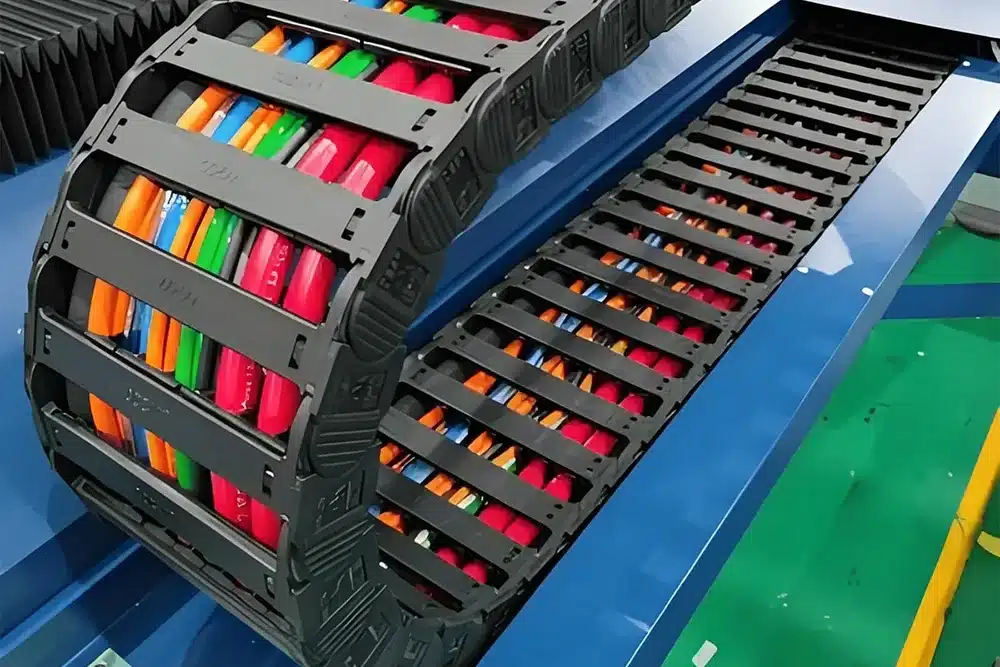
Static installations in fixed cabinets can use standard servo cables. Dynamic applications in drag chains or on moving axes require continuous-flex rated designs to withstand millions of cycles.
Bend Radius, Flex Life and Drag Chain Use
Check the cable’s specified minimum bend radius (often 5–15 times the outer diameter for continuous flex). For drag chain cable selection for CNC machines and machine tools, match this requirement to your drag chain dimensions and stroke length to prevent jacket cracking and conductor fatigue.
Torsion Requirements for Robotic and Rotary Axes
Robotic arms and rotary tables impose twisting forces. When comparing robotic cables versus drag chain cables, standard flex cables often fail in torsional applications—specify torsion-rated servo cables engineered for multi-axis movement with reinforced shielding and specialized stranding.

Step 4 – Consider Environmental and Regulatory Factors
Jacket and insulation materials must withstand your operating conditions.
Oil, Coolant, UV and Chemical Exposure
Servo cables for harsh industrial environments often use PUR or TPE jackets that excel in oil and coolant resistance common in machine tools while maintaining flexibility for drag chain use. Choose accordingly for food-grade or outdoor applications.
Temperature Range and Thermal Cycling
Match the cable’s temperature rating to both ambient conditions and heat generated during operation. Low-temperature flexibility is vital in cold environments; high-heat resistance prevents premature aging.
Certifications and Standards (UL, CSA, CE, RoHS, etc.)
Ensure the servo cable carries the required industrial cable certifications for global markets to streamline approvals and exports.
Step 5 – Build a Practical Servo Cable Selection Checklist
Use this checklist during design or procurement:
- Electrical fit: voltage, current, conductor size
- Shielding level matched to EMI environment
- Flex or torsion rating aligned with motion profile and bend radius
- Jacket material suitable for oils, chemicals, and temperature
- Required certifications and long-term scalability
Questions to Ask Suppliers and Drive/Motor OEMs
- What voltage and current ratings does this servo cable support under continuous operation?
- Which shielding configurations are recommended for my EMI conditions?
- Is this cable rated for continuous flex or torsion, and what is the minimum bend radius?
- What jacket options handle my specific chemical and temperature exposure?
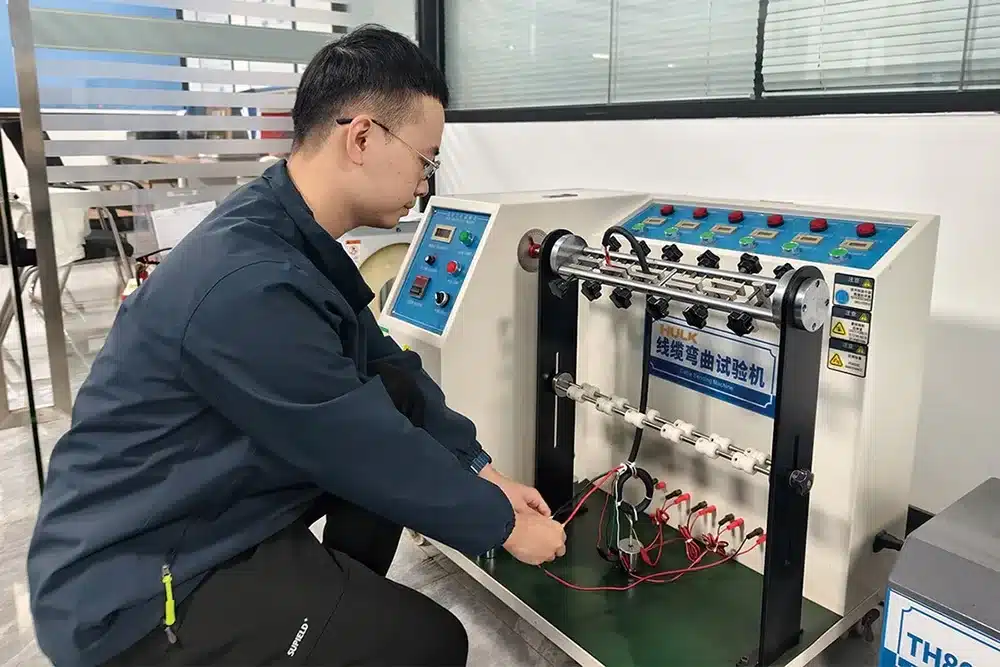
- Can you provide flex-life test data and full certification documentation?

Common Mistakes in Servo Cable Selection—and How to Avoid Them
Ignoring Motion Profile When Choosing Cables
Treating a high-cycle axis like a static run causes early jacket wear and conductor breakage. Always classify the motion type first.
Underestimating EMI and Shielding Needs
Inadequate shielding leads to intermittent faults and positioning errors. Proper hybrid shielding and routing resolve most issues.
Choosing on Price Alone Without Considering Lifetime Costs
Low-cost cables increase downtime and replacement frequency. Evaluate total cost of ownership for better long-term value.
Selecting the right servo cable based on voltage, shielding, and motion profile requirements ensures smoother operation, fewer faults, and extended service life in your automation systems. At Hulk Electric, our high-flex servo and motor cables are engineered precisely for these demanding industrial applications, with full customization and global certifications.
Share your drive specifications, motion profile, and environment details with our team, and we’ll recommend or custom-engineer the optimal solution for reliable performance.