Selecting the right servo motor cable requires understanding temperature, voltage, and current limits in servo motor cables as an interconnected system rather than isolated specifications. A cable that appears adequate on paper can overheat, degrade insulation or fail prematurely when real-world conditions such as peak currents, cable length, bundling or ambient heat exceed design assumptions. At Hulk Electric, we help OEMs and integrators specify custom servo motor cables that deliver reliable performance in demanding automation environments.
This guide explains the practical relationships between electrical loading, thermal management, and installation practices so engineers can prevent common causes of cable overheating and extend service life.
The Three Limits That Define Servo Motor Cable Life
Temperature, voltage and current limits interact directly with the application’s servo cable motion profile, environment and installation method. Evaluating them together helps avoid undersized conductors, excessive voltage drop and accelerated insulation aging.
Current Limit: Heat Starts in the Conductor
Current flow generates resistive heat according to the relationship P = I²R. Even modest increases in continuous or peak current can produce significant heating, especially in servo applications with frequent acceleration, high duty cycles, or regenerative braking.
Continuous current sets the steady-state thermal load, while peak currents during torque demands add short-term heat spikes. High duty cycles limit dissipation time between events. Conductor cross-section must therefore account for the full thermal reality of the axis, not just nameplate motor current.
Voltage Limit: Insulation Must Withstand More Than Nominal Supply Voltage
The voltage rating indicates the insulation’s ability to handle electrical stress. Servo drives produce fast-switching PWM outputs that create voltage spikes and reflected waves, particularly on longer cable runs. These effects stress insulation beyond nominal motor voltage.
Proper selection considers drive output characteristics, cable length, and manufacturer recommendations for filters or specific constructions to manage transients.
Temperature Limit: Ambient Temperature Is Only Part of the Story
A cable’s published temperature rating refers to the maximum conductor or insulation temperature under defined conditions. Actual conductor temperature equals ambient temperature plus load-induced rise and is influenced by grouping, ventilation, routing and nearby heat sources. These factors must be addressed through appropriate cable current derating.
High ambient temperatures shrink thermal margin, requiring derating to keep the cable within safe limits.

Why Servo Motor Cables Overheat in Real Machines
Overheating rarely stems from a single factor. It typically results from mismatched sizing, poor heat dissipation, or installation issues that compound electrical and mechanical stress.
Undersized Conductors and High Duty Cycles
Selecting cable based solely on nominal current overlooks repeated peaks in pick-and-place, CNC or indexing applications. To choose the right servo cable for your application, account for how heat can build faster than it dissipates in high-duty scenarios, even when average current appears acceptable.
Cable Bundling, Drag Chains and Poor Heat Dissipation
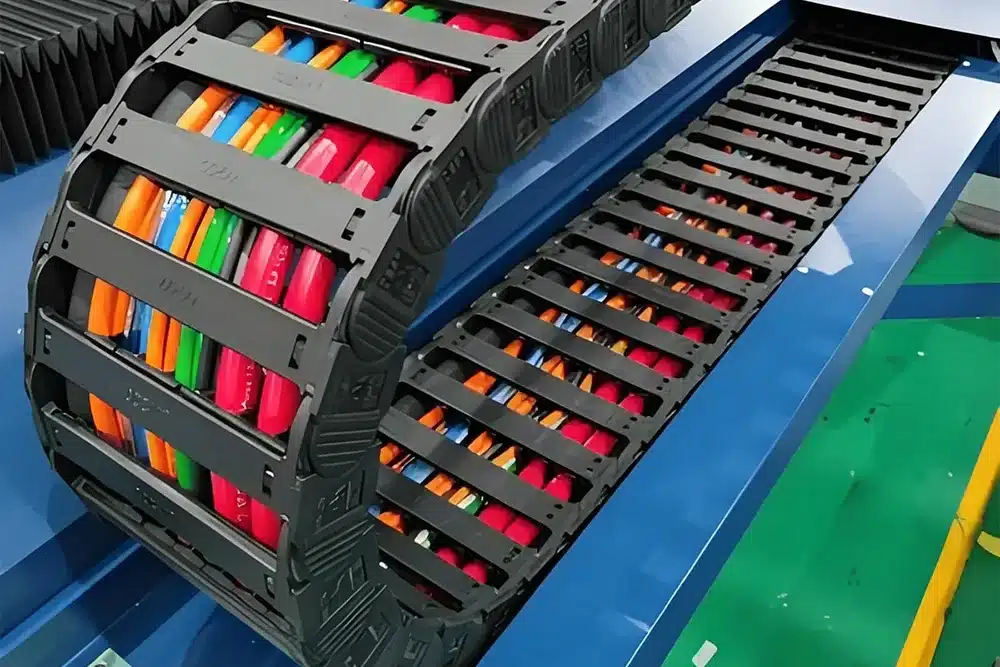
Bundled cables in trays, conduits or enclosed drag chains trap heat. Limited airflow around VFDs, ovens or densely packed cabinets accelerates temperature rise. Proper drag chain cable selection for CNC machines must account for grouping and the required derating.
Poor Terminations and Localized Hot Spots
Loose crimps, improper torque, corroded contacts or nicked strands create high-resistance points. Correct work with servo motor OEM pinouts and connectors helps prevent localized heating that may appear as discolored insulation or tripped drives, often independently of the cable run itself.

Current Rating and Conductor Sizing for Servo Motor Cables
Effective sizing balances continuous/peak demands, voltage drop, and system conditions without relying on generic tables.
Start With Continuous Current, Then Check Peak Demand
Begin with motor documentation for continuous and peak currents, map the actual duty cycle, select preliminary conductor size, then derate for ambient, grouping, and motion. Verify with suppliers for demanding applications.
Voltage Drop Matters on Long Servo Cable Runs
Longer runs increase resistance and voltage drop (V_drop = I × R_loop), reducing torque and generating extra heat. Larger cross-sections or shorter runs help maintain performance.
Copper Size Is Not the Only Variable
Consider stranding for flexibility, insulation/jacket materials for the environment, shielding, and dynamic ratings. Hulk’s servo cables are engineered for torsion, flex life, and harsh conditions common in robotics and machine tools.

Temperature Rating, Insulation Materials and Thermal Aging
Material choice determines how well the cable tolerates sustained or cyclic heat.
What a Cable Temperature Rating Really Means
Temperature ratings in custom cables define safe maximums under test conditions. Operating near the limit reduces margin for overloads or poor ventilation, so match the insulation class to expected conductor temperatures.
Heat Accelerates Insulation Aging
Elevated temperatures cause insulation to harden, lose flexibility, and experience reduced dielectric strength over time. Proper sizing and derating preserve mechanical and electrical integrity.
Choosing Jacket and Insulation Materials for the Environment
Options such as PVC, PUR, TPE or high-temperature silicone suit different oil-resistance, abrasion, flexibility and thermal-performance requirements. Proper cable jacket and insulation material selection helps ensure servo motor cables are suitable for automation, robotics and high-flex applications.
Voltage Stress, Servo Drives and Cable Length
Servo systems involve pulsed power, making cable selection part of the full drive-motor-cable ecosystem.
Why Nominal Voltage Is Not the Whole Design Check
Servo cables in VFD and inverter-driven systems must address switching transients and reflected waves on long runs with insulation and construction capable of handling peak stresses beyond steady-state voltage.
Drive Manufacturer Guidance Comes First
Follow the drive OEM’s recommendations for maximum length, shielding, grounding, and any required filters or reactors to ensure compatibility and longevity.

Installation Practices That Prevent Cable Overheating
Thoughtful routing and terminations significantly improve thermal and mechanical reliability.
Apply Derating Before Installation
Account for higher ambients, bundling, drag chains, or enclosures by reducing allowable current from published ratings. Document decisions for future reference.
Respect Bend Radius and Dynamic Motion Requirements
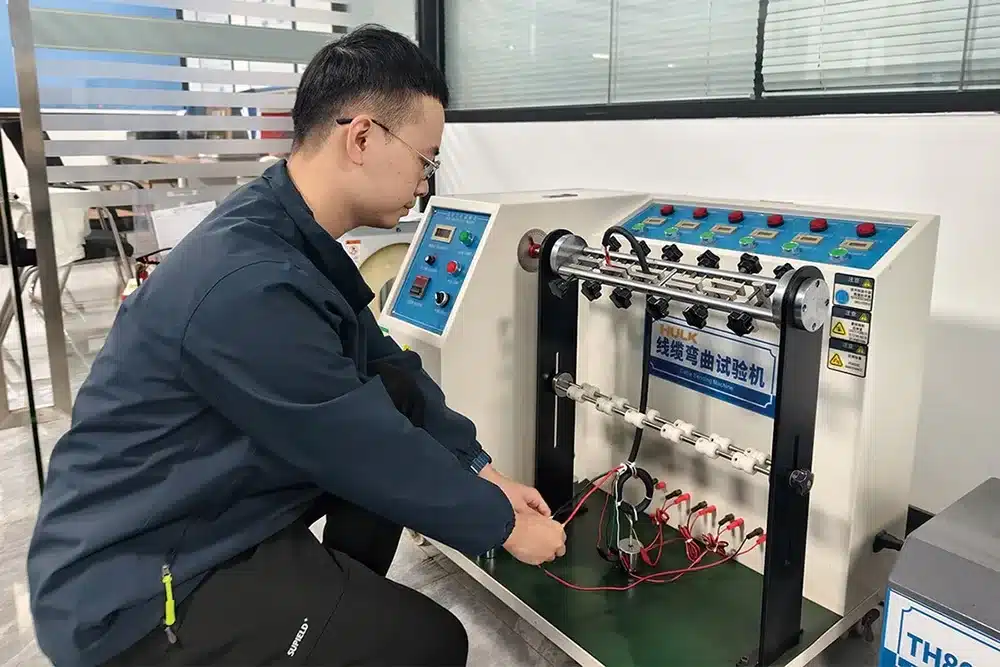
Exceeding minimum bend radii or torsion limits damages strands and insulation, increasing resistance and failure risk. Use cables rated for the specific flex cycles and routing, then follow drag chain cable installation practices to protect their service life.
Build Reliable Terminations
Match terminals to conductor class, use proper tools and torque, protect shields, and provide strain relief. Regular inspection prevents hot spots.

Maintenance Warning Signs and Troubleshooting Steps
Early detection prevents unplanned downtime.
Warning Signs of Thermal Stress
Look for sheath discoloration, hardening, cracking, hot spots at connections, unusual odors, or recurring drive faults.
A Safe Diagnostic Sequence
Lock out equipment, review currents and profiles, inspect routing and terminations, use thermal imaging safely, and test insulation resistance according to guidelines. Follow a systematic approach to diagnosing common servo cable failures and address root causes rather than replacing cables identically.
Practical Checklist for Servo Cable Temperature, Voltage and Current Selection
Use this framework when specifying or reviewing servo motor cables:
- What are the continuous, peak currents, and actual duty cycle?
- Has voltage drop been calculated for the full cable length?
- Does the voltage class and construction match drive requirements and transients?
- What is the maximum ambient temperature along the route?
- Are cables bundled, in drag chains, or near heat sources—have deratings been applied?
- Are insulation, jacket, shielding, and flex ratings suitable for the mechanical and environmental demands?
- Have terminations, grounding, and strain relief been fully specified?
- Has the complete drive-motor-cable combination been validated with OEM guidance?
At Hulk Electric (Dongguan) Co., Ltd., our servo and motor cables are built for high-flex, high-reliability applications with appropriate conductor sizing, shielding and materials. Share your motion profile, environmental conditions and drive details, and our custom servo cable design team will select or develop solutions that avoid overheating and support long-term performance across global automation projects.