If an engineer asks if they can just use a regular motor cable on a servo motor, the answer is often not so simple. Cable types can provide three phase power from drive to motor, however custom servo motor cables have been designed for closed loop precision and standard motor cables were designed for simple power transmission. This difference is evident in the machine’s shielding strategy, feedback-integration and long-term electromagnetical behaviour, which directly affect positioning accuracy and machine uptime.
This guide explores the differences between the two types of cable, and how these differences can be turned into real-world situations for OEM machine builders, panel builders and maintenance staff on CNC machines, robotics and high-speed packaging lines.
The Core Functional Difference Between Servo and Standard Motor Cables
There are standard motor cables available for the purpose of transmitting power. The servo motor cable is for a very close-coupled control loop.
What Is a Standard Motor Cable Designed For?
A standard motor cable usually consists of three live conductors and a protective earth (sometimes an additional control conductor). It is suitable for handling the current and the voltage of the induction motors or for a basic speed or torque control in a simple servo application. Protecting low voltage feedback signals is generally not the purpose of shielding when it is present, and it is typically lighter in weight and used for general EMC compliance.
These cables are very effective on pumping, fan, conveyor and many material handling type axes where micron level positioning is not necessary and if required, the feedback is via a completely separate cable.
What Makes a Servo Motor Cable Different by Design?
Servo motor cables are designed for a closed-loop system. To understand servo power, feedback, encoder, and brake cable types, note that most constructions include three power cores and one or more shielded twisted pairs for encoder, resolver, brake, or temperature signals. Others allow feedback to be kept in a separate cable matched with the other cables, and the power cable is still optimized to minimize interference.
The internal geometry (pair lay lengths, stranding consistency, and multiple shielding layers) is selected for the ability to maintain signal integrity in the presence of high frequency PWM noise from the drive in the same jacket or in the nearby raceway.
Design Differences: Conductors, Feedback Pairs, and Shielding
The difference between servo cable and motor cable is revealed when you slice open the jacket.

Power Cores and Feedback Cores
Normal power cables end at power delivery. Servo cables incorporate feedback elements (integrated pairs or coordinated separate cable). The additional cores contain exact position information that the drive requires to close the loop. Deliberate engineering is necessary to preserve servo feedback signal integrity by ensuring consistent impedance and preventing noise on the power conductors from affecting sensitive feedback pairs, which motor cables do not always achieve.
Shielding and EMC Behavior
Servo motor cables will almost always be surrounded by an overall braid or foil shield, and are often also individually wrapped around each pair of feedback wires. These braid, foil, and hybrid shielding options create a layered design that contains drive noise and shields low-power signals from external noise.
Most of the common motor cables are unshielded or partially shielded. That construction is good enough for the simple induction motors in clean environments. The same cable can radiate and conduct noise, which can then manifest as encoder jitter or drive trips for which no cause can be determined.
Color Coding and Standards (DESINA and Beyond)
Pastingel orange jackets are for servo cables and black for motor cables, according to DESINA guidelines. The colour assists the technician to locate function easily when installing and troubleshooting. Color is not a guarantee of electrical performance, but it indicates its intended use and helps to document the performance across large machines.
Performance Impact: When the Cable Choice Actually Changes Machine Behavior
When the wrong cable is used, it is not likely to cause instant catastrophic failure. Rather, it causes occasional issues that are hard and costly to track down.
Positioning Accuracy and Feedback Stability
Lack of proper shielding or improper pair geometry allows noise to penetrate to encoder or resolver signals. For more detail on servo cable quality, positioning accuracy, and feedback stability, consider that a CNC axis may show surface-finish problems or lost steps during high-speed moves. It can introduce small errors in cumulative positioning on a robot joint, which may only be noticed after extended production runs. These effects are worse with longer cable lengths due to increased attenuation and noise pickup with distance.
Drive Reliability, Nuisance Trips, and EMC Compliance
Drives continuously get feedback. If noise interferes with the signal, then the drive will most likely stop driving believing there is a fault. Engineers then spend hours checking motors, parameters, and mechanics before finding that the cable was the cause. In facilities with strict EMC requirements, high-EMI servo cable shielding and grounding practices help prevent an under-shielded servo run from contributing to radiated or conducted emissions to nearby systems and delaying machine certification.
Where a Standard Motor Cable May Still Be Enough—and Where It Isn’t
Engineers require definite guidelines instead of general rules.
Acceptable Use Cases for Standard Motor Cables
The following motor cables are still suitable for:
- Small induction motors that are part of a pump, fan or simple conveyor, with no embedded sensing device.
- Well-shielded dedicated feedback cable away from power for servo motors.
- Typical motor cable construction is acceptable in short runs when the drive manufacturer’s manual states it is acceptable for low EMI environment.
In such cases, however, many teams still require shielded motor cable to meet overall machine EMC requirements.
Scenarios Where You Should Not Cut Corners
In most cases, cable construction in CNC machines, collaborative robots and synchronized packaging equipment are referred to as servo-grade. There are a number of factors that increase the risk of long cable runs, high carrier frequencies and cabinets with sensitive analog I/O or fieldbus lines. It is often one of the quickest ways to increase reliability if a machine has already experienced drive faults or communication issues with the motor which have not been explained.
Design and Selection Checklist: Servo Motor Cable or Standard Motor Cable?
Prior to ordering what’s available, ask these questions:
- Is closed loop position control required or just speed/torque control?
- Does the feedback signal go through a separate shielded cable or through the power cable?
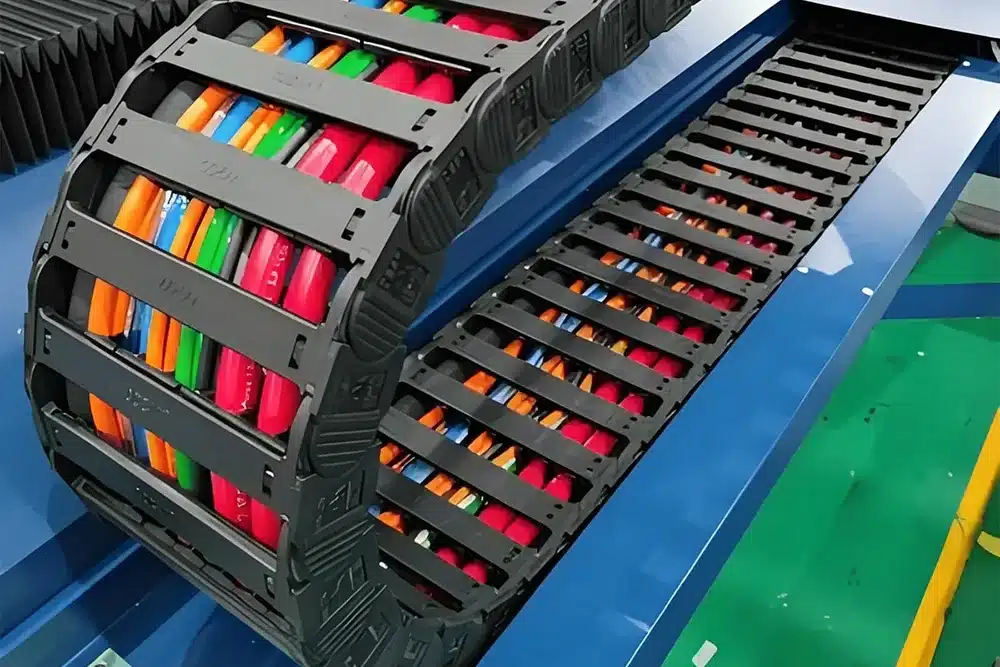
- What is the length of the cable and its routing (cable track, fixed conduit, high flex)?
- Are there any servo motor cable datasheet parameters or requirements from the drive or machine builder for specific shielding, impedance, or pair geometry?
- Does the final machine have to meet EMC testing requirements or customer audits?
The answers will be documented to avoid unnecessary changes towards the end of the build and to provide a purchasing team with a target.
Cost, Risk, and Lifecycle Perspective
Servo motor cables are typically more expensive for the meter compared to motor cables. The premium is due to the extra conductors, more complex shielding, and tighter process control during the manufacturing process.
Upfront Savings vs Long-Term Troubleshooting
The lower-priced cable might seem like a good choice for a bill of materials. However, a day of unplanned downtime or a few days of engineering effort spent chasing intermittent encoder noise can wipe out that saving. A total cost of ownership for industrial cables perspective favors correct specification during machine design, especially when multiple shifts are used.
When to Involve a Cable Manufacturer or Motion Specialist
When implementing a retrofit with older drives replaced by newer servo systems, or when installing new machine platforms with multiple servo axes, involving custom cable design services early is highly beneficial. A knowledgeable supplier can suggest constructions that optimize electrical performance, mechanical strength, and lead time without over-specifying every axis.
Engineering and manufacturing both servo motor cables and standard motor cables at Hulk Electric (Dongguan) Co., Ltd., follow the same high standards. Our servo cables ensure clean feedback signals and good EMI performance, while our standard motor cables provide reliable power in situations where it is the appropriate technical solution. We collaborate directly with OEMs and panel builders to provide custom industrial cable solutions that ensure each machine’s positioning accuracy and uptime remain consistent from the first day of production by matching cable construction to actual operating conditions.