Single-cable servo drive architectures combine motor power, feedback signals, and often brake or temperature sensing into one hybrid cable. This approach streamlines wiring in modern automation systems, cutting down on components and complexity while demanding careful attention to cable engineering for reliable performance.
Engineers evaluating platforms for CNC machines, robotics, or packaging lines frequently weigh these single-cable solutions—also known as One Cable Technology (OCT) or hybrid servo setups—against traditional two-cable systems. This guide breaks down how they work, their real-world advantages and limitations, and the specific cable design factors that determine long-term success.
What Is a Single-Cable Servo Drive Architecture?
A single-cable servo drive architecture integrates power delivery and digital feedback (plus auxiliary signals) within a single custom hybrid servo cable running between the servo drive and motor. Instead of separate power and encoder cables, everything travels together through one optimized line.
From Two Cables to One: How Architectures Evolved
Traditional servo setups use one cable for three-phase power (with protective earth) and a second dedicated cable for servo power, feedback, encoder, and brake cables, including encoder/resolver feedback, brake control, and thermal sensors. Digital interfaces like HIPERFACE DSL, EnDat, or proprietary protocols changed this by embedding high-speed feedback data into the motor cable using specialized conductors.
These hybrid designs emerged as part of integrated drive-motor ecosystems from manufacturers like Beckhoff, KEB, and others, rather than simple wire bundling. The result is a purpose-built “single motor cable” tailored for combined duties.
Typical Contents of a Single Motor Cable
A quality hybrid servo cable typically includes:
- Appropriately sized power conductors for the motor’s voltage and current.
- Dedicated pairs or wires for digital feedback signals.
- Brake and temperature sensor conductors where required.
- Advanced shielding layers, often using braided, foil, or hybrid shielding, plus symmetrical stranding for noise control.
The cable maintains controlled impedance to support reliable data transmission over distance without excessive attenuation or reflections.

Pros of Single-Cable Servo Drive Architectures
Single-cable solutions deliver measurable gains in many modern machine designs, particularly where space, installation speed, and simplicity matter.
Reduced System Cost and Component Count
Fewer cables and connectors translate directly to lower BOM costs, reduced inventory SKUs, and simpler panel assembly. Machine builders stock and manage just one cable type per axis instead of multiples, shortening lead times and cutting overall material and labor expenses.
Smaller Footprint and More Compact Machines
Narrower cable trays, smaller drag chains, and reduced cabinet penetrations free up valuable real estate. This proves especially valuable in dense multi-axis CNCs or compact robotic cells where every millimeter counts; see our guidance on servo cables for compact machines for routing and EMC considerations.
Faster Installation, Commissioning and Troubleshooting
With half the terminations and routing paths, installers spend less time dressing cables and verifying connections. The integrated design also lowers the chance of mixing up separate encoder cables, speeding up commissioning and simplifying field service.

Cons and Limitations of Single-Cable Architectures
Despite the benefits, single-cable setups are not ideal for every application. Understanding the trade-offs prevents costly mismatches.
Platform and Interface Dependence
These architectures require compatible drives, motors, and feedback interfaces (such as HIPERFACE DSL). Legacy systems with analog encoders or unsupported protocols often cannot adopt single-cable without hardware upgrades, limiting retrofit flexibility.

Cable Design Complexity and EMC Sensitivity
Combining power and sensitive data signals in one jacket raises the bar for shielding strategies and grounding best practices as well as impedance control. Substandard cables can introduce noise, reflections, or EMI issues that prove harder to isolate than in separated systems.
Replacement and Failure Impact
A single cable failure disables both power and feedback, potentially halting an axis until a correct replacement arrives. This increases the importance of proper spares strategy and high-reliability cable selection.
Cable Design Considerations for Single-Cable Servo Architectures
Success hinges on selecting or specifying cables engineered specifically for hybrid duty rather than adapting standard motor cables.
Shielding, EMC and Double EMC Protection
High-quality single motor cables employ double shielding—typically a combination of braided copper and aluminum-laminated foil—to contain power noise and protect feedback signals. Symmetrical designs further reduce inductive coupling.
Impedance Control, Attenuation and Reflections
Controlled characteristic impedance prevents signal reflections that corrupt digital feedback. Cables must maintain performance over the full expected run length, making vendor-approved hybrid designs essential for long-distance applications.
Connectors, Shield Terminations and Motor Interfaces
Motors and drives use specialized multi-contact connectors supporting both power and signal pins. Proper 360° shield termination at both ends ensures EMC integrity and mechanical security.
Flexibility, Drag-Chain and Torsion Ratings
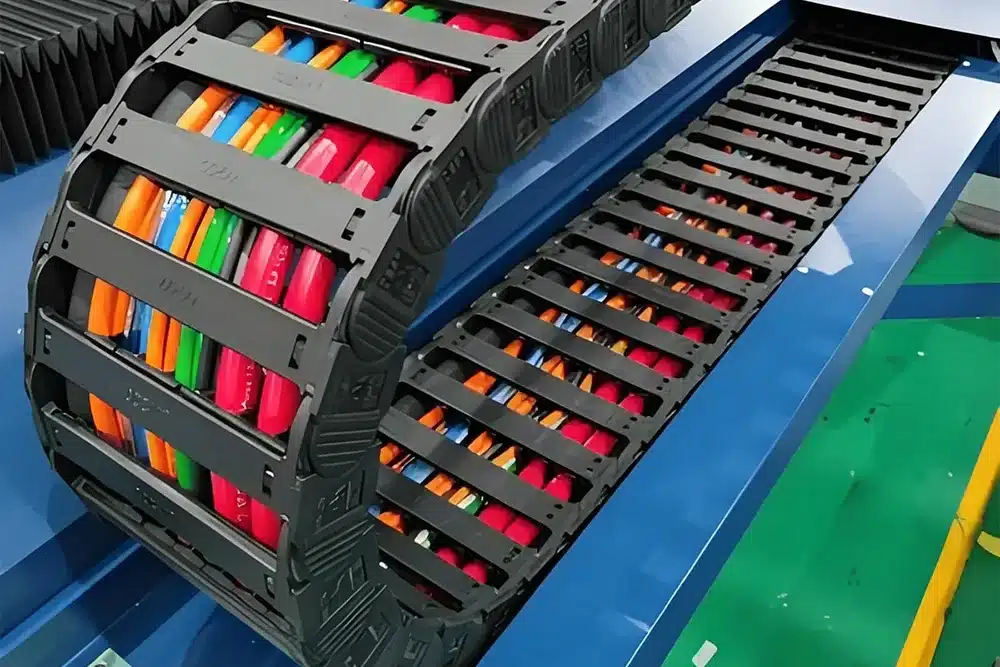
Dynamic applications demand servo cables for static, continuous-flex, and torsional motion with appropriate bend radii and jacket materials. Static-rated cables will fail prematurely in cable carriers or robot dress packs.

Application Scenarios: When Single-Cable Servo Architectures Make Sense
Single-cable solutions shine in specific contexts where their strengths align with project goals. For application-specific engineering support, explore Hulk’s drive technology cable solutions.
Multi-Axis CNC Machines and Compact Control Cabinets
Dense wiring in CNCs benefits enormously from halved cable counts, enabling smaller cabinets and easier routing while reducing mis-wiring risks.
Distributed Servo Systems and Long Cable Runs
Decentralized or spread-out axes gain from simplified long-distance runs, provided impedance and shielding meet the demands of extended lengths.
Robotics and Moving Axes with Tight Cable Management
Robot arms and gantries see lighter dress packs, fewer snag points, and improved lifetime when using torsion-capable hybrid cables. For these demanding dynamic installations, see Hulk’s robotics cable solutions.
Situations Where Two-Cable Architectures May Still Be Preferable
Traditional separate power and feedback cables vs hybrid servo cables should be evaluated carefully for legacy equipment, extreme EMC environments requiring physical separation, or safety-critical systems needing independent signal paths. Avoid forcing single-cable where platform support or application constraints don’t align.
Practical Selection and Design Checklist for Single-Cable Servo Drives
Use this checklist during platform evaluation:
- Confirm drive, motor, and feedback interface compatibility (e.g., HIPERFACE DSL support).
- Assess maximum cable length, EMC environment, and motion requirements.
- Verify availability of qualified hybrid cables with proper shielding, impedance, flex/torsion ratings, and connectors.
- Evaluate impacts on cabinet layout, spares inventory, and maintenance procedures.
- Plan trials with actual cables in representative conditions before full commitment.
Choosing the right approach—single-cable or traditional—ultimately depends on balancing machine requirements, total cost of ownership, and long-term reliability. At Hulk Electric, we engineer high-flex hybrid servo cables and single motor cables tailored to these demanding architectures, with robust shielding, precise impedance control, and UL/CE certifications for global automation projects. Share your servo drive specifications, and our custom cable design services team will recommend or custom-develop the optimal cable solution for your application.