In new machine designs, the selection of either separate power and feedback cables, or hybrid servo cables is one of the primary choices in designing. The choice affects the type of drive and motor, the cabinet design, the dimensions of the cable carrier, connector density, EMC performance, installation work and long-term serviceability. Usually a two-cable architecture is employed which provides one cable shielded for motor power and another for an encoder or resolver feedback. If the motor, drive and feedback protocol are compatible, hybrid servo cables, or one-cable systems, combine the power conductors and digital feedback into a single assembly. Neither is the best solution for everyone — the architecture selection depends on your particular servo platform, motion needs and machine limitations.
Understand the Two Servo Cable Architectures
Before choosing the machine layout, engineers will need to consider the electrical and mechanical differences between these methods.
Separate Motor Power and Feedback Cables
In many OEM designs, the traditional two-cable setup is still in use. It usually includes a unique shielded motor power cable which carries the high current switched energy from the servo drive to the motor, and a separate feedback cable, which returns the position, speed, commutation and sometimes the motor temperature information to the controller.
This separation is related to historical management of electrical noise. The power cables must be capable of passing large currents and voltage surges, whereas feedback signals must carry much smaller currents and are subject to high demands for integrity in order to ensure precise motion control. Distinct cables and routing paths help minimize crosstalk and simplify diagnostics.
Hybrid Servo Cables and One-Cable Technology
Hybrid servo cables are cables that consist of motor power, digital (feedback) communication and sometimes also brake or temperature conductors in one jacket. One Cable Technology (OCT) or Hiperface DSL technologies introduce this through specially adapted digital interfaces, which enable the transmission of feedback data in a purpose-designed cable in parallel with the power conductors.
These are not “home-made” multi-core cables. They need engineered conductor arrangements, tight tolerance on shielding layers, twisted pair geometry for signal integrity (where required), controlled impedance (where required) and complete qualification into the targeted drive-motor ecosystem.

Why Separate Cables Remain a Strong Choice in Many Designs
For many new machine projects the tried and tested two-cable method remains very relevant, particularly in cases of flexibility and risk mitigation.
Broad Motor, Drive and Feedback Compatibility
Different cables are used for more motors, drives, resolvers, analog feedback devices and combinations of multi-vendor. This is helpful when you are designing with components from different ecosystems, or when you are working with legacy components that don’t support hybrid by default.
Clearer EMC Separation
Placing high-power conductors away from sensitive feedback conductors will limit noise coupling. This configuration is well suited to environments where multiple vendors or systems are involved, or where noise is a problem in the long cable runs.
Independent Service and Replacement
Technicians may be able to replace a broken feedback cable without affecting the power connection which would keep downtime to a minimum. This complicates the number of SKUs to manage, but does give clearer boundaries for troubleshooting and more modular spares strategies.

Where Hybrid Servo Cables Add Value in New Machines
Hybrid designs offer significant optimisation in compact and/or high density systems under specific conditions.
Compact Machines and Narrow Cable Carriers
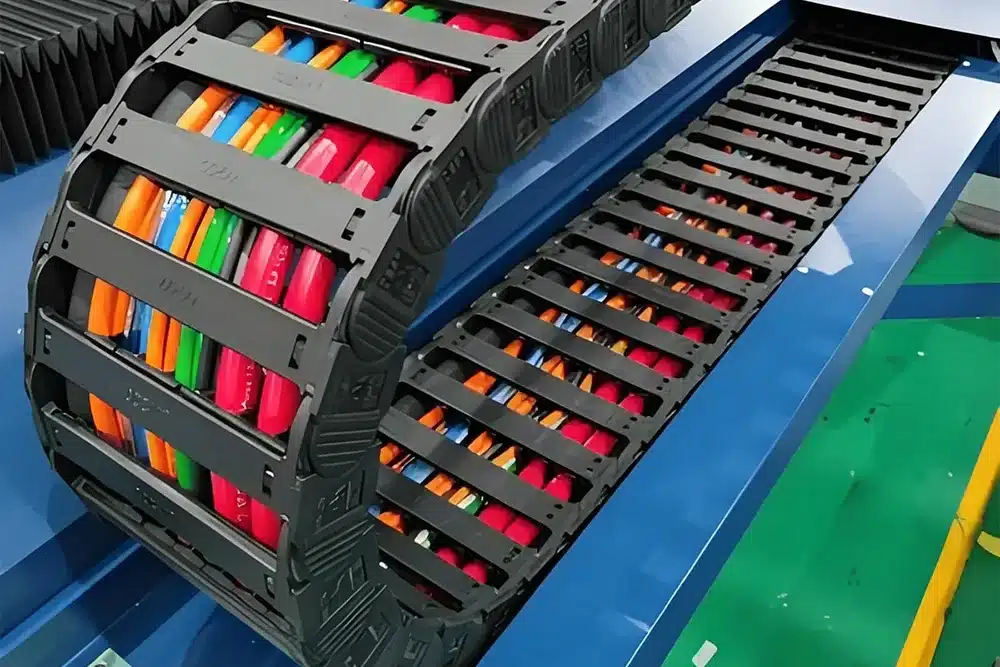
A single hybrid cable requires fewer carriers than two cables. The benefit is particularly evident in environments where space is at a premium, like on compact CNC machines, packaging lines, lab automation, and tight multi-axis robotic cells, for instance, where every millimeter matters.
Fewer Connectors and Faster Installation
One cable architectures reduce connectors, terminations, cable pulls and possible wiring mistakes. This may shorten the assembly and commissioning time and reduce the number of connectors at the motor and drive ends.
Better Fit for Supported Digital Feedback Ecosystems
When all the components in the motor, drive and cable, and connector are optimized together, platforms with native digital interface support (e.g., Hiperface DSL or OCT) perform at their best. A shared assembly provides reliable feedback in these systems.

EMC and Signal Integrity: The Main Engineering Question for Hybrid Cables
Functional integration requires higher demands on the construction of the cables and the design of the system.
Why Standard Motor Cables Are Not Suitable Substitutes
A standard motor cable won’t be able to provide the required signal pairs, shielding and impedance control for a successful hybrid system. Cables used exclusively for the servo platform will perform better than unqualified cables.
Shielding, Pair Design and Connector Continuity
Good hybrid cables include overall shield, isolated or protected feedback elements, stable twisted pairs, and continuous shield (through connectors and glands). Always terminate and ground according to drive and motor manufacturer’s instructions.
Validate at the Complete-Machine Level
Testing the entire system, not only based on individual component ratings, but also on the actual operating condition, cable length, and layout is the final step necessary for EMC compliance.

Dynamic Motion, Bend Radius and Maintenance Trade-Offs
The architecture decision is heavily based on motion profiles.
Cable Carrier and Robot Motion Requirements
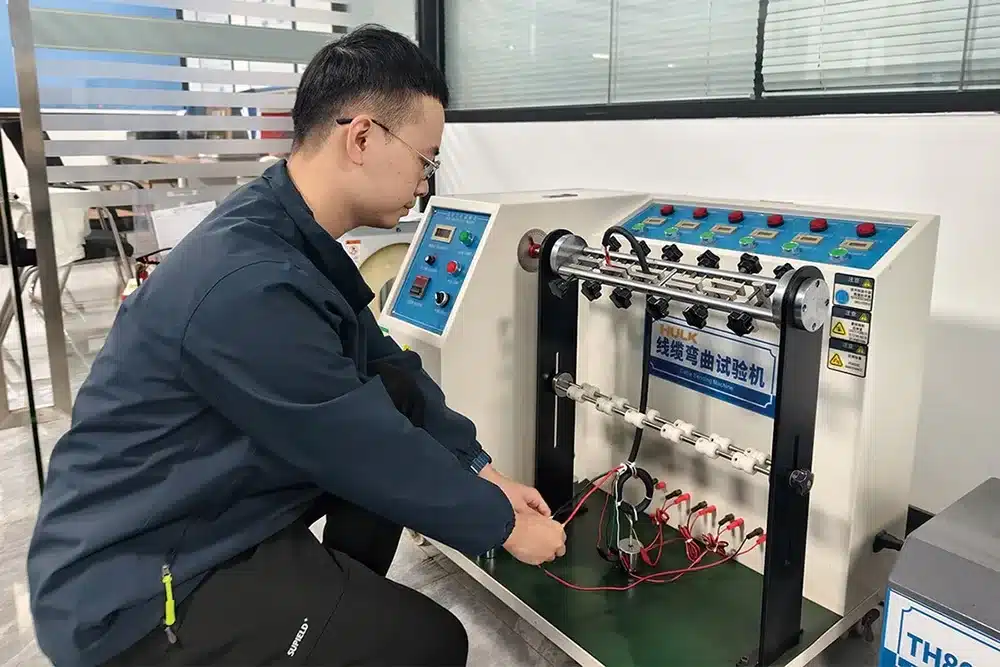
Check outer diameter, minimum bend radius, travel distance, speed, acceleration, torsion angles and environmental exposures (oil, coolant, temperature, abrasion). The same applies for hybrid cables as for separate cables – they must have the same dynamic rating as the application.
Failure Consequences and Service Strategy
Remember that one hybrid cable failure can impact both power and feedback, so ensure the routing is accessible, connectors are of high quality, strain relief, and spare assemblies. The impact is reduced by good planning.
Connector and Assembly Quality Matter More Than Ever
The fewer the connection points the less the complexity, but each one of the hybrid connectors has several functions. Built solutions, correct pinout, sealing and bend relief ensure reliability.

Cost Comparison: Look Beyond Cable Purchase Price
Focus on total installed cost and lifecycle value.
Where Hybrid Systems Can Reduce Total Installed Cost
The cable runs, the connectors, the labor, the carrier size and the amount of time it takes to get it up and running are often reduced areas of savings.Cable runs, connectors, labor, carriers smaller, and commissioning times faster are often areas that will save you money.
Where Separate Cables May Deliver Better Lifecycle Value
When vendor flexibility or independent replacement or conservative EMC practices can offer more long-term value than installation efficiency, separate architectures are the best choice.
Decision Checklist for New Machine Designs
Take these questions to your design reviews and discussions with your cable supplier:
- Does the chosen motor/drive platform come in hybrid or one cable?
- What would be the feedback protocol and what geometry, shielding, impedance, connectors etc are required for the cable?
- Does space for cables, machines or cabinets really matter?
- What are the current, voltage, brake, temperature sensor, safety circuit requirements of electricity?
- What are the motion profile parameters (Length, Bend radius, Speed, Cycles, Torsion)?
- What will be the management of EMC throughout the entire machine?
- Are the size of the hybrid cable and its routing and connectors compatible?
- What is the process for accessing services, inspecting services and replacing them?
- Which of the spares and tools should be kept?
- Is there a need for wide vendor flexibility or locked in system design?
- What qualifications and regional standards do they need to comply with?
Hulk Electric provides OEM teams with high flex separate power and feedback cables, and compatible hybrid of servo cable, to support both applications. Tell us the number of axes, motion profile, type of drive platform, and environmental conditions of your machine, and our engineers will help you determine the architecture best suited to your new machine, balancing performance, reliability and price.