In the realm of industrial automation, the choice between off-the-shelf cables and custom-cables can make all the difference between a reliable, long-lasting system and frequent failures and maintenance problems. Many projects begin with standard catalog items to get up and running quickly and without a hefty up-front price tag, but applications with continuous flex, harsh environments or complicated signal applications often call for custom-designed items to ensure reliable performance and compliance. This guide provides OEM designers, system integrators, plant engineers and procurement teams with practical criteria for comparing each on the basis of actual project requirements.
What Off‑the‑Shelf Cables Offer—and Where They Work Best
These are available from the manufacturer catalogs and have the same specifications, certifications and availability as other off-the-shelf cables. They are suitable for simple installations where the needs are close to the industry standards.
Advantages of Standard Catalog Cables
These cables offer instant access, fixed prices, and field-tested performance in thousands of similar applications. Many have broad UL, CE or other certifications, and documentation is readily available. This eliminates engineering and sampling delays for teams with tight timelines.
Typical Use Cases Where Standard is Enough
For fixed control cabinet wiring, short sensor runs in controlled indoor environments, or replacement parts in mature machines with light duty cycles, standard cables are suitable. The other advantage of catalog products is with simple Ethernet connections in low-EMI environments or simple power distribution in non-motion configurations, while ensuring that you do not exceed the cable’s bend radius and temperature limits.

What Custom Cables Provide—and When They Become Necessary
Unlike standard designs, custom cables are designed to meet specific mechanical, electrical and environmental requirements. They are necessary when catalog products can’t withstand the various stresses of the application alone and still achieve the required length of life or performance.
Solving Motion and Routing Challenges (Drag Chains, Robots, Tight Spaces)
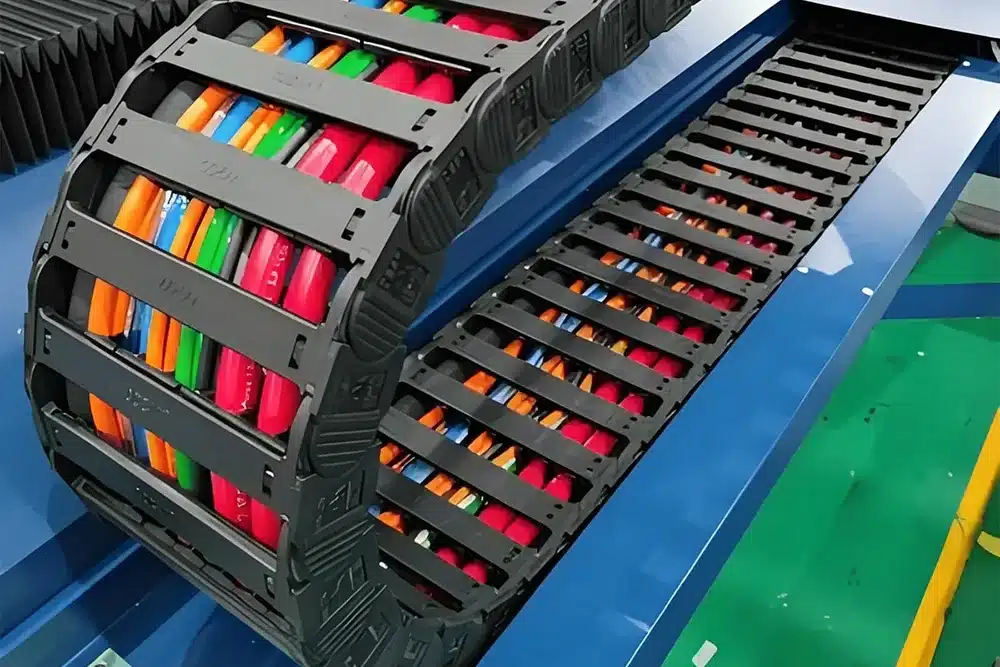
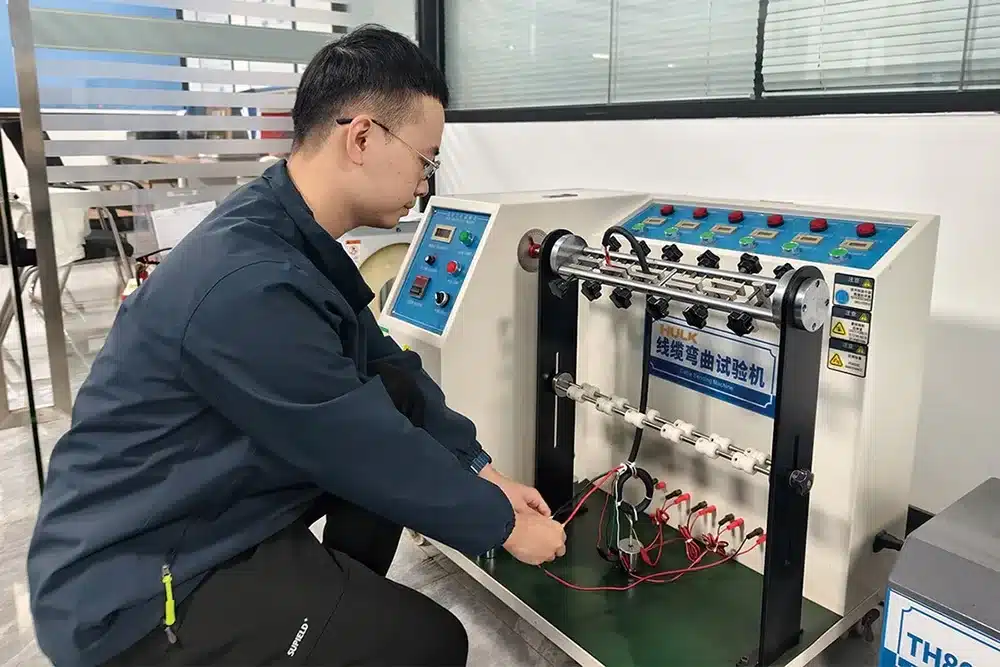
Typically, high-cycle drag chains, multi-axis robotic arms and rotating platforms require a higher flex life than standard flexible cables. Custom designs maximize conductor stranding, core lay and jacket compound for millions of cycles; with respect of tight bend radii. In one CNC application we supported, normal cables were replaced after 6 months of continuous use, while a custom torsion rated cable performed over 5 million cycles with little wear.
Handling Harsh Environments and EMI‑Sensitive Signals
Special jackets, insulation and shielding is required when subjected to oil, chemicals, extreme temperatures, washdown processes, or high electromagnetic interference from servo drives. Off-the-shelf cables may introduce noise or early degradation to the signal in the case of encoders, fieldbus, or high-speed Ethernet.
Integrating Multiple Functions into a Single Cable
Hybrid cables, with power, feedback, data and control cores in a single jacket, are often the preferred choice for complex servo or robot systems. This helps lower down the number of connectors, the routing path and helps to make the system more reliable than multiple standard cables bundled together.
Key Decision Factors: How to Evaluate Your Project Against Each Option
Systematic evaluation helps avoid both over-specifying (unnecessary cost) and under-specifying (early failures).
Project Scope, Lifetime, and Criticality
Off-the-shelf cables may be adequate for short-run prototypes or for auxiliary equipment that is not critical. Custom investment is warranted for optimized durability of production-critical lines that have high downtime costs or lines that are anticipated to operate for 10+ years.
Mechanical Motion Profile (Static vs Flex vs Torsion)
Mostly static installations can use standard cables. A moderate level of flexibility will benefit from catalog “flex-rated” options. Custom continuous-flex designs that are optimized to your specific travel distance, speed, and acceleration requirements work best for continuous high-cycle motion or torsion robots and drag chains.
Environmental and Compliance Requirements
Strict market certifications or harsh conditions (oil exposure, food-grade washdown or high heat up to 200°C for silicone variants) limit catalog options. If none of the standard products meets all of the parameters, then there is no need to compromise; custom engineering guarantees complete compliance.
EMI, Signal Integrity, and Data Rates
For Servo feedback, vision systems or PROFINET/EtherCAT, the impedance control and the shielding effectiveness is crucial. Compare catalog datasheets with noise environment — often custom geometry and shielding configurations are required here.

Cost, Lead Time, and Total Cost of Ownership
Cables that are priced upfront are better suited for catalog cables, but total cost of ownership can point to a different decision over the product lifetime.
Comparing Upfront Cost and Lead Time
Standard cables win on price and availability — often same day or next week. Custom projects require an engineering discussion, sampling (usually 7-15 days) and a lead time for production, though many manufacturers have done their best to keep this to a minimum for repeat customers.
Evaluating Downtime, Maintenance, and Replacement Costs
One cable in a robotic cell can cause a complete line stop. A greater total ownership cost is achieved using the custom solutions that are designed specifically for your motion and environment profile, which dramatically reduce the need for replacement and unplanned stops even if the cost of the unit is higher.
Volume, Standardization, and Long‑Term Supply Strategy
One-off or low volume machines are more likely to use catalog selections. OEMs that build series production can benefit from custom designs as their internal standard, which can make procurement easier, lower part numbers and maintain consistency between machines.
Practical Decision Framework: A Checklist for Engineers and Buyers
Use this checklist to get a clear recommendation for your project:
- Does the cable move mostly in a static position, occasionally flex or move in a constantly high cycle of motion/torsion? Static/mild flex: catalog will most likely suffice, high cycle: custom recommended.
- Are there any actual exposures to the environment (oils, chemicals, washdown, temperature swings, and UV)? (Extreme/Combined exposures = custom.)
- Are there space constraints where the cable has to perform more than one function (power + signal + data)? (Yes → custom hyb will probably be better.)
- Are there special compliance or signal integrity requirements that are not covered in catalog datasheets? (Yes → engage custom supplier.)
- What is the average life of the machines and what is the cost of downtime in terms of one hour? (High → reliability over initial price)
When to Talk to a Custom Cable Manufacturer
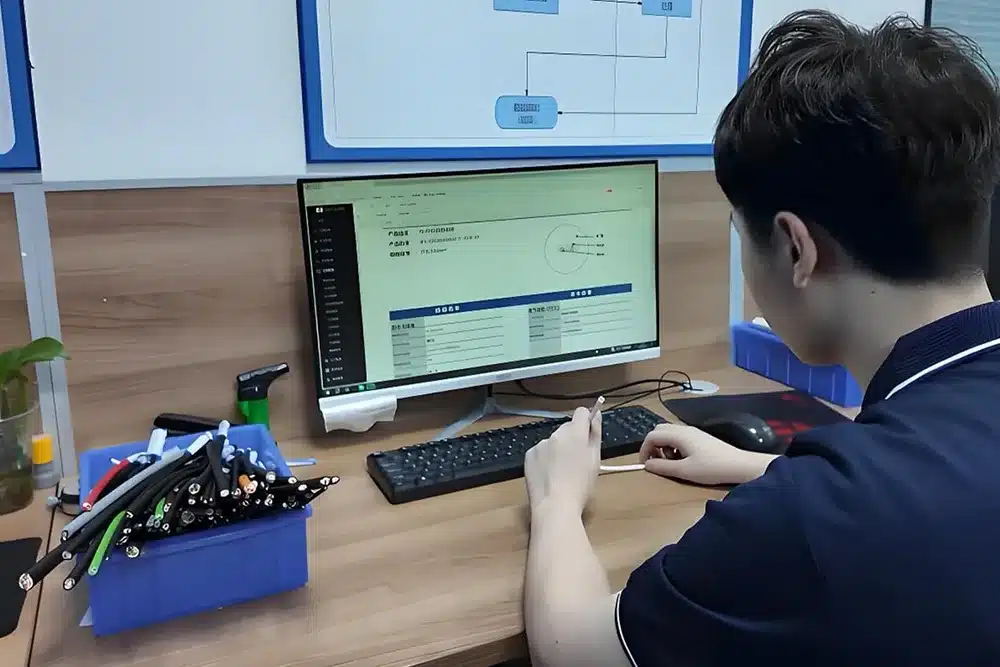
Seek help from a specialist manufacturer if you have a recurring number of catalog failures, conflicting requirements and/or opportunities to standardise across product lines. Create motion profiles, environment, electrical specs and target certifications. Here at Hulk Electric, we look through these points in no time and offer specific suggestions supported by more than 20 years of automation cable experience.
When choosing between off-the-shelf and custom cables for industrial automation systems, the decision hinges on a combination of factors, including speed, cost, long-term reliability, and performance. They can help plant and OEMs steer clear of common mistakes and realize lower total ownership costs.
We produce high performance standard flexible cables, and we can also provide fully custom solution cables with the customers’ requirement of Servo, Robot, Drag chain, Fieldbus application. Share your project parameters and we can help you find the best way to reliably and efficiently automate your project.