Hybrid servo cables integrate motor power, feedback signals, and often brake conductors into one streamlined jacket. For engineers designing CNC machines, robotic arms, or compact automation systems, this single-cable approach can simplify wiring, reduce space demands, and cut installation time. Yet they are not ideal for every setup. This guide examines when hybrid servo cables deliver real value versus when traditional separate power and feedback cables remain the safer, more practical choice.
What Is a Hybrid Servo Cable?
Hybrid servo cables represent engineered integration of functions that traditionally required two or more separate runs — such as dedicated servo power, feedback, encoder and brake cables. They combine heavy-gauge power conductors with shielded data pairs for encoder feedback, plus optional brake and temperature sensor wires, all within a single high-flex jacket suitable for industrial motion applications.
Power and Feedback in One Cable
The core design places power cores (typically for three-phase servo motors) alongside carefully isolated and shielded twisted pairs that carry high-speed digital feedback. This fusion minimizes electromagnetic interference through specialized layering, individual shielding of signal elements, and overall braiding or foil. The result is reliable signal integrity even as power lines switch at high frequencies.
One Cable Technology and Modern Encoder Interfaces
One Cable Technology (OCT) relies on compatible interfaces like HIPERFACE DSL, EnDat, or similar serial protocols. These digital systems allow feedback data to travel safely alongside power over longer distances. Drive and motor manufacturers design these ecosystems together, so hybrid cables work best with newer servo platforms that explicitly support single-cable operation.

Practical Advantages of Hybrid Servo Cables in CNC and Automation
Machine builders and integrators increasingly adopt hybrid solutions where space and complexity matter most.
Reduced Cable Density and Space Requirements
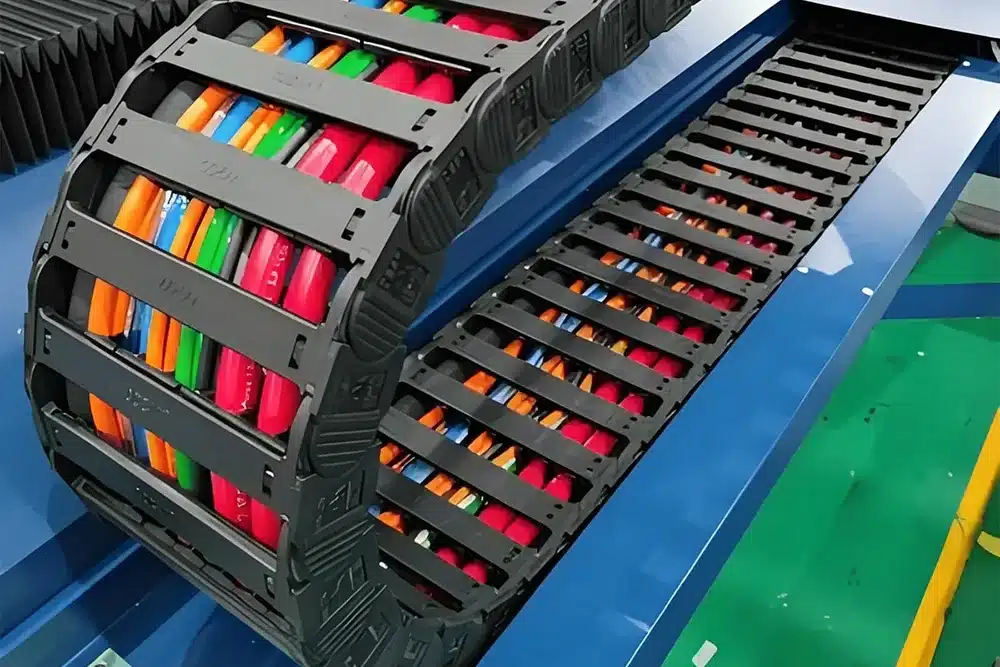
Running one cable instead of separate power and encoder lines halves the number of conductors in cable carriers or trays. This benefit shines in multi-axis CNC gantries or robot dress packs, where every millimeter counts for tighter machine footprints and reduced mechanical stress on moving parts.
Faster Installation and Simpler Wiring
Installers handle a single run with one set of connectors and clamps. This reduces alignment headaches, separation requirements, and overall labor. Many projects report noticeable time savings during assembly and commissioning.
Fewer Connectors and Potential Failure Points
Fewer junctions mean fewer opportunities for loose connections, corrosion, or vibration-induced faults. In high-cycle environments, this translates to improved uptime and simpler spare parts management.

Technical Considerations and Prerequisites Before Choosing Hybrid Cables
Despite the benefits, hybrid servo cables require specific system compatibility.
Drive and Motor Support for Single-Cable Interfaces
Success depends on drive and motor support for single-cable interfaces that work with compatible encoders such as HIPERFACE DSL or EnDat. Legacy analog resolvers or unsupported platforms typically cannot use hybrid cables without significant upgrades.
Shielding and EMC Requirements in Hybrid Cable Design
Integrating power and data increases EMI risks. Quality hybrid cables use dedicated shielding layers and precise geometry to maintain signal quality. Always select manufacturer-approved cables and follow EMC guidelines rather than improvising.
Flex Rating, Drag Chain and Torsion Behavior
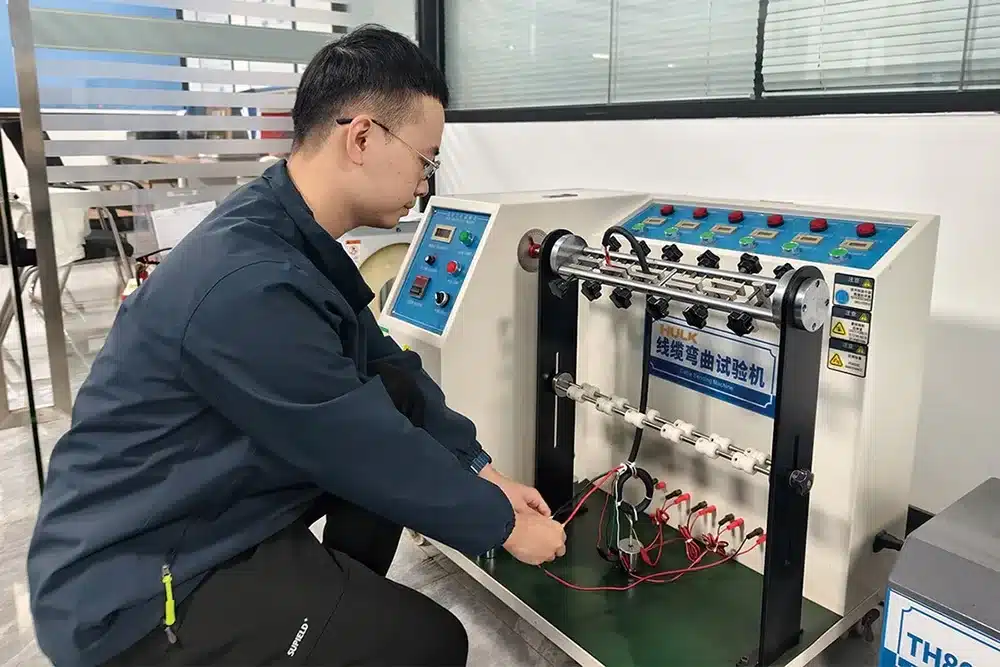
Choose continuous-flex or torsion-rated variants for dynamic applications. Verify bend radius, flex cycle ratings, and jacket materials (often PUR for oil and abrasion resistance) match your motion profile.
When a Single-Cable Solution Makes Sense in CNC and Automation
Hybrid servo cables excel in targeted scenarios.
Compact CNC Machines and Multi-Axis Systems
In densely packed machining centers or gantries nearing cable carrier limits, the reduced bulk allows smaller carriers, easier routing, and better access for maintenance.
Robots and High-Density Automation Cells
Robotic arms and compact cells benefit from lighter dress packs and fewer snag points, improving reliability and speed in pick-and-place or collaborative applications.
New Installations vs Retrofits
They integrate most smoothly into new designs where components are selected together. Retrofits may require platform changes.
When Separate Power and Feedback Cables Are Still the Better Choice
Traditional setups retain advantages in many cases.
Legacy Servo Systems and Non-Supported Encoders
Older systems with analog feedback or incompatible interfaces perform best with dedicated cables to ensure signal integrity and easier troubleshooting.
Special EMC or Safety Requirements
Applications with stringent EMC rules or safety redundancy needs often favor physical separation of power and signal paths.
Cost, Lifecycle and Risk Considerations
Hybrid cables can lower overall material and labor costs despite higher per-unit complexity. However, a single failure affects both power and feedback, making rapid replacement strategies essential. High-quality, application-rated cables from experienced manufacturers minimize long-term risks.

Practical Checklist: Is Hybrid Servo Cabling Right for Your System?
- Do your drives, motors, and encoders support single-cable interfaces like HIPERFACE DSL or EnDat?
- Is cable density or drag chain capacity a design bottleneck?
- Do your flex, torsion, and environmental requirements match available hybrid cable ratings?
- How will the choice impact EMC compliance, installation time, and maintenance?
Careful evaluation during the concept phase prevents costly mismatches.
At Hulk Electric, we engineer high-flex hybrid servo cables tailored for CNC, robotics, and automation demands, with robust shielding, precise conductor configurations, and full certification support. Share your system parameters, and our team will help determine the optimal single-cable or traditional solution for reliable performance.