In a high performance industrial automation, cables and drag chains (cable carriers or energy chains) are generally considered as two separate entities – this can cause premature wear, unforeseen downtime and expensive field failures. When working with cable and drag chain suppliers as a system, early coordinated design ensures that the construction of the cable, the geometry of the chain, the layout of the interior and the installation of the system are optimized for the specific motion profile, environment and duty cycle of your machines.
We at Hulk Electric have had over 15 years of supporting OEMs in the robotics, machine tool, material handling, and automated systems segments. Combining cables and chains engineering from the concept stage to the plant can achieve a dramatic increase in service life, smooth operation and reduced warranty claims. This guide provides an explanation of why a system level approach is important and how it can be done effectively.
Why Cables and Drag Chains Must Be Designed as One System
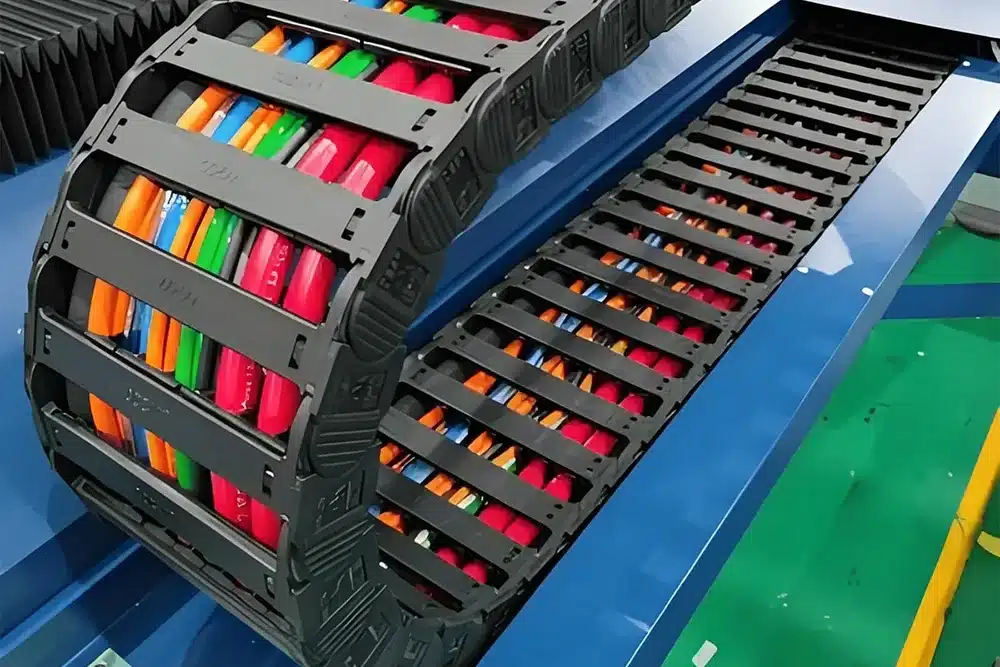
Drag Chains are guides, protectors and supports for linear, multi-axis and torsional applications of moving cables and hoses. But even the best flexible cable will not last long if the bending radius, fill ratio, or separation of the interior of the chain is not in alignment with the cable’s mechanical needs.
The coordinated design guarantees all the components of the cable (stranding, shielding, jacket compound and minimum bend radius) are compatible with the dimensions and movement characteristics of the chain. This system view helps to avoid the most frequent failure modes: bending stress of the cables, abrasion between the cables and uneven load distribution. Suppliers with an understanding of both can suggest matched solutions that will ensure consistent performance over time.
Common Field Failures When Cables and Chains Are Designed in Isolation
Numerous field problems are directly related to making the decision to choose a cable and the decision to choose a chain as independent events.
Incorrect Sizing and Bending Radii
A chain with a bending radius smaller than the cable’s recommended min. radius or one that has no safety margin will cause conductor fatigue and cracking of the jacket. High-flex cables should be specified for a given radius, but the radius should be one of the main drivers for the selection of chain used in a particular application.
Overfilling and Poor Load Distribution
Heavy and light cables together and exceeding recommended fill percentages result in friction, pressure points and accelerated wear. This is particularly a problem in high-speed applications, where dynamic forces increase this problem.
Poor Interior Separation and Routing
Without any dividers or compartments, cables may tangle, rub against one another and suffer signal interference. Avoid sharing power, signal and data cables to ensure performance and longevity.
What “Coordinated Design” with Cable and Drag Chain Suppliers Looks Like
Collaboration isn’t just about ordering catalog items. Integrated solutions are offered by leading suppliers.
Integrated Drag Chain Systems from One Supplier
Some producers offer pre-matched cable + chain packages that involve the high flexible cables being pre-optimized to the carrier’s geometry. This makes the procurement and compatibility easier.
Joint Engineering on Chain Sizing and Layout
Tell your machine how far it will travel, how fast it will move, how fast it will accelerate, any environmental conditions (chemicals, debris, temp), and what your expectations are for a cycle. A cable supplier such as Hulk and experienced chain partners can then be able to recommend together the best possible interior height/width, radius and separation options.
Shared Responsibility for System Performance
Create accountability and minimize integration risk with clearly defined roles: OEM specifies application requirements, suppliers verify combinations of components.
Key Design Parameters That Require Supplier Coordination
Minimum Bend Radius and Interior Dimensions
Always start with the cable manufacturer’s specified minimum bend radius and apply a safety factor. The chain’s interior dimensions must accommodate the largest cable or hose while maintaining clearance.
Clearance Safety Factors and Fill Rules
10-20% more space is recommended by industry best practices, depending on the type of cable. Separators that are proper and orderly and lay so as not to cross prevent cross movement and allow for independent movement during flexing.
Load Capacity and Attachment Points
All media (cables, hoses, weight) should be included when determining chain load ratings. The placement of optimal mounts and strain reliefs are determined with coordinated input to avoid stress concentration.

Integrating Energy Chains into Machine Design from Day One
When integrating with cable and drag chain suppliers at the conceptual layout stage, expensive retrofits can be avoided. By planning early, sufficient room can be left for chain movement, service access and correct mounting. New suppliers also provide simulation tools to simulate dynamic behaviour without prototyping.
Installation and Maintenance Practices That Require a System View
No matter how well designed the system is, it will not work properly if it is not installed properly. Cables should be laid straight without twists, with sufficient freedom in the chain. Service intervals can be extended for a long time with regular checking for wear, correct tensioning and predictive maintenance (when available, supported by smart sensors).
System-Level Failure Modes – How Uncoordinated Design Shows Up in the Field
The sloppy choice of conductors may be seen as broken conductors, worn jackets, intermittent signals, or complete jamming of the chain. All such problems result in unnecessary delays, safety hazards and TCO. A system approach takes on the root cause instead of the symptom.
Practical Collaboration Model – How OEMs Should Work with Cable and Drag Chain Suppliers
- Give motion and environmental parameters to cable and chain partners.
- Ask for together recommendations for matched cable-chain combinations.
- Discuss and agree on sizing, radii, fill ratios and separation plan together.
- Communicate about installation instructions and maintenance plans.
- Consider the whole cable + chain assembly as a generic unit for additional platforms.
Final Guidance – Treat Cable and Drag Chain Suppliers as One System Partner, Not Separate Vendors
When used together as a system with cable and drag chain suppliers, there are measurable reliability benefits. Adopting coordinated design at an early stage reduces failures in the field, downtime, and creates machines that meet reliability requirements of millions of cycles, all while helping OEMs and integrators save money and time.
Our high-flexible cables, servo motor cables, robot torsion cables and industrial Ethernet solutions are designed to provide solutions to difficult drag chain applications at Hulk Electric (Dongguan) Co., Ltd. Co-development with chain manufacturers and OEM engineering teams is a regular occurrence, providing fully optimised systems. Let us know your application parameters and we’ll work with you to design a coordinated solution that will be reliable in your actual application.