Failure of cables can be traced to inadequate design of the insulation material that hardens, cracks or deteriorates in dielectric properties with time in high-temperature industrial applications. These properties make silicone cables singling out for these conditions, but proper selection of the temperature range, insulation thickness, and safety factor within this range requires careful matching with the actual stress.
This guide is based around actual experience of specifying silicone cables for challenging applications. It provides engineers and OEM designers with useful guidelines to prevent common problems such as early aging or inadequate electrical protection within hot areas.
Understanding Temperature Ratings for Silicone Cables
Where PVC or regular thermoplastics would deteriorate rapidly, silicone rubber insulation shines. But not every silicone cables are the same. The ratings depend on the type of conductor and the compound formulation and overall construction of the cable.
Continuous vs Intermittent Temperature – Why the Distinction Matters
The continuous operating temperature is the temperature at which the cable will operate reliably for many (usually years) years without appreciable degradation. Intermittent or short-term ratings are for short periods of time, like startup, cleaning cycles or peak periods in the process.
Some silicone cable types can withstand high temperatures for short periods of time up to +250°C; under controlled conditions, standard industrial silicone cable can handle up to -90°C to +300°C continuous. A design that is based on spikes only and ignores the continuous exposure will work fast towards the end of the service life and cause a thermal aging.
Typical Temperature Classes for Silicone Cables
In all but the most practical terms, most catalog silicone cables can be categorized into these classes:
- 150-180C: Good for most heating elements, HVAC and medium industrial lines.
- 200°C: Industrial applications such as engine bays, ovens and process equipment.
- Higher grades (500-300°C): They are employed in furnaces, glass industries and steel industries where high temperature is to be expected.
Choose the class for the cable based on the highest sustained temperature to which the cable will be exposed at its point of installation due to surface contact and radiant heat, and not ambient air.
How Heat Affects Silicone Cable Insulation Over Time
Although silicone rubber does not age as rapidly as many other materials, heat exposure produces chemical changes. It is crucial to understand these effects in order to set realistic expectations and design parameters.
Thermal Aging and Insulation Degradation
Silicone insulation can become hard, have loss of elasticity or surface cracking or compression at or near its rated limit for long periods. These modifications create a lack of flexibility and the possibility of mechanical failure in the process of movement or vibration. On hot conditions, silicone is better than lower grade materials; however, continuous ratings overstated will reduce life expectancy.

Impact on Electrical Safety and Service Life
Loss of insulation reduces the dielectric strength, increases leakage currents and increases the voltage breakdown hazard. This has a direct impact on safety and uptime. Don’t settle for a minimum temperature class and margin, but rather use the target service life as your guide.
Designing Insulation Thickness for High-Temperature Silicone Cables
The thickness of insulation cannot be made in a single size fits all manner. It has to be a compromise in the electrical performance/thermal management/flexibility/and mechanical durability.
Voltage and Dielectric Requirements
The thickness of insulation should be at least equal to the requirements for the rated voltage (usually 300/500V or 600V) of the cable. For thick walls, higher voltages or critical circuits, dielectric testing is needed for validation. Always refer to manufacturer’s tables showing the conductor size, voltage, and minimum thickness.
Balancing Thickness, Flexibility and Heat Dissipation
Thicker insulation will result in greater electrical and thermal margins but will also add greater diameter, stiffness, and may create a thermal trap around current-carrying conductors. Pay attention to thinner, but flexible, designs in high-temperature areas where flex or tight routing are involved. Silicone’s very flexible nature is helpful, but test prototypes under combined heat and motion.
Typical Insulation Thickness Values and Standards
Typical commercial silicone cables have insulations that are scaled to the conductor AWG or mm2. For instance, 0.5-1.0mm walls are suitable for finer wires, and the thicker the walls, the thicker the power cables. Consider the aging effects on the dielectric properties for high temperature service with extra margin.
Defining Safety Margins for High-Temperature Silicone Cable Design
Safety margins serve as a buffer against real world parameters such as measurement inaccuracies, hot spots and unexpected spikes.
Temperature Margin Above Real Operating Conditions
When the maximum continuous temperature is measured at 150°C, select a cable that is 180–200°C or higher. This margin helps offset fluctuations, and slows down the aging process. Do not choose a cable with a continuous rating the same as the maximum expected temperature.
Accounting for Thermal Spikes, Heat Sources and Measurement Error
Many times, actual cable temperatures are higher than calculated, due to localized hot spots around furnaces, radiant heat, sensor drift, and installation differences. Add more margin for intermittent exposures, thermal cycling.
Safety Margins for Different Application Profiles
- High heat levels (furnaces, steel mills): higher continuous margins of +-30 to +-50C or more are required.
- Repeat thermal cycling (repeatedly hot/cold – ovens, engine bays): Think about fatigue resistance and temperature margin.
- Occasional peaks (cleaning/sterilisation): Check if ratings are valid over time and frequency and if total score isn’t being exceeded.
Mechanical Stress and Routing in High-Temperature Environments
Heat and mechanical loads work together, causing wear to happen more quickly. Though silicone offers more flexibility at high temperatures than its alternatives, proper routing is important.
Bending, Flexing and Vibration Under Heat
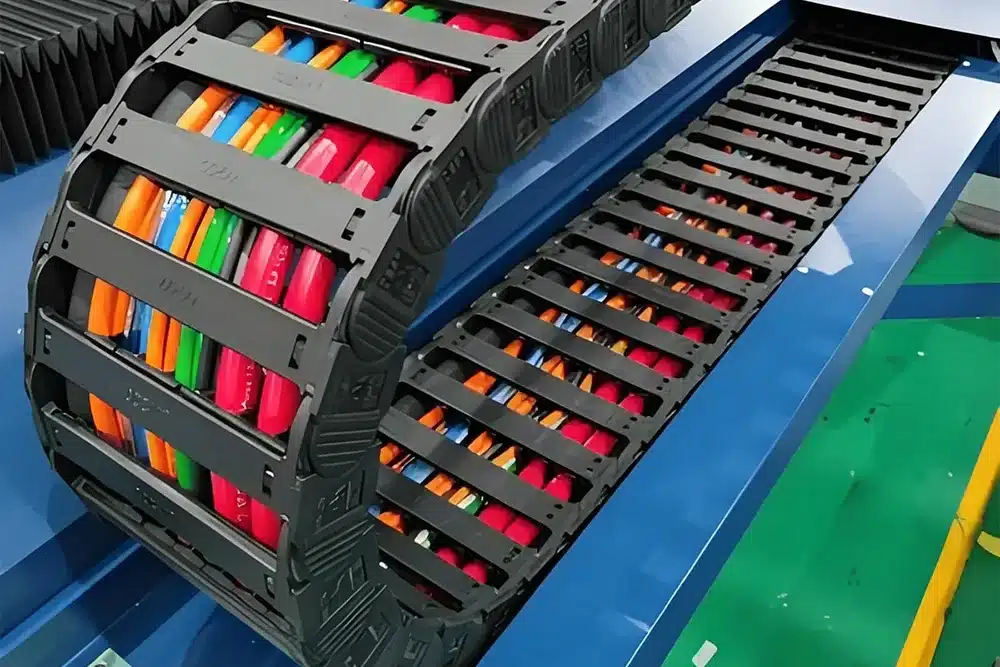
Fatigue can occur with repetitive movements close to heat sources, particularly when insulation has started to stiffen. Utilize well-strapped conductors and constructions for torsion or linear motion as required.
Minimum Bend Radius, Clamping and Support
Follow manufacturer bend radius guidelines (may tend to tighten when hot). Avoid use of sharp edges, abrasion or heat-concentrating points, with the use of appropriate clamps and supports. Include routing information in specification package.

Typical High-Temperature Applications for Silicone Cables and What They Teach Designers
Real applications illustrate the variability of the temperature range, thickness, and margins in the various sectors.
Process Industries: Steel, Glass, Plastics and Furnaces
Silicone cables withstood the highest radiant heat and mechanical loads in steel mills, glass lines and extruders. Here, designers are focused on higher temperature classes (200 °C and above) and heavy insulation thickness to deal with continuous exposure and vibration.
Appliances, HVAC and Heating Equipment
For smaller applications such as heating elements, ovens and HVAC systems, 150–200°C ratings are necessary. Flexibility and heat dissipation, as well as safety margins, are necessary in confined spaces
Mobility and Electronics Under Thermal Stress
When it comes to silicone’s resistance to extreme temperatures, it’s perfect for engine bays and electronics enclosures. Here, margins are used to shield from fluctuating loads and vibrations.
Practical Design Checklist for High-Temperature Silicone Cables
When ordering cables, follow this list:
- Record the highest continuous temperature at the specific location on the cable.
- Determine thermal spikes, length of thermal spikes, and frequency (frequency of cleaning cycles).
- Explain voltage rating and required values of dielectric test.
- Evaluate bending, flexing, vibration, torsion stresses.
- Make note of any hot spots, routing restrictions or measurement uncertainties.
- Determine safe limits for temperature and insulation thickness.
- Examine conductor stranding and general construction of cables for the environment.
Questions to Answer Before Finalizing Silicone Cable Design
- What is the actual continuous temperature exposition?
- What is the frequency and duration of the spikes?
- What is the mechanical movement needed?
- Do prototypes exist that have been tested for combined heat and load?
Working with Cable Manufacturers on Validation and Testing
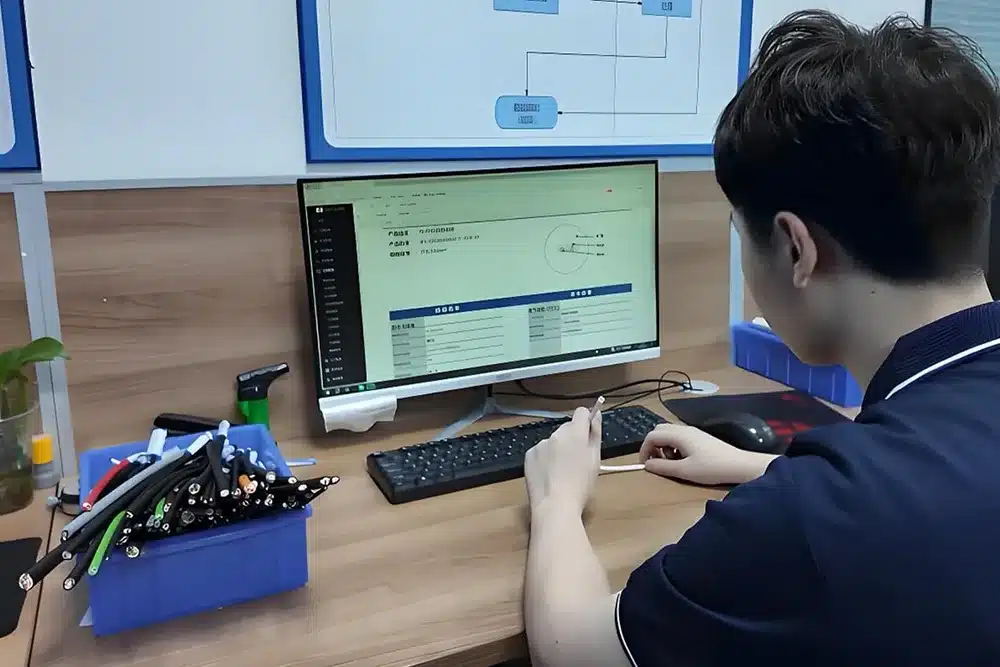
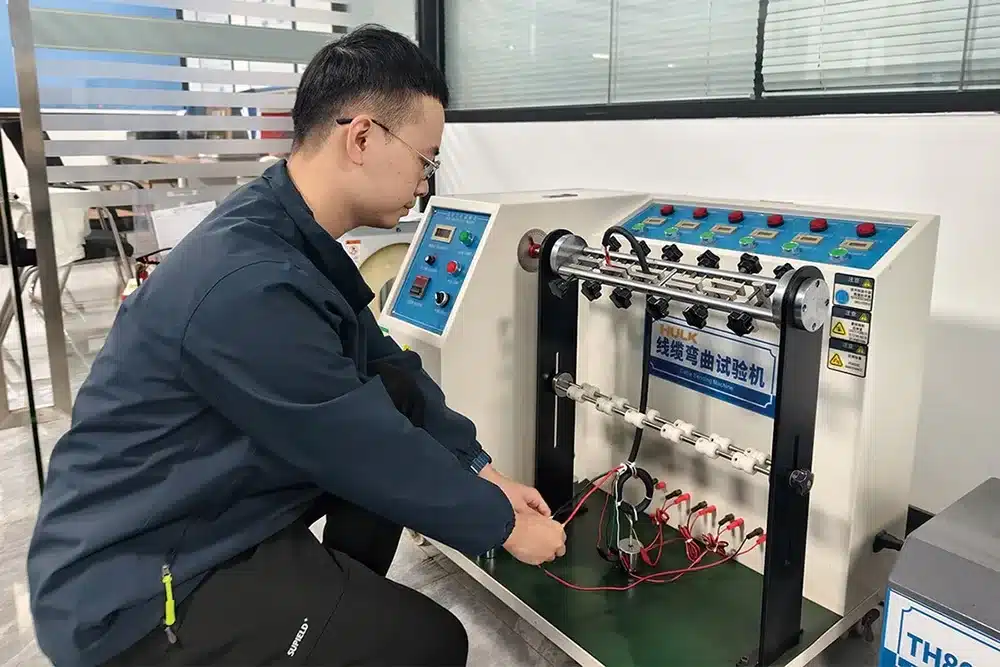
Get the expertise of seasoned manufacturers involved early on. Provide comprehensive operating profiles for the compounds, geometries and constructions they are considering, for them to give recommendations on optimized compounds, geometries, and constructions. Ask for accelerated aging data, thermal cycling data and custom test data. Such co-operation can reveal unanticipated risks and optimise safety parameters to ensure long-term reliability.
We at Hulk Electric specialize in developing high-temperature silicone cables designed for just these sorts of situations. Our custom solutions offer an accurate temperature rating, optimized insulation thickness and a proven margin to meet challenging industrial automation, robotics and process requirements. Communicate your parameters: we’ll help you to design cables that perform consistently where it counts.