Silicone rubber is one of the most reliable insulation materials for cables in harsh industrial applications. Because of its high temperature stability, flexibility over a broad temperature range and ability to withstand harsh environments, silicone rubber cable insulation is commonly used in high-temperature applications where long-term performance is required. In this guide, we will examine the behaviour of silicone rubber when it is thermally aged, thermally cycled repeatedly and stressed together, so that the engineers and maintenance teams can use this knowledge to specify cables which will provide consistent reliability and minimise costly down time.
Why Silicone Rubber Is Widely Used as Cable Insulation in Industrial Systems
The silicone rubber is used for cable insulation because the cable has excellent performance in the environment where other materials cannot work. It has continuous operating temperature of typically -60°C – +180°C or +200°C, with special formulations that are able to operate at short duration peaks to +250 – +300°C. This wide range is appropriate for the use in such applications as metallurgy, petrochemical plants, robotics, food processing equipment and heavy machinery.
In addition to being heat resistant, silicone rubber exhibits high flex resistance even after prolonged exposure, and is highly resistant to ozone, UV, moisture, and chemicals. Its use in dynamic systems, such as in industrial automation and power transmission, serves to ensure safety, efficiency, and compliance in various industrial processes and applications.
Thermal Aging of Silicone Rubber Insulation – What Happens Over Time
Thermal Aging as a Slow, Irreversible Process
Thermal aging is a process of slow chemical changes of the polymer structure caused by continuous heat exposure. This causes a decrease in organic content and changes in mechanical and electrical properties over time, and an increase in cross-linking. These effects occur in all silicone rubber, even high quality, but happen more slowly than many other options.
How Silicone Rubber Responds to Heat Compared with Other Insulations
Silicone rubber is more thermally stable than PVC and many thermoplastics, and it retains more functionality at high temp. Research indicates greater resistance to degradation, higher retention of dielectric strength, and higher general durability at high temperatures. But it is not invulnerable and good specification with safety margins is still a must.
Observed Changes from Accelerated Thermal Aging
When the tests are accelerated, increased temperatures and exposure time will result in:
- Decreased tensile strength and elongation at break
- Lower thermal resistance and functional groups containing carbon (Si-CH₃)
- Modifications in the dielectric characteristics, for example, breakdown strength
These macroscopic effects can manifest themselves as stiffening, cracking risk, or decreased sealing capability at interfaces.
Thermal Cycling and Combined Stress in Industrial Systems
Repeated Heat-Up and Cool-Down Cycles
Industrial cables are subject to frequent thermal cycling due to equipment starting up, load changes, and atmospheric changes. This increases the stress over and above that applied by constant temperature exposure, which could increase the number of micro-cracks or debonding at the interfaces of silicone insulation.
Combined Electrical, Thermal, and Mechanical Stresses
Real-world operation is a combined heat, electric fields and mechanical compression effect at terminations or clamps. The volume resistivity and insulation performance can be degraded over time due to electro-thermal aging, requiring more than datasheet ratings to be considered.
Industrial Implications of Thermal Cycling and Stress
Cables are subjected to gradients and vibration and constraints in sectors such as power generation or material handling. These combined effects must be addressed with designs that will ensure long-term stability without premature failure and extended service life.
Long-Term Stability Benefits of Silicone Rubber in Industrial Cables
Stable Electrical Properties Across Wide Temperature Ranges
Silicone rubber exhibits good dielectric strength and insulation resistance at extremes, and is more thermally stable than many materials, ensuring reliable performance in changing conditions.
Flexibility and Mechanical Resilience
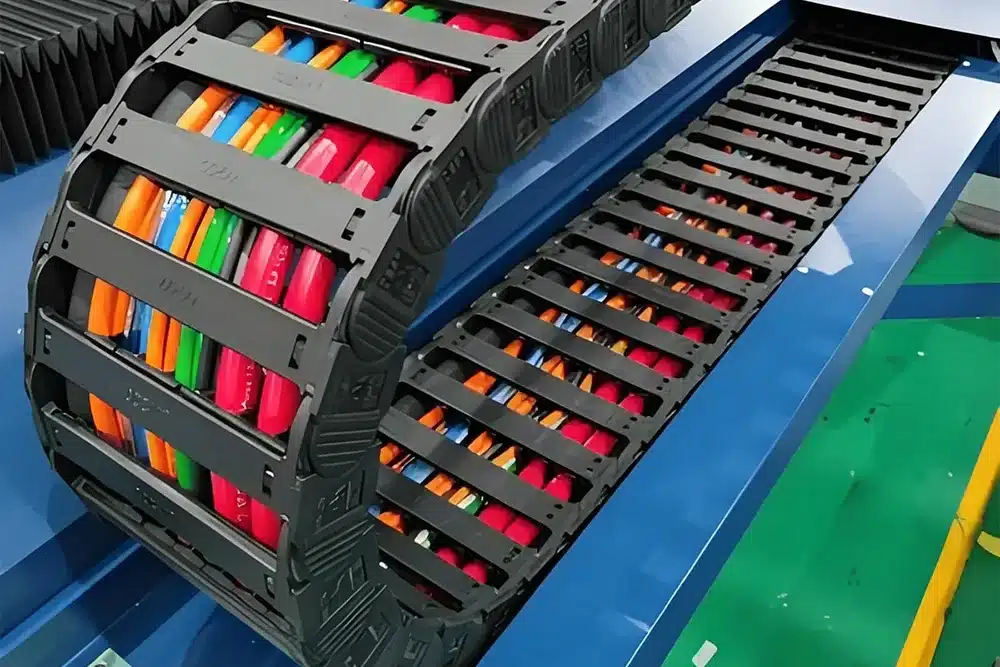
It is also elastic at both high and low temperatures, whereas older alternatives tend to be brittle and crack. It is especially important for cables in applications such as a robotic arm or drag chain where movement is a key component.
Resistance to Environmental Aging Factors
Silicone insulated cables are not only highly resistant to heat but also to ozone, UV and chemicals, making them suitable for industrial applications that are outdoors, in humid environments and corrosive conditions.
Design and Maintenance Considerations for Long-Term Stability
Designing with Realistic Temperature Profiles and Margins
Use conservative margins to the max ratings and model real operating profile, including peaks and cycles to maximize life
Accounting for Mechanical Stress and Interface Design
Pay attention to correct clamping, strain relief and terminations to reduce stress concentrations which can cause faster aging at connections.
Monitoring and Inspection in High-Temperature Industrial Systems
Carry out regular inspections for any changes in color, stiffness, or cracking. Follow-up the changes of insulation resistance to detect problems promptly.
Practical Checklist – Using Silicone Rubber for Long-Term Stable Cable Insulation
- Specify continuous and short term ratings with reasonable margins, in real conditions.
- Include thermal, electro-thermal and mechanical stresses in specification.
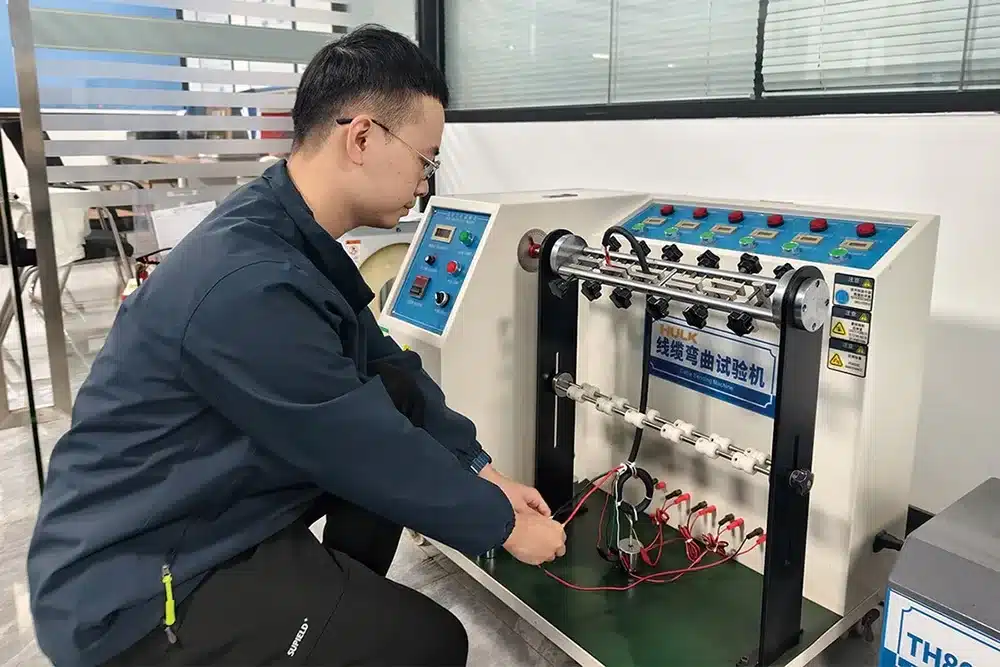
- Use accelerated aging data from trusted suppliers.
- Focus on flexibility of stranding, radius of bends and good strain relief.
- Set up regular inspection procedures regarding electrical function and visual condition.
We have a depth of expertise in the production of customized high temperature silicone cables that are perfectly suited to your specific industrial requirements at Hulk Electric (Dongguan) Co., Ltd. We are able to select materials with expertise, test extensively and certify to guarantee solutions that last through actual aging and cycling. Speak to our team about your project specifications and find durable, dependable cable insulation that’s optimized for your business.