In food-grade sensor/actuator cabling applications, cabling is exposed to special stresses that are not commonly encountered by typical industrial cabling. In food and beverage lines, where daily high-pressure washdowns, harsh cleaners, temperature cycles and FDA/EHEDG compliance requirements are essential to maintaining uptime, food safety and audit success, it is crucial to select the right cable.
Pre-failure problems with sensor or actuator cables can lead to unplanned downtime or a hygiene problem and are no problem for engineers or maintenance teams. This guide discusses key issues and solutions for specifying durable, compliant cables that will reliably function in these challenging environments.
Why Hygienic Processing Lines Are Hard on Cables
Food and beverage manufacturing conditions create mechanical, chemical and thermal stresses and are extremely hygienic. Cables and connectors need to withstand conditions that promote wear, yet allow for being cleanable and compliant.
Strict Hygiene Rules Apply to Electrical Components
All components in hygienic areas such as cables, glands, connectors should not encourage the growth and contamination of microorganisms. Smooth surfaces, easy to clean designs and proper drainage are essential, since impurities can not accumulate or come into contact with food products.
Daily Washdown and Aggressive Cleaning Agents
The production line may be cleaned for as much as 30% of the operating time, with high-pressure hot water, caustic/acid and sanitizers. These cycles and rapid temperature changes from refrigeration to hot fill processes only help to find cracks in traditional cabling systems.
Hygienic Zones and What They Mean for Cabling
The knowledge of various zones enables to decide on cable specification and routing.
Hygienic Design Zone (Product Contact)
The surfaces that come into direct contact with the product must be the best. Materials for cables used here should be FDA compliant and have geometry to minimize crevices, as well as withstanding complete CIP/SIP cycles without degradation.
Spray/Washdown Zone
The need for good chemical and moisture resistance remains for splash and run-off areas. In situations where washdown occurs often, cabling for sensor and actuator units is usually rated for IP69K which is designed to resist ingress from water.

Non-Product Zone
Where cables are not involved in critical functions, they are exposed to humidity, temperature changes and are sometimes washed. The issue of proper specification is of paramount importance because it helps ensure that there are no cascading failures, which is essential for system reliability.
Material and Design Requirements for Food & Beverage Cables
The first step in success for cabling in hygienic environments is to use materials specifically designed to meet the environmental stresses.
Chemical, Thermal and Mechanical Resistance
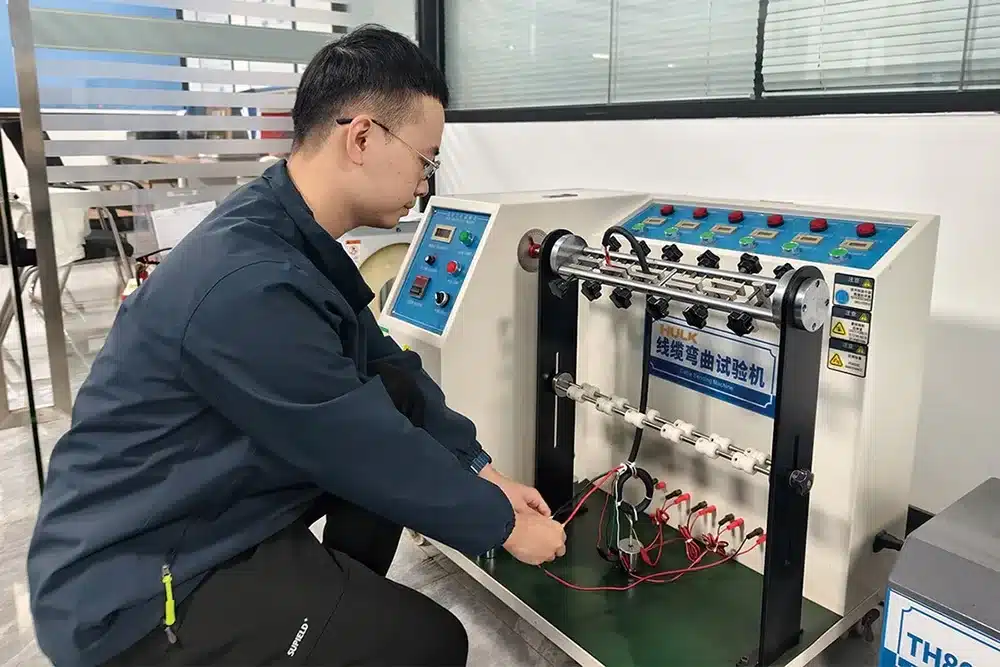
Cables should be able to withstand fats, oils, acids, alkaline cleaners, temperature exposure, and should also be flexible for dynamic applications. There are manufacturers such as Hulk Electric whose high flex designs are the best for linear-motion and torsion that is common in food automation.
FDA, ECOLAB and Hygienic Design Compliance
Look for cables with FDA, ECOLAB, and relevant hygienic certifications. Smooth, non-porous jackets (such as specialized TPE or PP compounds) and overmolded connectors minimize contamination risks.
Hygienic Geometry and Surface Characteristics
Check for FDA, ECOLAB and appropriate hygienic certifications on cables. The use of smooth, non-porous jackets (such as special TPE or PP compounds) and over-moulded connectors reduce contamination risks.
IP Ratings, Seals and Washdown Performance
IP69K for Direct Washdown Exposure
IP69K is the highest protection grade for high pressure/high temperature cleaning. It guarantees sensor and actuator wiring to perform as expected with no moisture related failures.
Connector and Cable Overmold Design
Good over molding is used to produce leak-proof and seamless connections. Double-lip seals and food-grade materials remain intact after thousands of cleaning cycles.
Cable Management and Routing Challenges
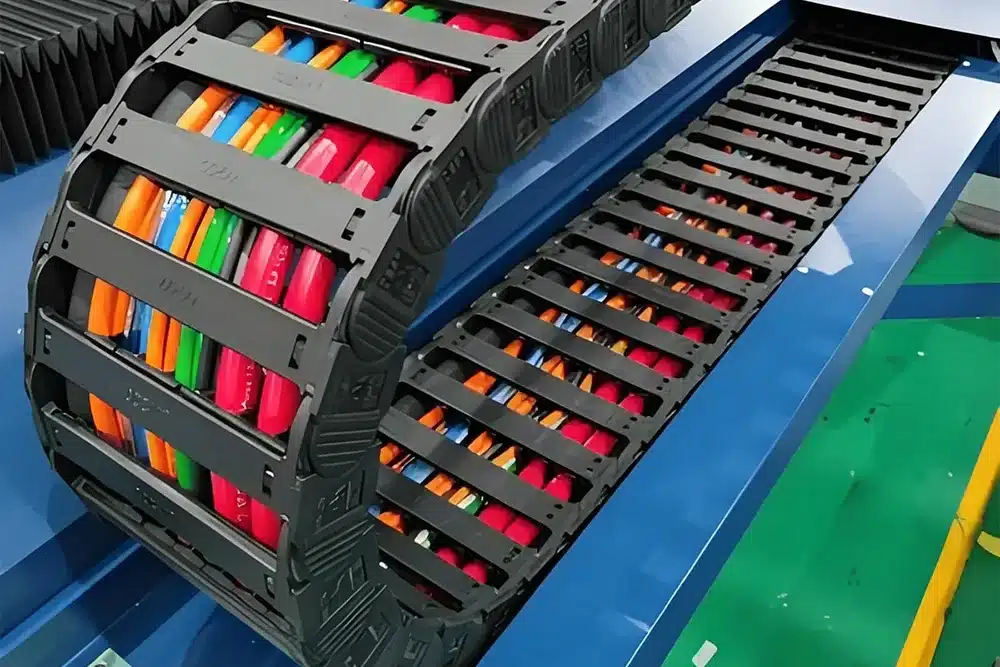
Cable Carriers and Hygiene
In addition to the hygienic principles outlined above, food lines must also be made up of cable carriers that will follow the smooth surface, open design and materials that resist dirt and cleaners.
Routing Through Hygienic Zones
If cable entry into critical areas is required, consider the use of short runs, optimal mounting angles for drainage and hygienic glands. It is important that mechanical and electrical teams work together.

Connectors and Assemblies for Food & Beverage Applications
Antimicrobial and durable connectors and TPE jackets offer good cleaning agent resistance. Connect cable assemblies to sensors to complete hygienic system.
Automation and Networking Considerations (AS-i, IO-Link, etc.)
Cables for bus systems, such as AS-Interface and IO-Link, further minimise wiring clutter but must be fully hygienic and chemically resistant to ensure reliability.
Common Failure Modes in Washdown Environments
Common problems include degradation of the seal resulting in the infiltration of moisture, swelling or cracking of the jacket due to chemical exposure, and corrosion at connections. These are expensive issues that are avoidable by taking a proactive approach to specification.
Practical Cabling Strategies for Food & Beverage Lines
Keeping Cables out of Direct Product Zones Where Possible
Where possible, route cables away from products and where they are required, use hygienic sensors with short and sealed connections.
Choosing Jacket Materials by Zone
Use advanced PUR, TPE and PP jackets for washdown areas and standard jackets in other non-product spaces, being careful to check chemical compatibility.
Integrating Cabling with Hygienic Machine Design
Integrate cabling into the hygienic design of the machine by planning and implementing cross-functional procedures, as well as regular inspection procedures.
Design Checklist – Sensor and Actuator Cabling in Hygienic Lines
- Determine the operating area and the hygiene level necessary
- Check IP level, chemical/temperature resistance and certifications (FDA, ECOLAB etc.).
- Maintain hygienic geometry, sealing and routing that allows for drainage
- Actual process and cleaning conditions test samples
- Work with savvy manufacturers on custom solutions.
We specialize in products such as high flexible sensor & actuator cables, robot cables, and food grade products, which are designed for the challenging sanitation requirements. Our cables come with UL, CE, RoHS and other certification marks, and offer extensive customization options, so they can provide the reliability that food processors expect.
Tell us about your application and get custom application recommendations that minimize downtime and compliance.