The demanding industrial automation, robotics and high-temperature applications market depends on silicone cable quality and compliance that directly impact equipment reliability and operational safety. Cooperation with manufacturers that are rigorous in their testing and have international certifications is more than a checkbox for OEMs — it’s an essential risk-management tactic that staves off expensive equipment downtime, warranty problems, and compliance violations.
Over 15 years, Hulk Electric (Dongguan) Co., Ltd. has been developing high temperature silicone cables, which have been systematically developed based on quality system and fully validated. This guide brings practical knowledge of the benefits of testing and certifications that safeguards your supply chain and allows you to perform for a long, long time.
Why OEMs Need Proven Quality and Compliance in Silicone Cable Supply
Silicone cables perform well in extreme environments, providing robotic arms, servo systems and industrial machinery with flexibility of use in extremely cold and hot conditions (-60°C to +200°C). But, in safety-critical or high cycle applications, it is possible for even small variations in the material to cause insulation failure or signal interference or failure.
The objective evidence that cables will perform as specified is provided by rigorous testing and recognised certification. They minimize production batch-to-batch variability and provide OEMs with peace of mind when incorporating cables into complex systems for international markets.
Quality Systems – How Process Control and Traceability Protect OEMs
ISO 9001 and Structured Quality Management
At our manufacturing facility, we are driven to make sure we produce products that are consistent and of high quality, which is why ISO 9001:2015 is our foundation for consistent manufacturing. This certification prescribes documented procedures for all stages of the processes ranging from raw material incoming inspection to final product release. Every level of the cable manufacturing process from compound batch to finished cable reel, is traceable, enabling identification and containment of any potential problems in a timely fashion.
This translates to OEMs having a predictable quality, less incoming inspection work and easier integration into your quality management systems.
In-House Lab Testing and Strict Control Processes
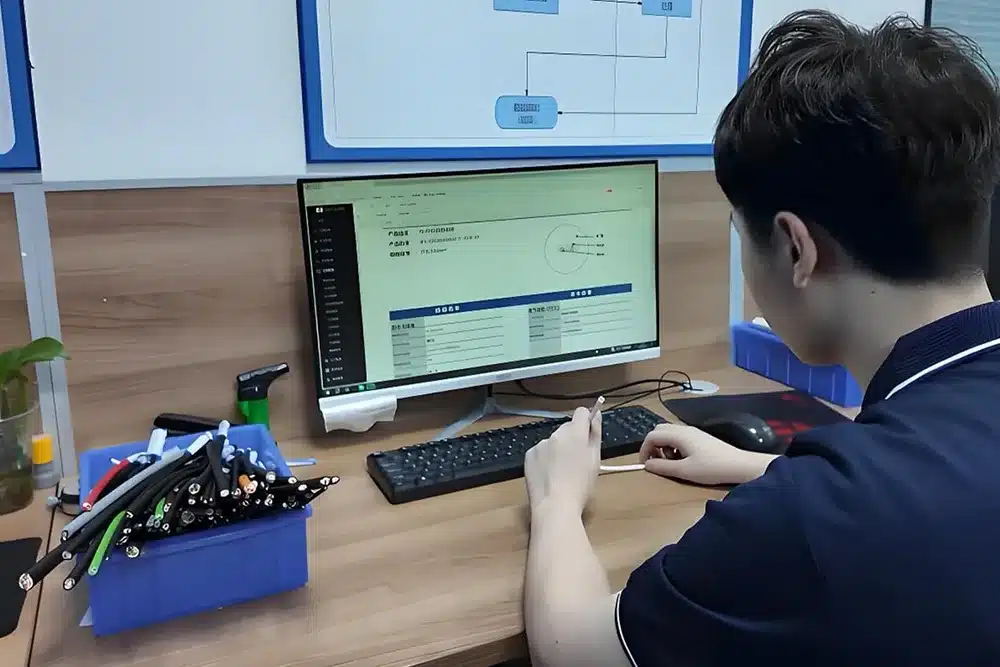
Our dedicated test center has more than 30 advanced instruments, allowing us to conduct 150+ types of tests every year. This includes periodic batch testing and application-specific testing. The in-house ability to detect deviations early means all silicone cables leaving the factory are conforming to the high standards set for them.
Testing Silicone Cables – Electrical, Mechanical and Environmental Performance
Electrical Tests – Continuity, Insulation, Dielectric Strength
Electrical validation tests verify insulation integrity and conductor performance throughout the cable’s temperature range. Insulation resistance, dielectric withstand voltage, and continuity are key tests used to ensure reliable signal transmission and power delivery even with thermal stress and flexing.
Mechanical Tests – Tensile, Bending, Strain Relief and Durability
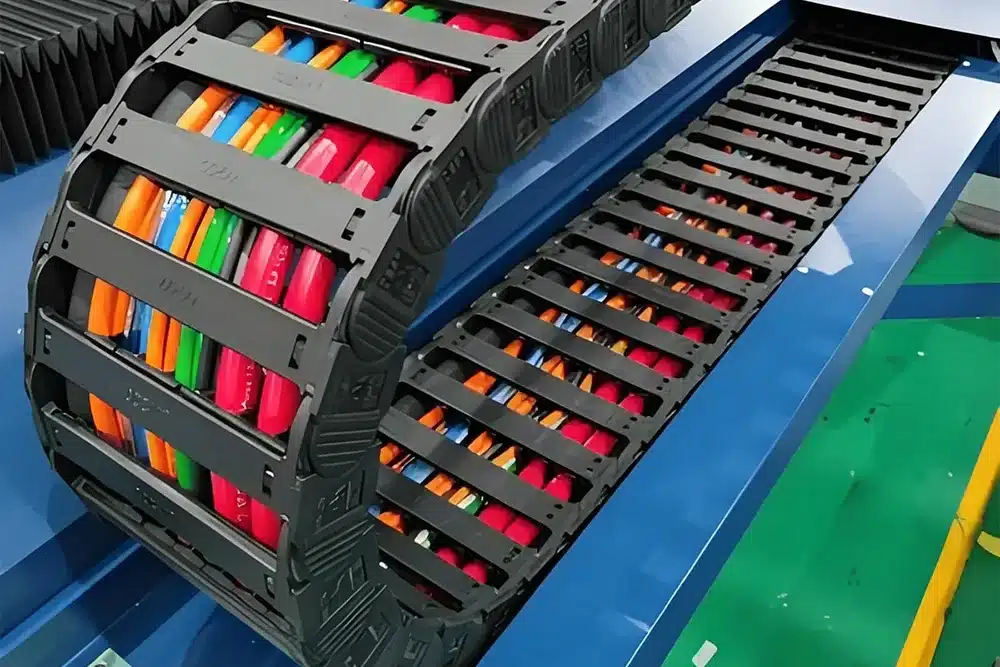
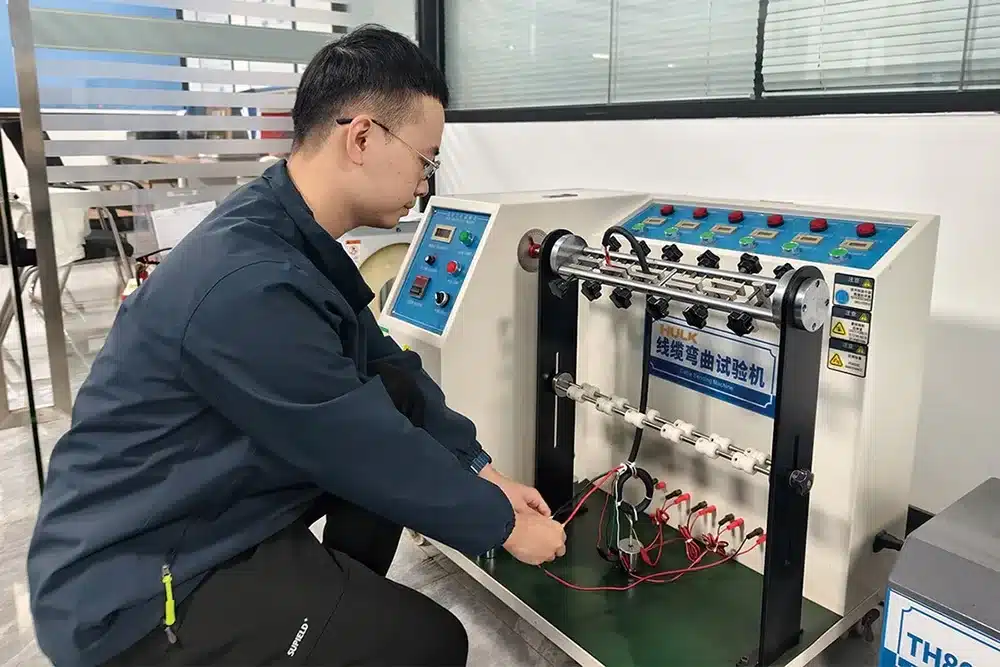
Applications requiring high flex and/or high levels of torsion require high mechanical properties. We perform repeated bending & torsion cycle tests (hundreds of thousands of cycles), tensile strength testing and abrasion resistance testing. These emulate real-world robotic movement and drag chain conditions, to verify long service life.
Environmental Tests – Heat, Cold, UV, Chemicals and Fire Behavior
Silicone cables need to withstand thermal cycling, chemicals in industrial applications and possible fire hazards. Aging tests and low or high temperature performance, flame retardancy, and resistance to oils or cleaners provide data to ensure performance in your operation.

Certifications That Matter for Silicone Cables – UL, IEC, TÜV, ISO and More
UL and ANSI/UL 758 – Product Safety and Appliance Wiring Material
UL recognition gives the North American market a level of confidence, as UL tests for safety, flame resistance, insulation and suitability of materials. Our UL-rated silicone cables help OEMs meet requirements for equipment exported to or installed in the US and Canada.
IEC, EN, TÜV and VDE – International and European Compliance
The standards include aspects of the electrical, mechanical, and environmental performance which are essential to European and global projects. Certifications by TÜV and VDE are especially for long-term reliability and safety for industrial applications.
ISO 9001 and Additional Compliance (RoHS, REACH, CE)
In addition to quality management, our cables meet RoHS, REACH, CE and CCC standards, ensuring compliance with both environmental and regulatory needs in 30+ countries served.
How Testing and Certifications Reduce Risk for OEMs
Preventing Field Failures, Downtime and Warranty Claims
High-quality cables reduce unplanned losses of servo-motors, robots or control cabinets. This means greater equipment uptime and reduced expensive warranty claims for OEMs.
Supporting Safety, Regulatory Compliance and Audit Readiness
Customer audits and regulatory approval are made easy with certified products. Documentation and traceability are an expression of the due diligence in the safety-critical installations.
Ensuring Consistency and Traceability Across Batches
Processes driven by ISO 9001, coupled with testing performed on each batch, mean repeatability and no risk of product variation between lots.
What OEMs Should Look for in a Silicone Cable Manufacturer
Evidence of Robust Quality Systems and Regular Audits
Look for partners who are ISO 9001 certified and have frequent 3rd party audits performed.
Comprehensive Testing Capabilities and Test Reports
Make inquiries for access to test reports that address your electrical, mechanical and environmental needs.
Appropriate Certifications for Target Markets and Applications
If you’re looking to export to North America, Europe, or high-flex end-use industries, match up certifications: UL for North America, TÜV for Europe, and specialized high-flex ratings for robotics.

Practical Checklist – Using Quality and Compliance as Risk Insurance
- Check that the manufacturer is compliant with ISO 9001:2015 standards and has complete traceability.
- Ensure that your product has the appropriate UL, CE, TÜV, IEC, etc. certifications for your target markets.
- Analyze comprehensive test reports on electrical, mechanical, environmental and fire performance.
- Make sure that the supplier has customization capabilities with application specific validation.
- Request references from similar OEM projects in your industry.
One of the greatest ways OEMs can minimize supply chain risk is to choose a silicone cable manufacturer that has quality systems and certifications. Our 15,000㎡ factory, skilled staff and lean manufacturing (TPS) focus guarantees each high-temperature silicone cable, flexible drag chain cable and robot torsion cable performance is excellent.
Tell us about your project requirements; our engineering team is here to help you with your next project with certified and application proven solutions.