Water ingress, corrosion and contamination of sensor cable connections are essential factors to consider in order to maintain signal integrity, ensure safety compliance and eliminate unwanted downtime in challenging industrial applications. It’s often the case in automation systems that the most critical connections — sensor cables — are the ones most likely to be affected by washdowns, condensation, dust, chemicals, and temperature fluctuations. The risk of a single failure here can result in false readings, equipment stoppages or even contamination of food & beverage lines.
We have been working with this type of flexible connector for more than 20 years at Hulk Electric, and have assisted thousands of plants in overcoming the issues described above by specifying an appropriate flexible sensor or actuator cable, gland, and connection practice. In this guide, real world, tested strategies are provided to help you protect your sensor connections for long term performance.

Why Sensor Cable Connections Fail in Harsh Environments
In many automation configurations, particularly in environments such as food processing, material handling or outdoor installations, sensor cable connections are the least secure. Eventually water, chemicals and dust deteriorate seals, conductors and contacts and cause problems to escalate into failures.
Water, Chemicals and Dust Attack the Weakest Link
Even IP-rated sensors may fail if the cable glands, connectors, and/or routing are incompatible with actual environment. Poorly designed and poorly maintained connections are often compromised by high pressure washdowns, condensation from temperature cycling, salty air or abrasive dust. These stresses are designed to be withstood by the jacketing and shielding of the sensor and actuator cables, if they are appropriately installed.

Consequences — From Intermittent Signals to Total Failure
Shorts and signal noise are due to water ingress. As a result of corrosion, there is a high resistance or open circuits. False alarms or contacts are completely disabled due to contamination. In food plants it could mean a loss of production, in a robot or machine tool it could mean a loss of dollars. If you take the proper precaution, your lines will still run smoothly.
Get IP Ratings and Materials Right at the Design Stage
Most problems can be avoided by making selections at the outset. Show the entire chain, cable, gland, connector and enclosure.
Choosing the Right IP Level (IP67, IP68, IP69K)
- IP67 is a designation that means the product can be submerged in water for a short period.
- According to manufacturer’s specifications, IP68 can be submerged continuously.
- IP69K is able to resist high pressure, high temperature washdown, which is often seen in the food processing industry.
Always check the entire assembly to ensure it has the required rating. Hulk’s industrial sensor cables work well with IP69K rated connectors for washdown applications.
Match Connectors, Glands and Cables Across the Chain
Leak paths form where the components do not fit together. Choose glands that are the exact size for your Hulk sensor cable and properly torqued to manufacturer’s specifications. For long life use corrosion resistant materials such as stainless hardware or chemical resistant polymers.
Pick Corrosion-Resistant Materials
For maximum protection, use cables with halogen-free, flame resistant jackets and tinned copper conductors. Hulk’s high flex sensor cables are highly resistant to chemicals and abrasion and allow for consistent performance in harsh environments.
Design for Water Management — Keep Water Away from Seals
Geometry and routing are as important as the ratings.
Drip Loops and Cable Orientation
Run cables down and up into connectors to allow water to drain off before getting to seals. Avoid pooling by positioning entries that point down.
Enclosure and Cable Entry Design
Make accurate cut-outs for glands. Apply gaskets and do not over tighten as it may crack gaskets.
Venting and Pressure Equalization
Pressure Relief Plugs are effective in enclosures when temperatures fluctuate, providing relief without allowing moisture or dust to enter.
Use Water-Blocking and Sealing Techniques Inside Cables
Internal protection is available with advanced cable construction.
Gel-Filled Cores and Water-Blocking Media
For outdoor or conduit runs, a water block sensor cable provided by Hulk is a good choice since it will prevent moisture from traveling along the cable’s core.
Overmolding and Additional Sealants
The overmolded connectors offer additional shock and ingress protection. Incorporating the correct quality RTV silicone/gasket can be done in an existing setup.
Cord Grips and Sealed Connectors
Combine Hulk’s flexible cables and premium cord grips that match your IP needs for secure sealing at the entry point.
Minimize Contamination and Corrosion with Good Maintenance
Good design is not the end of the story; it is important to have a plan for on-going care.
Regular Cleaning and Protective Covers
Use non-conductive tools and compressed air for cleaning. Apply protective caps when connectors are idle.
Controlled Cleaning Cycles and Documentation
Schedule inspections and log results. Use cleaners compatible with your cable jackets.
Positive Pressure in Enclosures
Maintain slight positive pressure in dusty areas to keep contaminants out.
Routing and Placement Practices to Avoid Ingress and Contamination
Smart installation prevents many issues.
Smart Cable Routing Around Water and Dust
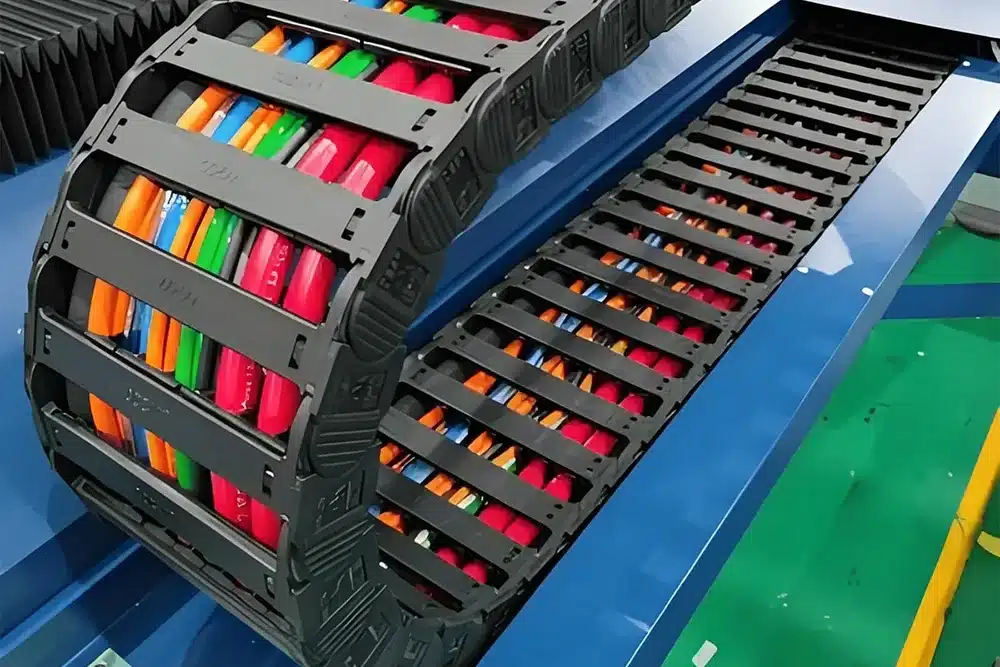
Use trays or clips to avoid tight bends and pooling areas. Hulk’s high-flex cables tolerate dynamic movement without compromising seals.
Avoid Trapping Liquids in Conduit
Understand the difference between Leak Sensing and Normal Sensor Cables
Distinguish Leak Sensing from Regular Sensor Cables
Practical Selection Scenarios and Recommendations
Practical Selection Scenarios and Recommendations
Humid or Outdoor Use: Choose venting and corrosion resistant sensor cable connectors with high UV stability in the form of a gel filled cable assembly.
Dusty Machining Environments: Use positive pressure enclosures and regularly inspect and protect the Hulk connections.
Create a design and maintenance checklist.Develop a design and maintenance checklist.
Design and Maintenance Checklist
Design Checks
- Equal MpV throughout the complete chain?
- Water blocking and corrosion-resistant materials have been chosen?
- Is a down flow and drip loop properly planned?
Installation Checks
- Accurate gland torque and alignment?
- Are there any dangerous trapped liquids in routes?
Maintenance Checks
- A regular cleaning and inspection programme?
- Has it been protected with covers and documented?
With these practices, selection and maintenance of sensor cable connections can result in substantially lower risks. The highly specialized sensor & actuator cables offered by Hulk Electric are certified by UL, CE and more and provide the flexibility, durability, and performance your automation systems require.
Provide our team with your application information and we’ll make tailored recommendations based on your environment.