Cables and dress packs on robot arms break far more frequently than the mechanical components or controllers of the robot arms in many 24/7 automation factories. These failures stop production in an uncontrolled manner, cause safety trips and consume hours of troubleshooting. If you have a well established inspection and maintenance plan, you will be able to detect the onset of wear or damage before it becomes a problem.
For years we have delivered Torsion-rated robot cable and high flex solutions to plants all over the world at Hulk Electric. This guide is designed to bring those real world lessons into a handy robot arm cable maintenance checklist to use daily, weekly, and periodically. Consistently follow the guidelines to reduce downtime and increase the life of the cable in your robot cells.
Understanding Where and Why Robot Arm Cables Fail
Technicians know where to look for trouble by understanding the weak points. The constant bending, torsion and abrasion of cables and dress packs by robotic arms, particularly 6 axis robots, can cause degradation.Cables and dress packs are subjected to constant bending, torsion and abrasion due to the movement of robotic arms, particularly 6-axis robots, which can lead to degradation.
High-Stress Zones on a 6-Axis Robot

Focus on the wrist near the end-effector where frequent twisting and tight bends are made. Heavy torsion at joints with large ranges of rotation, such as J1 at the base and J4 or J6 at the wrist. Look for cable exit/entry locations on the robot body and transition areas between stationary and moving parts. These areas tend to pinch on edges or whipping during quick movements. Addressing these high-stress zones requires proven torsion cable technology for 6-axis robots engineered for continuous twisting, bending, and 3D motion.
Typical Cable Failure Modes in Robotic Arms
Common problems include jacket abrasion or cuts to jacket caused by contact with guards or fixtures, kinks and crushed sections due to poor routing, exposed shielding or braids, broken strain-relief clamps, connector pull-out and breaks in the internal conductors. Often the last is presented as intermittent axis errors or communication alarms, prior to total failure. Any exposed surface will wear more quickly if contaminated by weld spatter, oil or chips.
Daily Visual Checks Before or During Each Shift
The little things that happen on a daily basis only take a few minutes, but they can detect major problems before they get out of hand.
Quick Walk-Around Inspection of the Arm and Dress Pack
Go all the way around the cable harness and inspect for new scuffs, flattened areas, bare or broken shielding, loose or missing ties and anything that might snag. Slow Walk Cycle the robot, checking for cables getting caught, snapped, or whipped. Record any new accumulations of debris.
Connectors, Strain Relief and Safety Signaling
Inspect the connectors on the base, wrist and EOAT to ensure that they are locked on and strain relief boot is not damaged. Check safety-related cables for pinching or damage – they can trip emergency stops unexpectedly.
Weekly and Monthly Cable Inspection Tasks
More detailed checks are done weekly or monthly (dependent on high-duty cycles), as applicable.
Checking Routing, Bend Radius and Pinch Points
Check cables are not loose or wrapped around in new sharp bends or loops. Check minimum bend radius (usually 10 times the outer diameter of the cable) at the joints and brackets. Check for extra tie-downs or mended areas with pinch points.
Verifying Cable Carriers, Dress Packs and Protective Sleeves
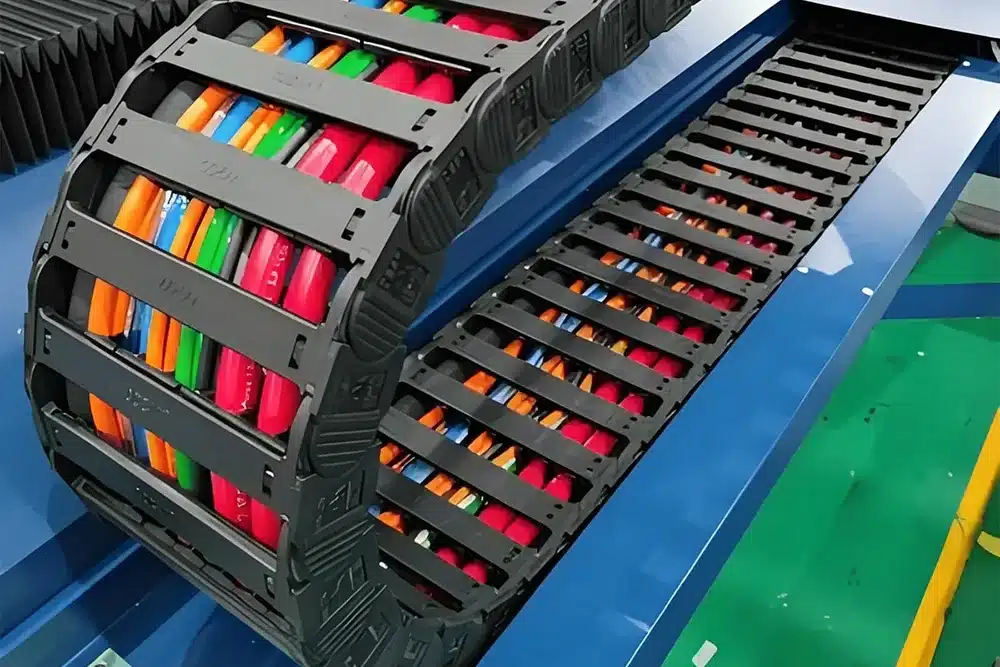
Check multi-axis cable carriers or corrugated tubes for cracked links, worn inside surfaces, loose brackets, or cables that are no longer separated in the tube. Damage to the cables speeds up internal cable damage. Selecting a properly engineered custom drag chain cable from the outset significantly reduces the risk of these carrier-related failures.
Periodic Cleaning, Torque Checks and Environmental Control
Loose parts and contamination mask the onset of failure and accelerate the process.
Cleaning Cables and Removing Debris
Use manufacturer’s recommended procedures to clean the arm, dress pack and area of chips, dust, weld spatter and oil. Avoiding abrasion and chemical attack on jackets by clean surfaces.
Tightening Brackets, Clamps and Mounting Hardware
Insure brackets, clamps and rails for torque to per OEM specifications. Loose hardware allows parts to rub together, while over-tightening will crush the cables. Torque ensures that everything stays in place without causing any damage.
Scheduled Preventive Replacement and Lifecycle Planning
Dress pack components are like wear items and be replaced according to replacement plans, not when they fail.
Defining Cable Service Life Targets by Hours or Cycles
Determine base replacement cycles based on operating hours, cycle counts, duty severity and historical plant data. In high duty applications such as welding, swaps may be required every few months or even after a million cycles, without any signs of damage.
Keeping Spares and Standardizing Cable Sets
Adopt standard robot cables and dress pack designs that have been proven. Have pre-terminated spares on-hand to reduce downtime in planned or emergency replacement situations.
Maintenance Checklist: Tasks by Interval
Print this Robot Arm Cable Maintenance Checklist and customize frequencies to your operation.
Daily / Per Shift Tasks
- Conduct walk-around visual inspection for scuffs, flattening or peeling of shielding
- Slowly jog the robot to observe the movement of the cables and to detect if the cable catches or if there is tension in it.
- Look for recent alarm on axes or I/O
- Inspect for damage and seating at connectors
- Remove any obvious junk from dress pack
Weekly / Monthly Tasks
- Confirm complete routing, bend radii and pinch points
- Check internal separation, sleeves and cable carriers
- Inspect and tighten clamps, brackets and mounting devices
- Thoroughly pack and wash the dress and arm.
- Record any small wear marks for trend tracking
Annual or Major Service Interval Tasks
- Take apart partially to inspect the harness for any hidden parts.
- Check connector pins for corrosion or deterioration
- Change cables and components beyond service life expectations
- Check if there are patterns in alarm history related to cables
- Keep the maintenance records up to date and change the PM periods as needed.
Training, Documentation and Working with Cable Suppliers

Checklists only work when technicians understand what to check and records are up-to-date.
Training Technicians to Recognize Early Cable Damage
Use images of actual worn cables and dress packs for short sessions. Train staff to make note of all observations, even the smallest ones, to begin to see patterns early.
Sharing Failure Data with Robot and Cable Vendors
Report the same failures over and over again to your robot OEM and cable supplier, for example, if you are having a problem with your wrists keep the data for failures and send it again. This feedback can help to design better dress packs, upgrade specs, or route upgrades, which will positively affect all the similar cells.
When this robot arm maintenance checklist is followed regularly, reactive extinguishing becomes predictable reliable. At Hulk Electric, we design high flex servo, torsion and industrial Ethernet cables specifically for these challenging robotic applications. If you have continued problems with dress packs or are looking for an upgrade, let our team know about your application. We will provide assistance in choosing the appropriate cables and support techniques to insure that your robots will run longer with less interruption.