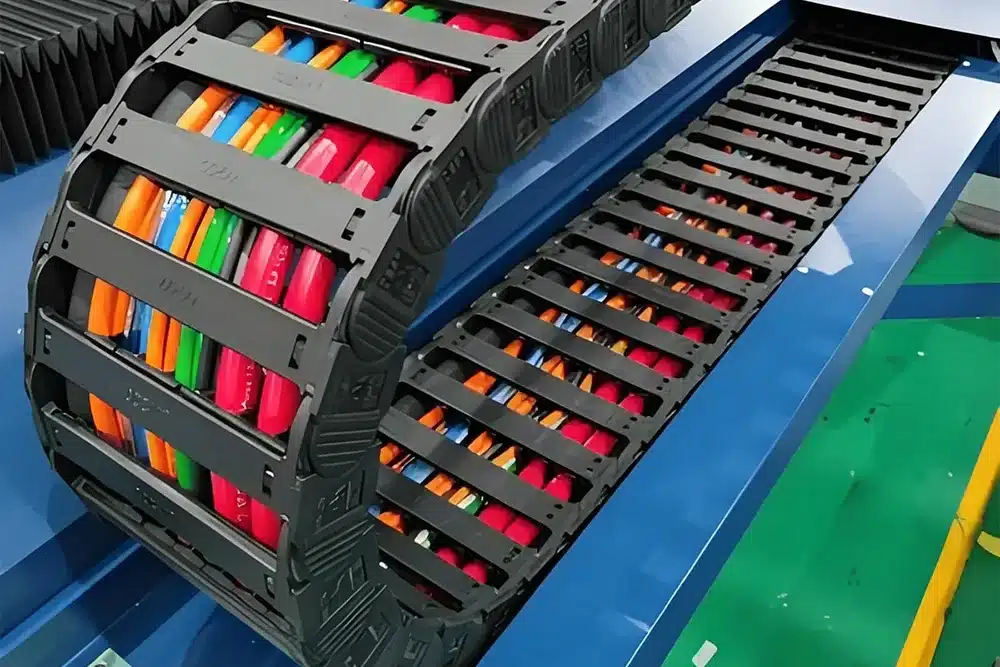
Silicone cables are frequently used in dynamic industrial applications such as robotics, automated material handling, and CNC machinery, where their ability to withstand extreme temperatures and flexibility are highly desirable. However, many find that there are cables that are classified as “flexible” but still break prematurely when they are used in repetitive movements. It is all about understanding the interaction between actual mechanical stresses, like bending, vibration, torsion, acceleration etc. with the actual dynamic flexibility to get the real service life.
This guide provides practical examples of such relationships, based on actual motion control applications. It aids automation engineers, robotics designers and maintenance teams in making improved specification and routing decisions to ensure the life of silicone cable in high-cycle applications.
What Flexibility Really Means for Silicone Cables
One of the most common misconceptions about flexibility in cable selection is that it is the same for all individuals. An easy-to-hand bend cable in the installation process can not endure millions of cycles in continuous use. Silicone rubber insulation is very flexible and performs extremely well over a broad range of temperatures, but performance over the lifetime of the cable will depend on the full cable construction and the use of mechanical stresses.
Silicone Rubber Flexibility Across Temperature
Unlike other materials it retains its suppleness when cold and remains elastic at high temperatures up to 200°C and higher. This is why silicone cables are especially useful for thermal cycling, cold starts, or in close proximity to motor or drives. Its abrasion-resistant properties help to minimize installation pressure and avoid cracking along the cable’s path.
Pliability vs Dynamic Fatigue Resistance
Pliability is one time bending resistance, and dynamic fatigue resistance is resistance to repeated cyclic loading. If the stranding and shielding are not optimized for motion, a very soft silicone cable may feel very flexible and have a high degree of conductor fatigue. Well-engineered high flex silicone cables, on the other hand, distribute stress over many millions of cycles as they incorporate fine stranded conductors and strong silicone jackets.

How Mechanical Stress Damages Silicone Cables Over Time
Mechanical stresses can not be completely prevented through even the best silicone insulation. Multi-forces act on the cable at the same time in drag chains and robot arms, vibrating equipment.
Bending, Stretching and Copper Fatigue
These bending cycles put tension on the outside of the cable, while putting compression on the inside. Even though copper conductors are ductile, they suffer minute damage each time they are cycled. The excessive bend radius has the effect of rapidly inducing this fatigue. Research indicates that bending radius reduction by half can decrease the flex life by 70-85%.
Vibration, Impact and Mechanical Movement
There is additional loading from machinery vibration and sudden impacts, which silicone is partially able to dampen out. But if support or clamping is not adequate, it is possible for too much flexing to occur causing abrasion, localized stress concentrations, and cracking or breaking the insulation.
Torsion and Twisting Loads in 3D Motion
Torsional stress can be applied along the axis of the cable in robot joints and multi-axis systems. Shear forces are not the same as simple bending, and pure torsion can lead to breakdown of cables, even with silicone jackets, in a short time if they are not designed for such stresses. Anti-twist features are crucial in these applications in proper construction of cables.
Flexibility as a Stress-Reduction Tool – But Only in the Right Design
With proper design, silicone properties can reduce peak internal stresses and help to delay fatigue. Fine stranding spreads out the stresses on more individual wires, reducing the stresses on each one. Many materials crack during repeated flexing but silicone jackets do not.
Fine-Stranded Conductors and Stress Distribution
The finer the wire strands, the higher the strand count, the better the flex life will be as each strand will move freely and share the load.
Cable Diameter, Bend Radius and Stress Levels
The greater the bend radius, the less the strain on conductors and insulation. The relationship is nonlinear: that is, a small decrease in radius results in a large increase in stress. In dynamic applications, silicone cables may be able to be bent over smaller curves than stiffer insulations, but a minimum radius of 10× the outer diameter of the cable is a good starting point for the designer.
Silicone’s Role in Reducing Insulation Cracks and Softening
Silicone has superior mechanical properties that remain more consistent with time and temperature than PVC or some TPEs, minimizing surface cracking. But it cannot make up for small conductors and incorrect routing which focuses stress elsewhere.
Dynamic vs Installation-Only Flex – Why Specification Language Matters
Many “flexible” silicone cables are used for simple or limited motion. They are prone to failure in continuous drag chain or robotic service applications.
Installation Flex vs Dynamic Motion
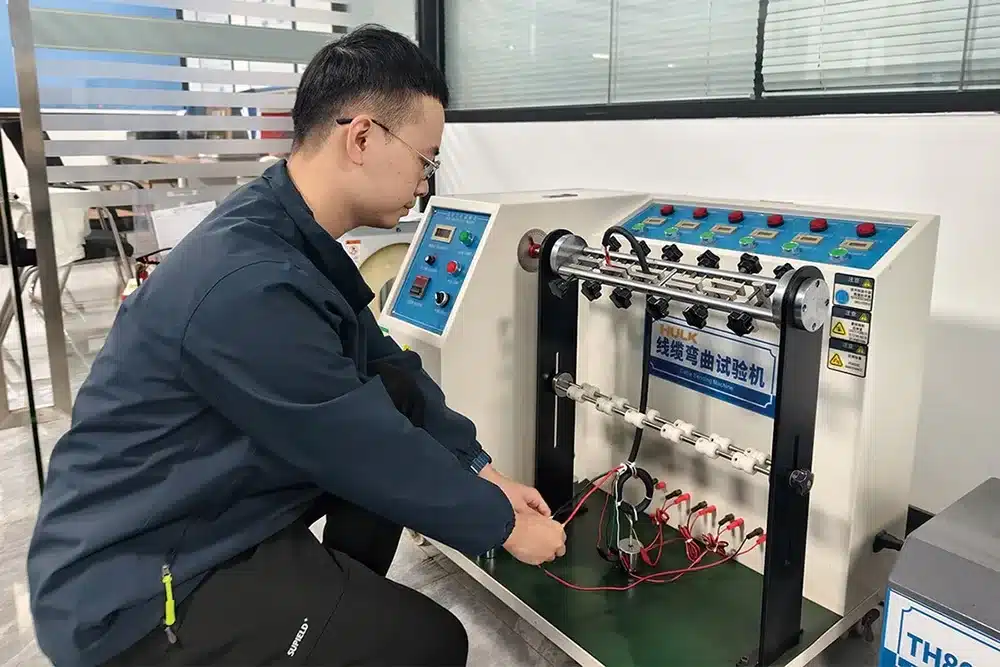
Installation-flex cables are good for onetime routing but don’t have an optimized stranding and shielding for high cycle life. Dynamic rated cables are tested dynamically and are given the listed cycle ratings under specific conditions.
What to Look for in “High-Flex” or “Dynamic” Ratings
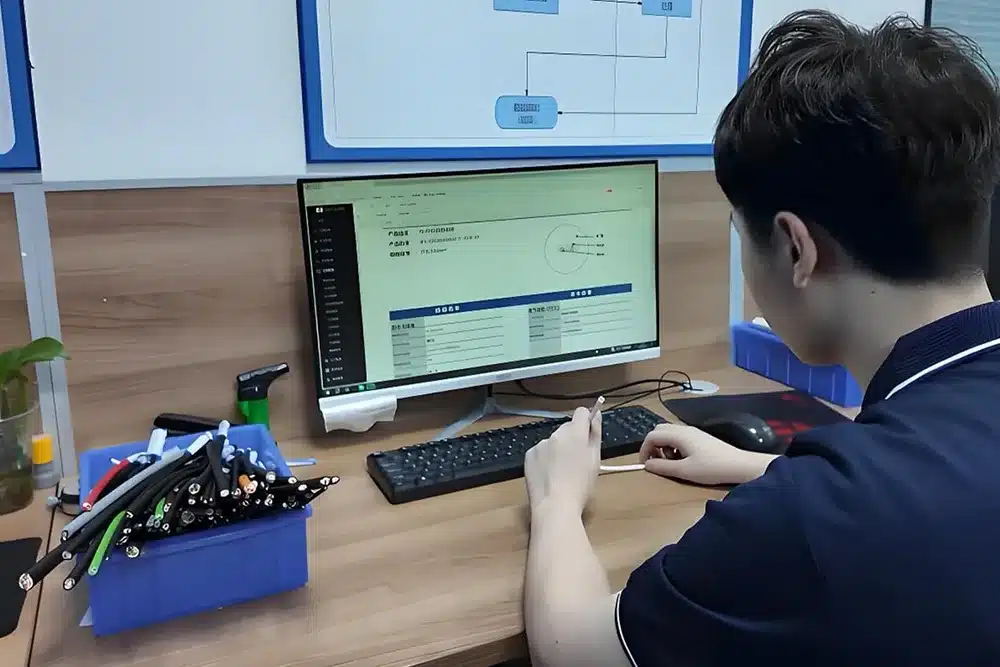
Ask actual test data: Minimum bend radius, how many cycles did that perform, the temperature and the type of motion. When using generic marketing terms, please check with supplier test reports that match your application profile.

Installation Practices That Extend Silicone Cable Lifespan in Motion
Often the longevity of the cable is more attributed to correct installation than to the material itself.
Respecting Minimum Bend Radius and Avoiding Sharp Edges
Keep or exceed the manufacturers MINIMUM Dynamic Bend Radius. Avoid sharp edges, use adequate guides and avoid twisting when routing cables.
Strain Relief, Clamping and Anchor Placement
Use strain reliefs by connectors to prevent cyclic loading on connector terminations. Properly anchor cables at points to avoid excessive whipping or sagging in systems that are moving.
Managing Acceleration, Travel Length and Motion Profile
Stress is increased with high acceleration, long travel distance and complex 3D paths. In these instances, use torsion-resistant constructions and use the proper spacing between the cables, ensuring support.
Failure Modes in Dynamic Silicone Cable Applications – And How to Spot Them Early
Preventing unplanned downtime with early detection.
Insulation Cracks, Stiffening and Surface Damage
Check for whitening, small cracks at bend locations, abrasion or localized hardening. These changes are more apparent in silicone’s normal elasticity.
Conductor Fatigue, Broken Strands and Resistance Changes
With some internal strand breaks, the first evidence may be intermittent signals or increasing resistance, with no actual strand failure. It is advisable to make periodic electrical tests on critical circuits.
Connector and Termination Failures
Stress tends to localize at the ends. To ensure protection of these high-risk areas, it is essential to use the proper strain relief and secure anchoring.

Designing for Longer Flex Life – Practical Checklist for Dynamic Silicone Cable Applications
When ordering or checking silicone cables for motion use this checklist:
Key Design and Selection Questions
- Which type of motion is the most prevalent (bending, torsion, vibration, or some combination)?
- What is the minimum desired cycle life?
- Is the bend radius planned adequate and within specifications for the dynamics?
- Is the acceleration, speed and length of travel taken into consideration when selecting the cable?
- Are there any flex-life test data available from the supplier for similar conditions?
Collaboration with Cable Manufacturers and System Integrators
Provide thorough motion modelling, environmental data and constraints from the start. The engineering team at Hulk Electric is experienced in developing custom high flex silicone cables for challenging dynamic applications such as drag chains, robotics, and automated systems. We supply construction, shielding and jacketing which corresponds exactly to your requirements for maximum reliability.
Choosing appropriate high flex silicone cables and proper mechanical procedures can significantly decrease fatigue failures. Flexibility is considered as a whole system design rather than just a property of the system and plants realize longer service life, reduced replacement rates, and increased OEE.