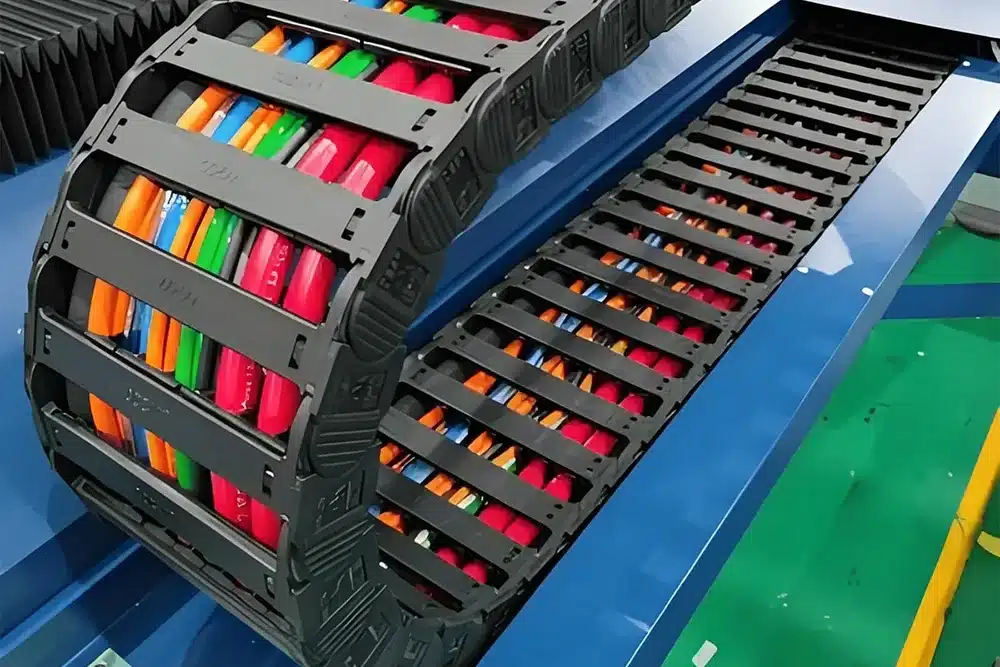
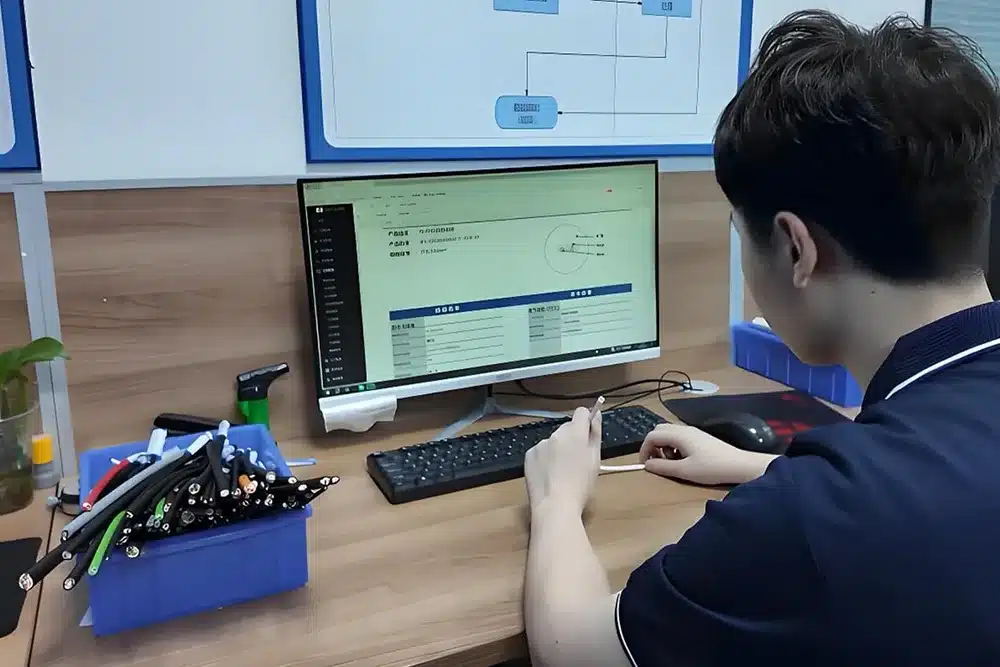
Choosing the appropriate drag chain cable is crucial to ensuring smooth and reliable machine operation in high-performance machine design, or to minimizing costly downtime. The need to make the transition from standard to custom drag chain cables arises when catalog options no longer match the motion profile, environmental requirements, or integration requirements. From OEMs and integrators, we help them make the call every day, making sure that cables perform over the long haul under real-world conditions at Hulk Electric.
It outlines a practical approach to determining the need for a standard continuous-flex cable or custom-engineered solution, thereby helping to mitigate risk, maximize lifecycle value and create more competitive machines.
Where Standard Drag Chain Cables Shine — and Their Limits
Standard drag chain cables (called continuous-flex cables) are designed for the most popular industrial automation applications. They are tested for millions of flex cycles, and specify typical stroke length, bend radius, speed and acceleration.
Typical Use Cases for Standard Drag Chain Cables
These cables are extremely functional for simple applications like CNC machine axes, typical automation lines, pick-and-place systems and conveyor systems. If your motion remains within the published parameters (moderate travel distances, standard bend radii, and typical factory environments), off-the-shelf solutions are available quickly; there is proven reliability and they’re competitively priced.

Mechanical and Environmental Assumptions Behind Catalog Cables
With moderate conditions of oil, temperature and abrasion, most catalog cables have the assumption of linear motion. They employ standard stranding, jacketing (typically PUR or TPE) and shielding designs designed for maximum compatibility. If your application requires these envelopes, then a catalog cable is often the easiest way to go.
Step 1 – Classify Your Motion Profile Before Choosing Cable Type
Accurate classification of proper motion is for smart cable selection.
Motion Categories (Fixed, Flex, Continuous Flex, Robot/Torsion)
- Fixed installation: Simple power or control cables.
- Flexibility for occasional use: General flexible cables generally can be used.
- Motion that is continuous: Needs special drag chain / continuous-flex cables.
- Multi-axis or torsional movement:Requires special robot/torsion cables.
When Catalog Continuous-Flex Is Enough
If a stroke, bend radius, speed and acceleration are within the manufacturer’s specifications and the environmental factors are standard, a drag chain cable from a catalog will provide a good service life with relatively small engineering effort.
Motion Profiles That Start to Push Catalog Limits
Combined high speeds and accelerations, extreme long travel distances or combined linear travel and torsion are warning signs. If published test data doesn’t offer adequate margin then it is time to look at custom continuous-flex cable design options.

Step 2 – Identify Design Constraints Catalog Cables Can’t Meet
All good catalog offerings have limits.
Space and Routing Constraints
For tight machine envelopes, a standard machine envelope may not be enough, requiring non-standard outer diameter, ultra-small bend radius or flat/slim machine envelope.
Electrical and EMC Constraints
Many applications must have a combination of power, high speed data and feedback signals in a single cable and may require custom conductor arrangements, specific shielding and accurate twisting to ensure signal integrity and EMC compliance.
Environmental and Regulatory Constraints
High UV levels, harsh chemicals, extreme temperatures or hygiene/smoke control needs often are beyond the range of standard jackets.
Connector, Color and Marking Requirements
The specific numbers of conductors, custom colour coding, branding or sector specific certification may not be available as a catalog.

Step 3 – Typical Scenarios Where Custom Drag Chain Cables Make Sense
Multi-Function Hybrid Cables in Tight Chains
Custom hybrid designs break the fill factor constraint, enhance EMC performance and streamline routing when a machine requires a bundle of power, encoder and sensor signals to be in one neat drag chain.
Extreme Duty Cycles and Mission-Critical Axes
Applications such as 24/7 production lines or the high-speed packaging machines that set the standards for high cycle expectations are best suited to cables that are especially designed and proven for those specific applications.
Harsh or Atypical Environments
Standard catalog jackets may not be suitable for particular food processing or chemical exposure environments, or outdoors use.
Balancing Cost, Risk and Flexibility – Why Not Always Go Custom?
Custom cables are engineering, tooling, MOQ and lead time. If the volume of the axes is not high enough or it is not critical, the benefits of the change might not outweigh the costs. The balanced approach takes into account TCO (total cost of ownership) versus risk of premature failure.
Designing Custom Drag Chain Cables – Key Technical Considerations
Conductor and Stranding Design
Mechanical means of long service life are the provision of fine stranding, optimized lay lengths, and high flex conductor classes.
Core Configuration, Shielding and Impedance
Cores, twisted pairs and shielding (foil / braid / hybrid) are all carefully arranged in accordance with electrical and EMC specifications.
Jacket and Insulation Material Selection
The durability under continuous flexing and environmental stress directly depends on the choice of material, whether PUR/TPE or special high temp or chemically-resistant compounds.
Validation and Testing of Custom Drag Chain Cables
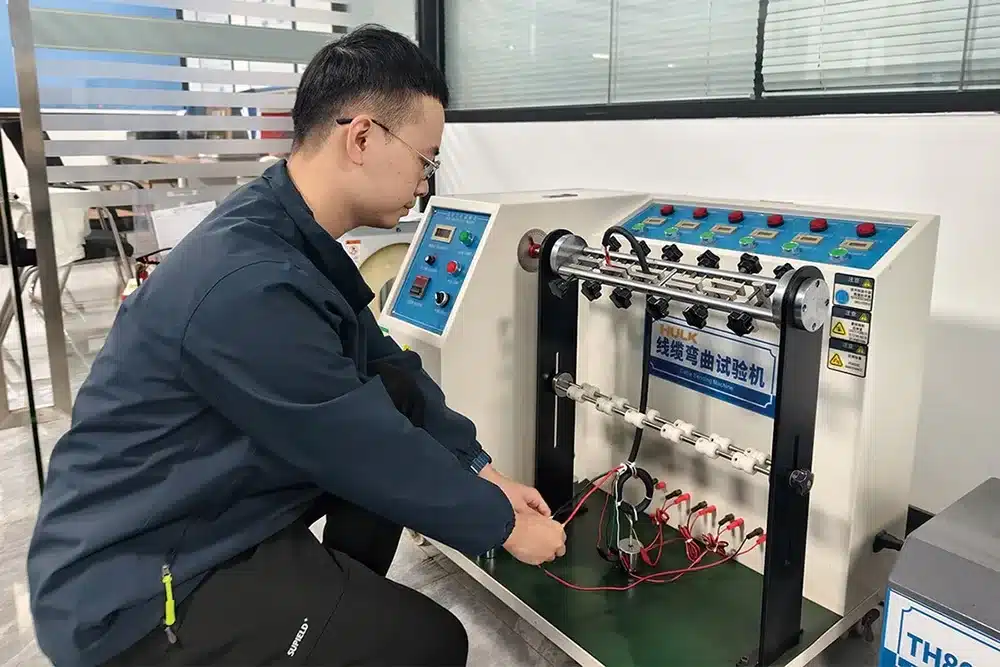
Laboratory Flex and Drag Chain Testing
It is important to conduct realistic testing in drag chains that replicate stroke, radius, speed, acceleration and environment.
Field Trials and Feedback Loops
Production tests are carried out with limited production and then monitoring their performance can be done prior to final deployment.
Practical Decision Framework – When Catalog Is Enough vs When to Go Custom
Follow this basic decision tree:
- Have a catalog drag chain cable that has enough margin to cover your motion, environment and EMC requirements? → Begin with catalog.
- Are there special requirements or constraints (space, hybrid functions, extreme conditions, regulatory requirements) that present serious compromises? → Discuss custom.
- If the axis is critical to the mission and is costly to experience downtime; consider custom, even if the catalog is only slightly acceptable.
Final Guidance – Treat Custom Drag Chain Cables as a Strategic Tool, Not a Default
For most standard applications, catalog drag chain cables are still the smart choice – they are tried and tested and widely available, and are reasonably priced. Use custom continuous-flex cable when motion profiles, integration issues, or environmental applications require it to be different than available in catalog. Taking a systematic approach, machine builders — categorizing motion, defining constraints, measuring risk, and working with an experienced manufacturer — get their best combination of performance, reliability and economics.
We believe that at Hulk Electric (Dongguan) Co., Ltd., we can provide you with high quality flexible cable products of standard products, as well as fully customize drag chain products for you. With 15,000㎡ of workspace, a broad range of test facilities, and 20+ years of experience, we can supply cables with performance that meets the most challenging automation applications. Teach our team your machine parameters and we’ll help you decide what the best way forward is from standard to custom.