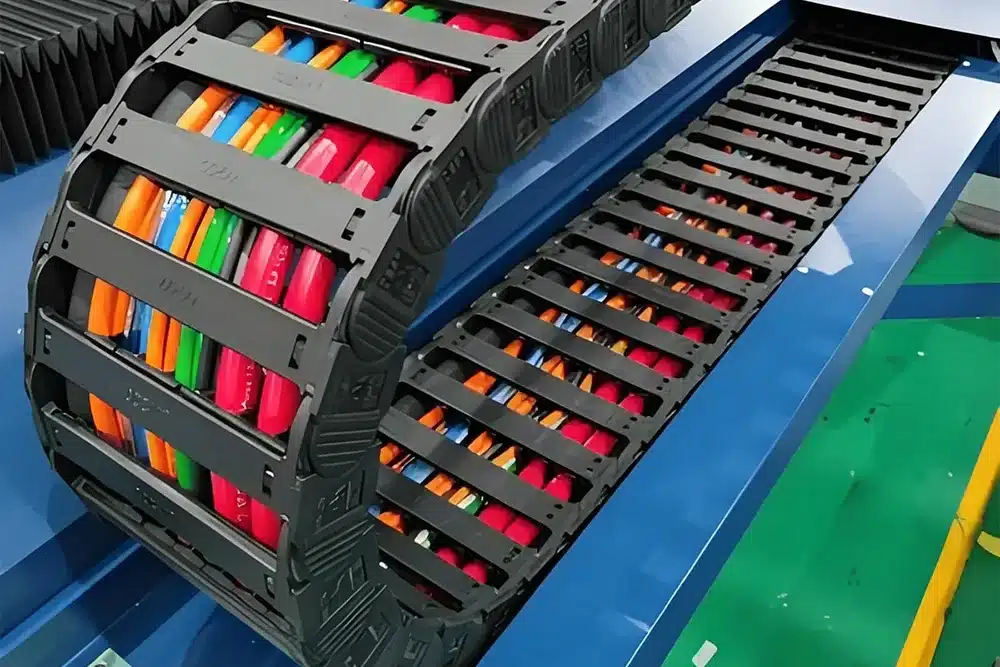
Growing up, I’ve always been drawn to the world of television.Ever since I was a kid I’ve always been fascinated with the world of television. This outer jacket needs to resist the constant exposure to hydraulic oils, coolants, weld spatter, metal chips and harsh chemical cleaners, whereas the inner conductors and shielding take care of the mechanical stresses involved with twisting and bending. The wrong jacket results in cracking, swelling, abrasion or melting, resulting in unplanned down time in high-stakes cells.
This guide is based on practical experience in providing high-flex robot and torsion cables for manufacturers all over the world. It covers the most important environmental stresses, introduces some of the most common types of jackets such as PVC, PUR, TPE/TPU and gives a practical guide to choosing the appropriate jacket for your particular robot motion profile and operating environment.
Understanding Harsh Robotic Environments – Oil, Weld Spatter and Chemicals
The continuous multi-axis motion and harsh environments on industrial robots demand a robust solution, such as a torsion cable, that can withstand the environment for long periods of time. Automotive and machining cells include hydraulic oils, cutting fluids, coolants, and hot spatter and thermal cycling is common in welding applications. In food processing lines or paint lines, chemical washdowns are an added stress.

Oil and Coolant-Rich Cells (Automotive, Machining, Metalworking)
In these types of environments, cables are subjected to continuous exposure to oils and fluids which can work their way into the jackets and cause damage. PVC tends to grow stiffer and crack with time, whereas PUR and TPE jackets resist and retain integrity much longer because of their excellent oil resistance.
Welding, Thermal and Spatter-Intensive Cells
Near welding torches, jackets should be able to withstand hot sparks which can penetrate or melt the softer material. For thermal cycling jackets must be tough yet not brittle.
Chemical and Cleaning-Intensive Environments
In applications such as food & beverage or chemical processing, jackets exposed to acids, alkalis, solvents or washdown chemicals must have a wide chemical resistance so they will not swell or break down.

Common Jacket Materials Used on Torsion-Rated Robot Cables
The process of choosing the right jacket begins with understanding the performance of PVC, PUR, TPU/TPE and sometimes silicone in torsion motion and severe exposure environments.
PVC Jackets – Where They Work and Where They Fail
PVC is a cost-effective choice with good resistance to a number of cleaning products and medium abrasion. Adaptable to less heavy duty indoor robots that are less exposed to oil or spatter. During cold weather, however, it becomes stiff and in the presence of prolonged oil exposure, it crackes or swells. Do not use PVC in heavy oil/weld cells as it does not last long.
PUR Jackets – The Workhorse for Industrial Robots
Polyurethane (PUR) jackets are widely used in most of the robotic applications because of their excellent flexibility, high abrasion resistance, resistance to oils, coolants and mechanical wear. Resisting low-temperature brittleness, they undergo millions of torsion/bending cycles and are a dependable material for drag chains or robot arms in challenging situations for automation.

TPU/TPE and Other High-Performance Jackets
Thermoplastic Elastomers (TPE/TPU) offer outstanding elasticity, chemical and UV/weatherability. They’re bright in harsh chemical conditions, outdoors and in high-frequency use where flex life is paramount. Silicone jackets are great for high-temperature applications and less durable against abrasion and tear, which means that they are not ideal for applications that require a lot of mechanical stress.
How Motion Type and Installation Conditions Interact with Jacket Choice
The performance of the jacket relies on both the environment it is exposed to, and the mechanical stresses of cable carriers, such as tension, bending, dragging and tight radius.
Torsion and Bending Behaviour of Different Jackets
PUR and TPE/TPU have an advantage over standard PVC in terms of maintaining pliability over repeated torsion and this helps to minimize fatigue. The TPE/TPU has very good shock absorption properties in high speed multi-axis movements.
Installation Conditions – Dragging, Crushing, Tight Radii and Fixtures
Abrasion is a risk when using dress packs or clamps. In the case of tougher PUR and TPE jackets, they are much harder to tear and tear on the surface when being dragged or made contact with guides. Always check minimum bend radius requirements with the specification of the jacket you’ve selected.

Matching Jacket Material to Oil, Weld Spatter and Chemical Exposure – Practical Scenarios
Scenario 1 – Oil-Heavy Machining and Automotive Cells
Most often, PUR jackets will serve as the minimum standard of quality for torsion cables because they offer excellent oil and abrasion resistance, and they are also flexible at low temperatures. For even more severe exposure or outdoor applications, TPE/TPU can be selected.
Scenario 2 – Welding Robots and Spatter-Intensive Cells
PUR or special purpose robot jackets with better spatter resistance work well and sometimes are also used with protective sleeving in the hottest areas. PVC will start to char or melt rapidly.
Scenario 3 – Chemical Cleaning and Aggressive Washdown
cid, solvent and often washdown resistant TPE/TPU or chemically formulated PUR jackets are available for wide resistance. For lighter cleaners, PVC might be acceptable only.
Compliance, Approvals and Lifecycle Cost Considerations
In applications where fire safety or low smoke are important, seek jackets that comply with UL, CE, RoHS and LSZH standards. PUR and TPE jackets offer lower total ownership costs because of their lower upfront cost, longer service life and reduced downtime in the harsh environments of robotic applications.
RFQ and Design Checklist – Specifying Jacket Materials for Torsion Cables
Ensure suppliers know the details to make optimal recommendations:
- The model and motion profile of the robot (torsion degrees, cycles per minute)
- How the material has been exposed: type of oils, proximity to welds, chemical cleaners
- The temperature range to include cold starts.
- Caution: Drag chains, potential crushing, clamps
- The minimum number of years that a certification is required and the target service life.
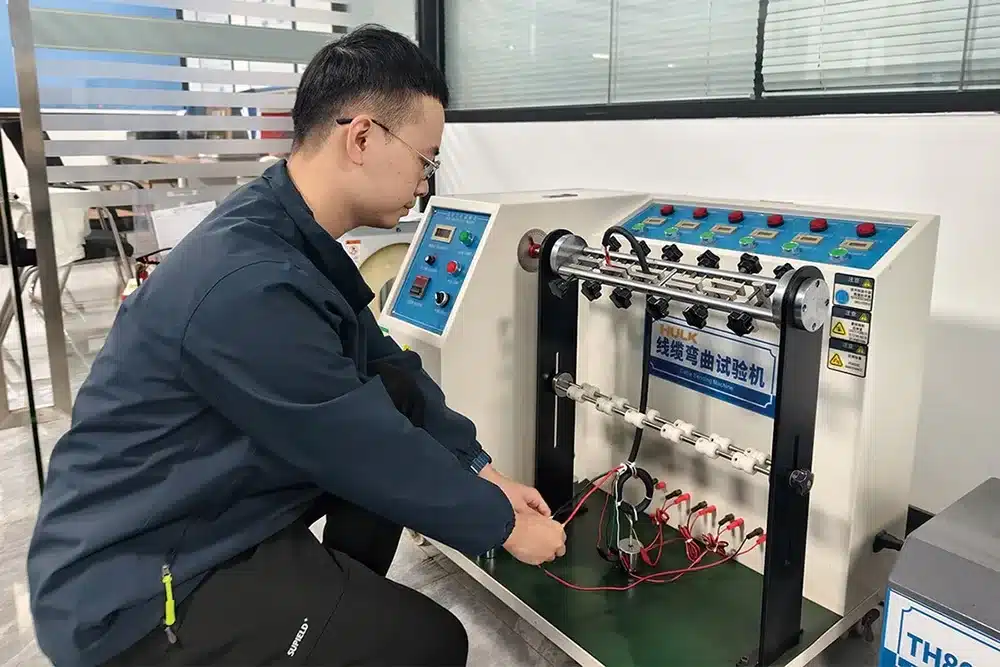
Inquire about tested oil/chemical resistance, torsion cycle data and other reference installations from vendors.

Closing Guidance – Start from Environment and Motion, Then Choose Jacket
The first step towards successful torsion cable deployments in harsh robotic environments is to clearly document the oil, weld spatter, chemical and temperature environments as well as the specific motion and installation stresses. Then, choose PVC, PUR, or TPE/TPU for various applications. Specializing in custom robot and torsion cables that are designed specifically for these challenges, we’d like to hear your parameters to get your custom jacket solutions that maximize uptime, at Hulk Electric.