Mismatched cable jackets and insulation is a common cause of failures, especially in severe industrial applications, not because it is a manufacturing defect but because it is not a proper fit. A PVC jacket that is cut in a hot oil facility can become hard and brittle within a matter of months and a non-washdown compound in a food facility becomes a hygiene problem in a food plant in no time. To select the materials to support your custom cable jacket and insulation, you need to match your stressors (oils, chemicals, temperature variation, motion and regulations) to the properties and limitations of the materials. This guide empowers OEM designers, automation engineers and maintenance personnel with actionable tips to use to make a cable last longer and reduce unplanned downtime.
Start with the Environment – Mapping Real Stressors Before Choosing Materials
The first step to making the right material choice is to define the exact conditions your cables will be used in, not just from a catalog rating. Describe in detail the fluids, temperatures, mechanical requirements and cleaning procedures. This “design brief” avoids expensive mismatches later on.
Oils, Coolants, Chemicals and Contaminants
The cutting oils, coolants, and hydraulic fluids that machine shops come into contact with also get into the jackets and break down many standard jackets over time. Process plants containing aggressive cleaning products or solvents can lead to swelling or loss of mechanical properties. Washdown areas introduce another source of chemical stress – food grade detergents. Specifically the type of oils or greases, the concentration and the length of exposure; a generic “oil resistant” may not work in reality with the plant.
Temperature, UV, Humidity and Washdown
Every time the motor or oven is switched on, or the car starts in cold weather, or in the outdoors where the UV rays of the sun hit the car, aging will be accelerated by ambient and radiant heat. Jackets need to be hydrolysis resistant and maintain their surface integrity with repeated high-pressure washdown. If insulation and jackets get moisture, it can cause corrosion at terminations, which is enhanced by humidity and condensation. Materials behave differently when exposed to steady high temperatures as compared to thermal cycling, so check both continuous and peak ratings for your set up.

Common Insulation and Jacket Material Families – Strengths and Limits
There are multiple families of polymers used in industrial cables. Knowing their compromises will help whittle down choices rapidly.
PVC and PE / XLPE – When Standard Compounds Are Enough
PVC has good electrical properties and cost-effective for use in moderate environments where the control cables are fixed, installed indoors or flexed lightly. Both PE and XLPE give good dielectric properties and are also moisture resistant. However, these materials harden when in motion and are not resistant to harsh oils or high temperature and can release significant amounts of smoke during a fire. Are suitable for non-dynamic panel wiring, but tend to fail early in drag chains or oil rich areas.
PUR and TPE – Workhorses for Oil, Abrasion and Motion
Polyurethane (PUR) and thermoplastic elastomers (TPE) are known for their superior flexibility, abrasion resistance and oil / chemical resistance. Their strengths lie in dynamic applications such as conveyors, machine tools and robotics where cables are subject to repeated bending. These compounds can operate over high temperature ranges and remain unaffected from cuts created by sharp edges. Trade-offs are that it may be more expensive, and the low-temperature flexibility varies by formulation.
Silicone and High-Temperature Compounds
Silicone jackets and silicon insulators are flexible both in the hot and cold conditions, and can withstand extreme temperatures ranging from -60°C to +200°C. They are appropriate for around ovens, furnaces or outdoors extremes. If mechanical abrasion is also involved, be aware that they are less tear resistant and more expensive than other types—use of a good strain relief can help.
Halogen-Free, Low-Smoke Flame-Retardant Compounds
These formulations reduce toxic smoke and corrosive gases when a fire occurs and are suitable for public infrastructure, tunnels or enclosed areas. They will typically sacrifice a bit of flexibility and/or a higher price for enhanced safety compliance. Consider using them where flame ratings and low toxicity are required.
Matching Motion and Environment – How Materials Behave in Drag Chains, Robots and Tight Routing
The mechanical requirements of the material should match the actual requirements.
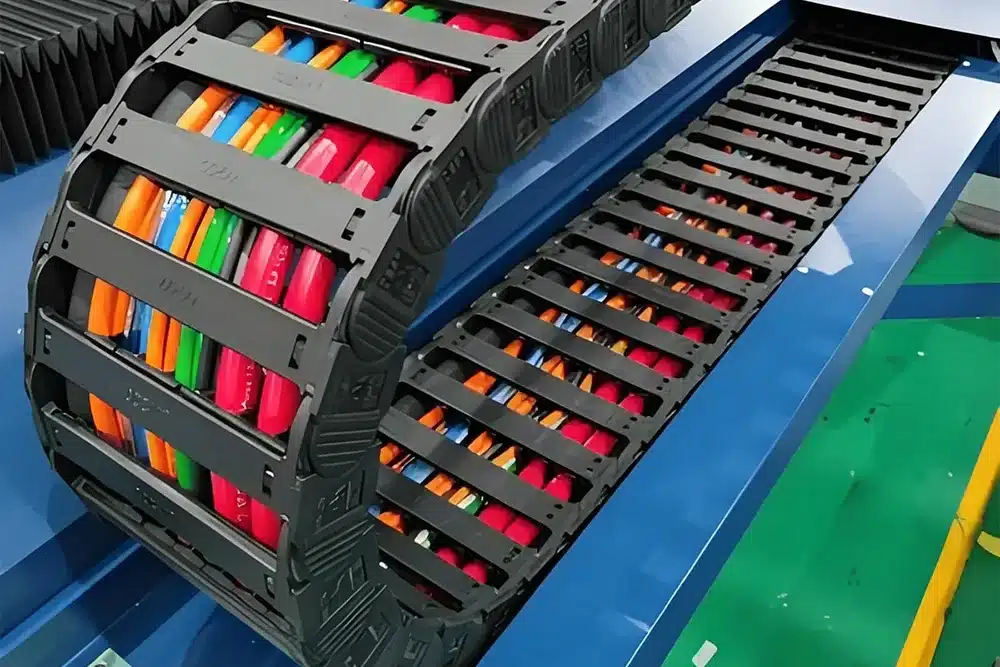
Continuous Flex and Drag Chain Applications
The jackets are subjected to millions of bending cycles and also internal abrasion in drag chains. PVC is not up to this here, because it has an insufficient resistance to wear and tear, nor is PUR and TPE with a low friction surface. Choose materials that have been tested for your specific bend radius, stroke length and speed so that you don’t get cracking or core damage.
Torsion and Multi-Axis Robotic Motion
3D Movement Robotic Arms introduce additional twisting motions that may lead to tearing jackets which are not suited to such movement. Specialized compounds that are torsion rated, continue to provide shielding integrity and flexibility during repeated rotation. There are plenty of cases of typical cables breaking at bends where a lack of consideration of torsion has been a problem.

Tight Spaces, Sharp Edges and Mechanical Contact
Cables that are routed around corners or around moving parts must be tough and abrasion resistant. These conditions are more readily controlled with PUR/TPE formulations than with standard formulations. Remember to always use the right material with proper strain relief and routing.
Chemical Compatibility and Testing – Don’t Trust Generic “Oil-Resistant” Labels
Understanding “Oil-Resistant” and “Chemical-Resistant” Claims
The test data is dependent on many factors such as the type of fluids, temperature and duration of the test. Ask for detailed compatibility reports and reports on changes in tensile strength, elongation and hardness after exposure. Some hydraulic fluids react well to some additives and not to others.
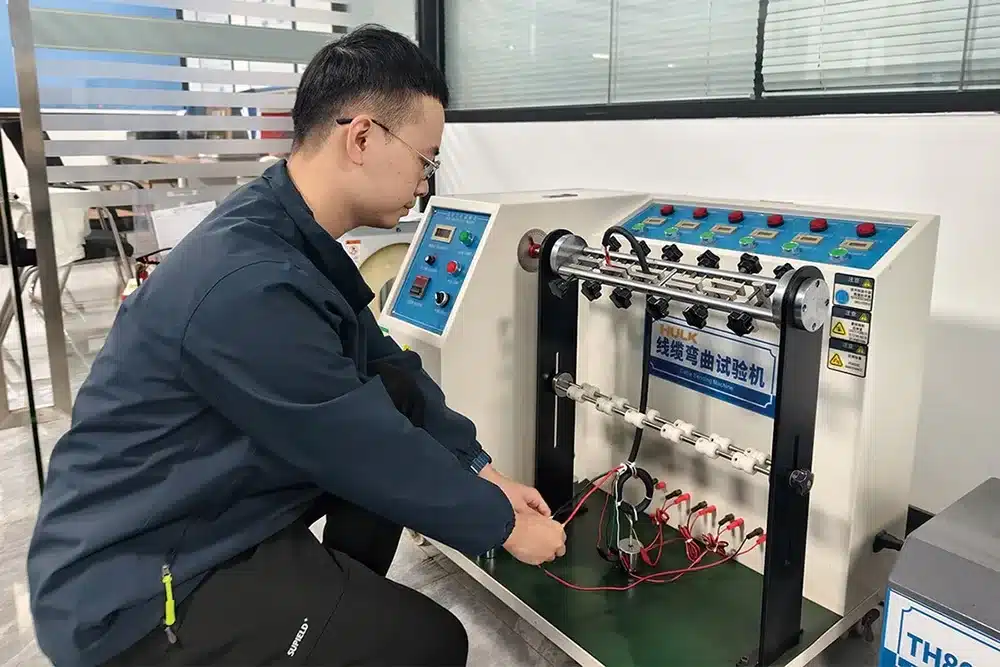
Application-Specific Testing and Sample Trials
Conduct short production trials of potential cable under field conditions. Check for any signs of swelling, cracking or loss of flexibility. If you can’t find what you need in standard compounds, work with your manufacturer to get a compound custom-made, or verified with test results.
Regulatory, Industry and Plant-Standard Requirements
Food, Beverage and Washdown Applications
For washdown areas, smooth, non-porous jackets are necessary that will not hold bacteria when exposed to caustic cleaners. Food grade materials make audits easier and minimise contamination risks.
Public Infrastructure, Transport and Safety-Critical Environments
Many of these situations require halogen-free, low-smoke compounds. Check flame ratings and certifications early.
Internal Plant Standards and Preferred Materials
There are many facilities that have approved materials lists. Match those requirements with your specifications to ensure quicker approvals and support for the long haul.
Common Material Selection Mistakes—and How to Avoid Them
Using PVC in High-Heat or Oil-Rich Zones
This is a very common mistake which causes the jackets to be brittle and have to be replaced frequently. Upgrade any fluid or temperature in the first upgrade to PUR, TPE or silicone if necessary.
Ignoring Motion When Choosing Jacket/Insulation
High-cycle flexing can cause cracks in chemically suitable materials. Always check dynamic ratings along with environment resistance.
Over-Engineering or Under-Engineering Materials
Over-priced compounds result in unnecessary added costs; low priced compounds lead to more downtime. Consider cost of ownership and performance data and trials.
Practical Material Selection Checklist for Custom Cable Projects
Key Questions to Answer Before Specifying Jacket and Insulation
- Which particular fluids, chemicals and cleaning will come into contact with the cable? (Conducts resistance tests for chemicals)
- What are the normal, peak and ambient temperatures and what does this involve – including radiant heat? (Determines thermal class)
- Is the cable static, flexing or under torsion, and what are the bend radius and number of cycles? (Dictates flexibility and fatigue properties).
- Indoor/outdoor or UV exposure or wash down? (Influences UV stabilizers and hygiene aspects)
- Any customer, regulatory or internal material standards must be adhered to. (Shapes compliance shortlist)
What to Ask Your Custom Cable Manufacturer About Materials
- What do you suggest for my stressors?
- Do you have application-specific chemical and flex test data?
- What are the continuous flex/torsion ratings of these compounds?
- Have experience with similar applications and environments?
- Are samples available for in-plant testing?

Choosing the right materials for custom cable jackets and insulation in severe industrial environments, ultimately, will minimise failures, make maintenance easier and ensure compliance. Our engineering staff at Hulk Electric actively collaborates with our clients to match compounds to actual operating conditions through our in-house testing plus decades of experience across the automation, robotics and process application spaces. Tell us your project specifications and we will provide durable cables.