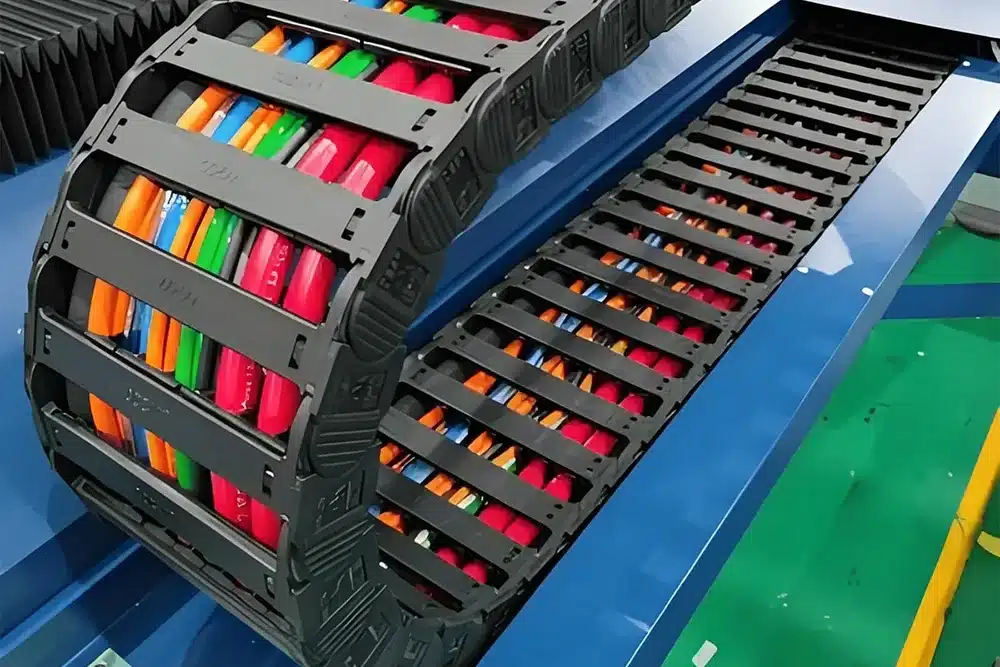
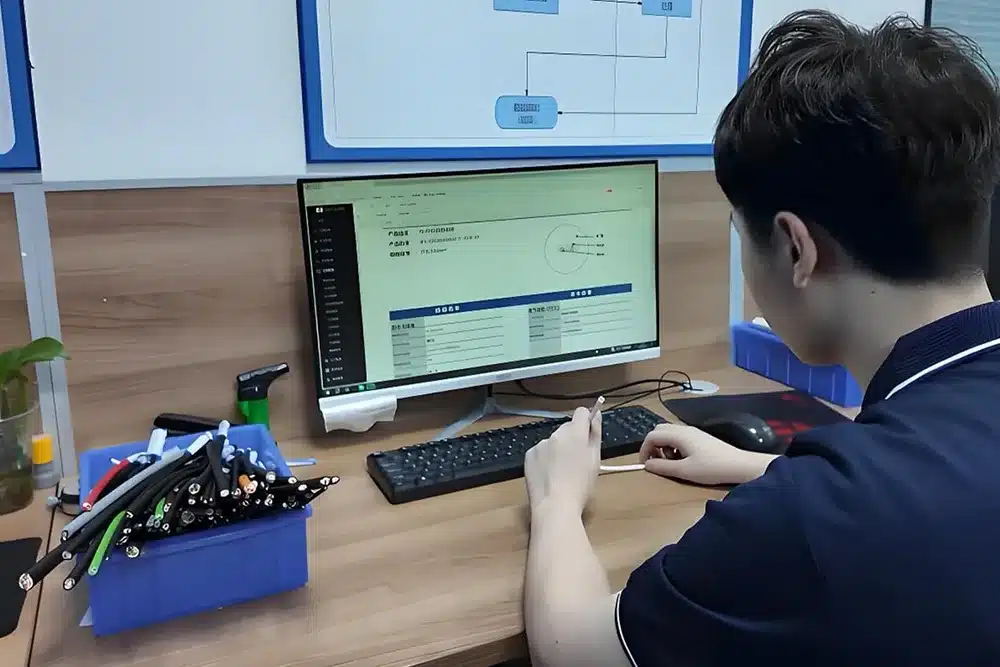
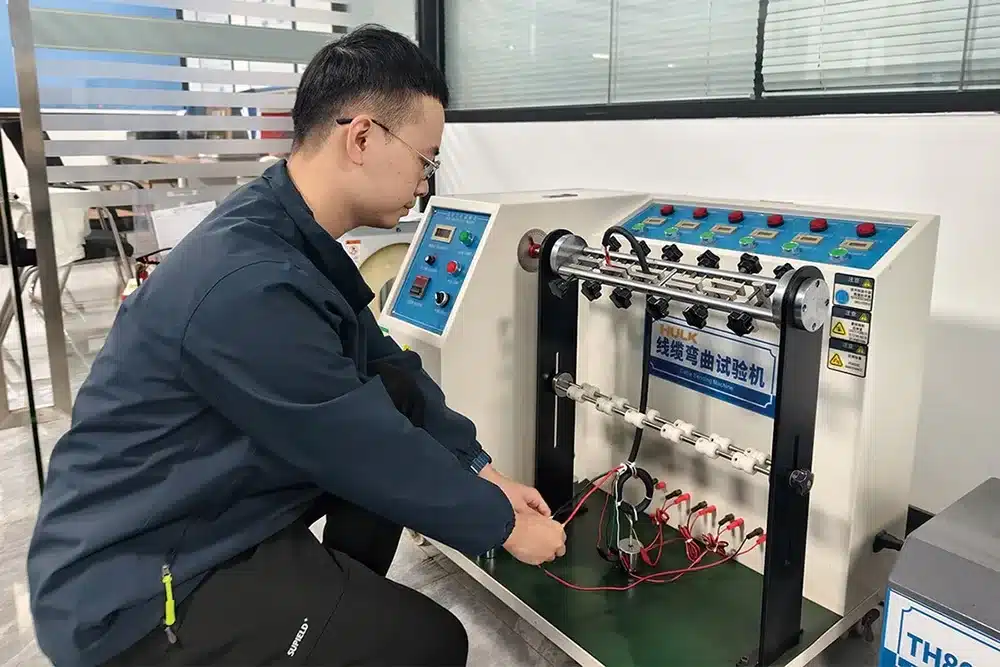
Signal integrity issues with moving cable carriers can stealthily stall automated manufacturing lines with seemingly random errors from the encoder, dropouts from the fieldbus or even unpredictable servo performance. Such intermittent faults usually occur during motion and can be very hard to trace. Having manufactured high flex cables for more than 20 years in the rigors of industrial applications, Hulk Electric has helped engineers identify and solve these problems, by solving both the electrical and mechanical stresses inherent in drag chains.
Knowing exactly why the issue is occurring, whether due to EMI from surrounding power lines, low shielding from continuous flexing or mechanical fatigue, enables maintenance and controls teams to identify the problem sooner and help them to recommend effective cable solutions for maintaining clean signals for millions of cycles.
What Signal Integrity Means in Moving Industrial Cables
Signal integrity (SI) refers to the accuracy with which an electrical signal reaches the receiver from the transmitter with minimum distortion, noise, attenuation and timing errors. It’s difficult enough in a static installation. When dealing with continuous flexing, twisting and severe exposure to extreme factory EMI, moving cable carriers (energy chains) place SI in their own daily struggle.
Common issues are reflections, jitter, crosstalk, added noise, and dropouts. Even slight degradations in these industrial applications, such as servo feedback, Industrial Ethernet (PROFINET, EtherCAT) or sensor networks, can initiate alarms, influence positioning accuracy, or lead to unplanned stop.
Typical Symptoms – Noise, Dropouts and Intermittent Faults
Motion related signal problems typically manifest themselves in ways which are not captured by a static error check:
- Noise: Surprising noise on analog signals or extraneous pulses on digital lines, which may increase and/or become more noticeable with axis motion.
- Dropouts: Temporary loss of communication on fieldbus or Ethernet links, or encoder count loss which recovers automatically.
- Intermittent faults: Errors that occur only at certain locations, speeds, accelerations, or temperature in the travel range.
If faults are highly associated with cable carrier movement and not with a steady state situation, then the cable is the likely culprit.
Electrical Causes – EMI, Shielding and Grounding Problems
EMI in High-Interference Industrial Environments
EMI sources abound in factories – VFD, large motors, welders and switching power supplies. These fields can couple on to sensitive signal lines through long parallel runs or poor segregation within the cable carrier and result in communication errors.
Inadequate Shielding or Wrong Shield Type
Sometimes static-rated foil shields crack with repeated bending, which reduces their effectiveness. Shields made of braid or hybrid (foil + braid) offer superior mechanical durability and wide-band protection, and are suitable for continuous flex applications. One common EMI problem in continuous-flex industrial cables is the selection of the wrong type of shield.
Poor Shield Grounding and Termination
Loose or long pigtails or inconsistent grounding make shields antennas not barriers. Noise currents must be safely diverted by using proper 360° terminations and low impedance paths.
Mechanical Causes – Damage and Motion-Induced Problems
Conductor Fatigue and Intermittent Continuity
Over bending with repeated flexes beyond the cable’s bend radius will lead to single strand failure and intermittent opens. These exhibit as noise spikes or dropouts based on position.
Jacket Damage and Moisture/Chemical Ingress
Rusted or worn jackets permit dirt and debris to enter, compromising insulation and posing leakage routes as electrical faults.
Poor Segregation and Layout in the Carrier
Twisted, rolled or rubbing cables create uneven stresses, which lead to accelerated wearing of the shield and conductor. Many moving cable carriers suffer from faults that are intermittent but can be prevented with proper separation and dividers from power cables.

Diagnosing Whether the Problem Is Electrical, Mechanical—or Both
Correlate Faults with Motion, Position and Speed
Use the terms fault, motion and speed to describe the relationship between them.
Visual Inspection of Cables and Carrier
Check for jacketing, flat spots, misrouting or inadequate strain relief throughout the travel path. Verify isolation of signal and power cables.
Electrical Tests Under Motion
Slowly bend the cable and carry out continuity and insulation resistance tests. Monitor signal quality with an oscilloscope during operation and error rates with a protocol analyzer.
Case Patterns – How SI Problems Typically Show Up in Moving Cable Carriers
Encoders and Servo Feedback
Alarms, position jumps or servo instability are usually due to fatigue of the conductors or damage to the shield of the feedback cable.
Fieldbus and Industrial Ethernet
Frequent issues are random CRC errors, link drops and timeouts, caused by poor hybrid shielding or being near power lines in the carrier.
Analog and Low-Speed Control Signals
The frequent occurrence of noisy readings or false trips is usually due to poor shielding together with mechanical stress.
Design Practices to Prevent Signal Integrity Problems in Moving Carriers
Separate Power and Signal Paths
Isolate with carrier compartments or dividers. For the worst cases, the cleanest solution is that of a dedicated carrier.
Choose Shield Types and Cable Designs for Motion
Use high quality continuous-flex cables featuring controlled-impedance, twisted pairs and high quality braid/hybrid shields. These fast-paced conditions are taken into account with Hulk’s servo, robot and Industrial Ethernet cables.
Implement Proper Grounding and Termination
Install 360° shield connections and system-specific grounding (both or single end) in accordance with best practices.
Maintenance Practices Focused on Signal Integrity
Incorporate visual checks of cable condition, shield integrity, and routing into preventive maintenance. Monitor error logs over time to catch rising trends before they cause downtime.

Practical Diagnostic Checklist for Signal Integrity in Moving Carriers
- Moving Carriers: Signal Integrity Practical Diagnostic Checklist
- Is it related to movement, certain movements, or to speed?
- Do jackets appear to be in good shape or show wear, twisting or abrasion?
- Does the cable have the correct rating for continuous flex and drag chain operations?
- What is the type of shield and the termination/grounding method?
- Are there adequate segregations between signal cables and power cables?
- How can error logs help determine timing and conditions?
Final Guidance – Treat Signal Integrity in Moving Cables as a Joint EMC and Mechanical Problem
Signal integrity issues in moving cable carriers is a combination of intertwined electrical and mechanical issues. Focusing on just one side will result in reoccurring problems. With the right cables, layout discipline, shielding and with constant understanding and monitoring, engineers can ensure the system will perform reliably regardless of the environment.
In the design of Hulk Electric (Dongguan) Co., Ltd high flex servo, robot torsion, Industrial Ethernet and fieldbus cables, these challenges have been taken into consideration. Provide the application information and we can help to detail solutions to keep the signals clean throughout millions of cycles.