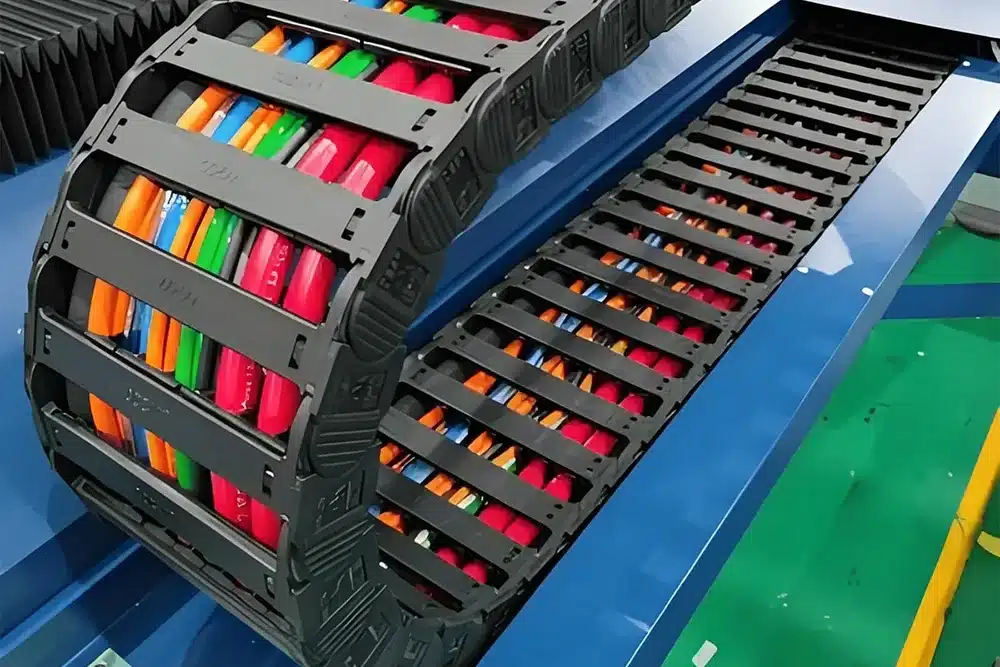
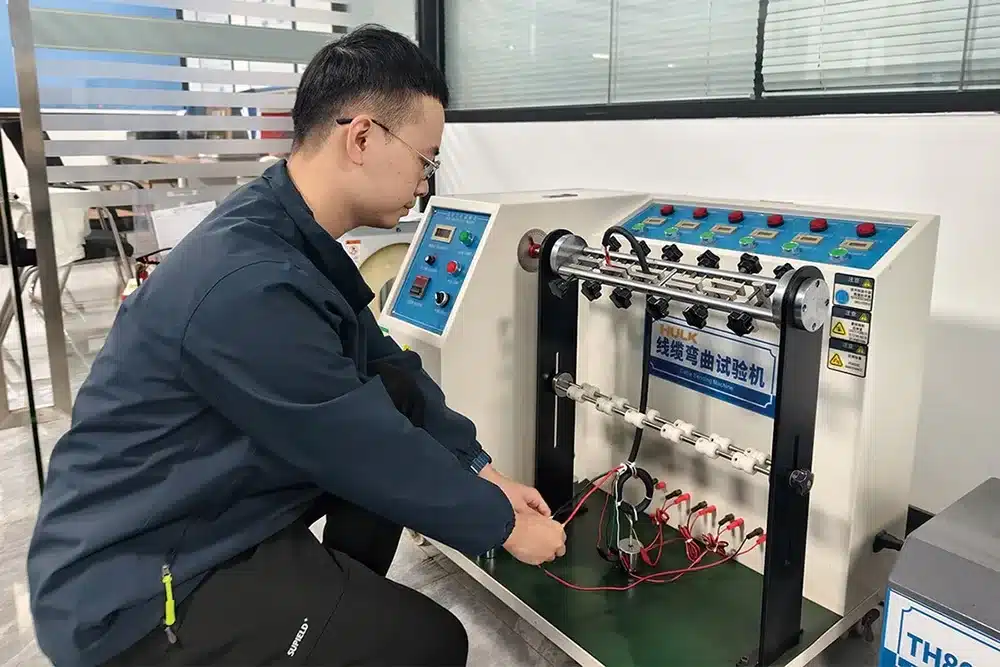
Preventive maintenance strategies for drag chain cables are no longer an option today, but a critical consideration to ensure maximum uptime, minimize unplanned downtime, and maximize service life for critical motion systems. Chain cables (also referred to as energy chain or continuous-flex cables) are subject to millions of cable bend cycles annually in robotics, CNC machines, material handling and automated assembly. If one fails, the entire production line may come to a standstill, causing major losses.
We, at Hulk Electric, have over 15 years of experience providing high-flex cables to customers around the world in the automation industry and know how to prevent the potential disaster from being a scheduled and manageable task through consistent, practical maintenance routines. It provides field-tested tips that maintenance teams can use right away.
Why 24/7 Production Lines Need a Preventive Approach
There are few opportunities to react with fixes when things go wrong when they are in use. In these conditions, the chain cables are subjected to high mechanical stress, environmental pollution and thermal fluctuations. A small abrasion or misalignment of the cable jacket, conductor or signal that may happen unnoticed can easily turn into cable jacket failure, conductor breakage, or signal loss.
Even those cable carrier systems that are marketed as “maintenance-free” can gain a lot from regular attention, according to industry experience. Using proactive maintenance allows early indication of wear, avoids cascading failures and contributes to better long-term cable selection. This translates to increased equipment availability and reduced total cost of ownership (TCO).
Defining Preventive Maintenance Objectives for Drag Chain Cables
The three basic objectives of drag chain cable preventive maintenance are:
- Prevention of wear, routing or environmental damage prior to failure.
- Carefully organized measures to minimise disturbance during scheduled shutdowns.
- Data driven improvement that loops back to future cable specifications and design of cable systems.
This isn’t just about ticking boxes but about ensuring safety, reliability, and predictable performance.
Visual and Functional Inspections – Daily to Weekly Tasks
Daily / Per-Shift Visual Checks by Operators
Rapid visual checks can be incorporated into shift transfer. Train operators need to pay attention to:
- Cracks, deformations or broken links in the drag chain.
- Abrasions, cuts, swelling or discoloration on cables when wearing a jacket.
- No twisted, tangled or cables escaping from compartments.
- Unexpected noises (grinding, scraping or rattling) while moving the axis.
Most early emerging problems are caught by these simple observations.
Weekly / Scheduled Functional Checks
If lockout/tagout procedures are properly used:
- Slowly move axis through its entire range of travel and watch how chain and cable behaves.
- Check for smooth, quiet movement, no sticking, jerking or binding.
- Inspect chain links for elongation or wear.
Record and identify trends over time.
Cleaning Practices – Keeping Chains and Cables Free of Debris
Why Cleaning Matters in 24/7 Environments
In a continuous production, dust, metal chips, coolant residue and debris tend to accumulate very quickly. This accumulation leads to increased friction, which can cause abrasion, and may also be a cause of trapping moisture or chemicals that can cause deterioration in the cable jackets.
Recommended Cleaning Methods and Frequency
Take all power off and lock before powering down equipment. Use:
- Loose debris soft brush and compressed air.
- Cable jacket materials approved cleaners (harsh solvents are not recommended).
- Frequent cleaning of guide channels, particularly for long travelling applications.
Lubricate following manufacturer instructions—Many plastic energy chains do not need lubrication. Clean regularly (once a week or more frequently if heavily contaminated).

Periodic Layout and Strain Relief Audits
Checking Cable Routing and Separation
Check monthly or quarterly:
- The cables are not twisted in the chain.
- Fill factor and separation rules are still followed.
- Balanced weight distribution remains.
Be careful of any work done during repair that may have interfered with original layout.
Verifying Strain Relief and Anchor Conditions
Check security and tightness of fixed and moving end strain reliefs. Avoid bending the chain at clamps or connectors – bend it within the chain’s designed radius. Tighten the mounting hardware as necessary.
Scheduled Replacement and Wear Criteria for Cables and Chains
Defining Wear Limits for Cables
When you see the following, replace the cables:
- Exposure of the shield or inner conductors as a result of jacket abrasion.
- Chemical/thermal degradation with cracking, swelling or loss of flexibility.
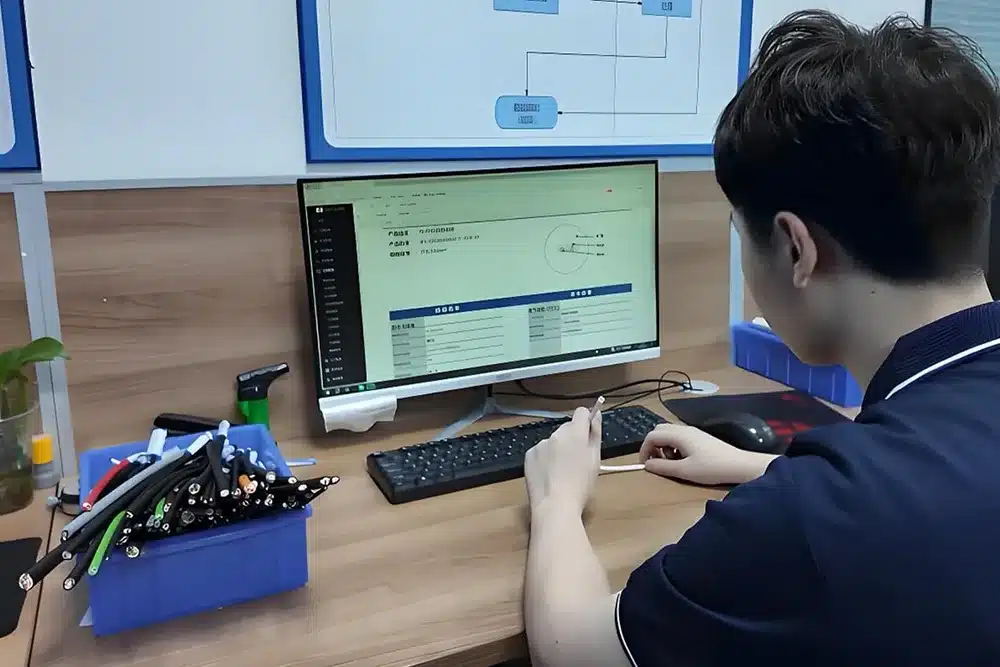
- Increasing electrical issues such as intermittent signals during testing.
Set proactive replacement interval by cycle counts and manufacturer life data.
Defining Wear Limits for Chains and Guide Systems
Watch for chain elongation, broken links, worn glide shoes or worn guide bars. If it’s essential to replace worn parts, do it during scheduled maintenance periods to avoid unexpected failures.
Condition Monitoring and Predictive Maintenance for Critical Axes
Simple Condition Monitoring Techniques
Record cycles on axis, monitor the fieldbus or encoder error rates, periodically test insulation resistance or continuity.
Advanced Sensors and Predictive Tools
If the axis is with high criticality, then sensors for vibration, temperature or wear monitoring might be considered. These tools can predict maintenance requirements and schedule maintenance to meet operating conditions.

Integrating Drag Chain Maintenance into Plant PM Programs
Building a Drag Chain Cable PM Checklist
Incorporate into your CMMS:
- Daily: Visual and noise checks performed by Operator.
- Weekly: cleaning and working tests.
- Monthly/Quarterly: Layout audit, strain relief audit.
- Cycle-based: Replacement planning.
Training Operators and Technicians
Make sure employees are trained to identify signs and know the needs of their set-up cables and chains. Frequent training enhances the early detection of errors and reduces errors.
Turning Inspection Data into Better Design and Procurement Decisions
After this, these inspection data are translated into improved design and procurement decisions.These inspection data are then translated into improved design and procurement decisions.
Take photos, notes on operating conditions, environmental factors of failures and near misses. Leverage this intelligence to modify your cable setup for example, use a stronger jacket, better shielding, or better stranding for your particular motion pattern.
Final Guidance – Make Drag Chain Maintenance a Routine, Not a Rescue Mission
Maintain your drag chain and make it a routine, not a rescue mission, is the Final Guidance.
When teams actively monitor drag chain cable wear, routing and environmental stress, cable failure in 24/7 production lines can be predicted. Plants can turn potentially dangerous situations into scheduled maintenance events with uniform strategies for managing drag chain cables, ensuring maximum uptime and long-term reliability.