PVC has proven itself to be the material of choice for cable insulation and jackets in public infrastructure and industrial automation applications for decades. However, today, engineers and safety teams are making a concerted push to replace PVC with a halogen-free cable that offers improved fire performance, toxicity and long-term reliability. The importance of this transition lies in its impact on smoke generation, corrosive gas emissions, equipment survivability, and overall operational resilience in challenging environments.
PVC’s Legacy in Automation and Infrastructure—and Its Fire-Behaviour Limits
Why PVC Became the Default Cable Material
When correctly formulated, polyvinyl chloride (PVC) became popular due to its low cost, high mechanical strength, easy processing and built-in flame resistance. Over many years it has fulfilled its purpose with reliability in factory automation systems, building wiring systems, tunnels, stations and other infrastructure where reliability and cost were prime considerations.
PVC Behaviour in Fire Scenarios
PVC produces large quantities of hydrogen chloride (HCl) gas and thick black smoke when exposed to fire. The smoke quickly prevents visibility in rooms with a small air volume, such as control rooms, data centers or tunnels, and the HCl reacts with moisture to corrosive hydrochloric acid. Consequences may include the destruction of a significant part of the cost of post-fire recovery, particularly in the electronics, metal structures and building material sectors.
Although the emissions from improved PVC formulations have been lowered, they still do not completely eliminate the secondary hazards that halogen-free formulations can offer, such as the dense smoke and corrosive acids.
What Halogen-Free and LSZH Cables Change in Fire Safety
Reduced Toxic Gas and Corrosive Acid Emissions
Halogen-free cables are cables that do not include chlorine, fluorine, bromine or iodine. Low Smoke Zero Halogen (LSZH) cables are also made without the presence of chlorine, fluorine, bromine or iodine. They emit a much lower amount of halogen acids when combusted, significantly reducing the risk of toxicity and corrosion, unlike PVC. This makes them safer to work with and sensitive equipment.
Lower Smoke Density and Better Visibility
In standard tests such as IEC 61034, LSZH cables can limit the smoke density by up to 70-80%, as compared with conventional PVC cables. In critical situations as in metro stations, airports or hospitals, it is the added visibility that gives precious time for safe evacuation and emergency response.
More Controlled Fire Behaviour
Typical halogen-free compounds include aluminium hydroxide as a filler, which volatilises water as it decomposes to cool the surface of the cable, preventing fire’s spread and reducing the potential for fire hazard. Not all cable is fireproof, but these materials limit damage and enable safer outcomes.
How Material Choices Affect Reliability, Corrosion and Downtime
Corrosion and Damage to Electronics
Smoke and acids that result from PVC can cause short circuits in control systems and machinery, pit metals and raise electrical resistance. Downtime often becomes lengthy following incidents when requiring post incident cleaning or replacement of affected electronics.
Halogen-Free Materials and Equipment Survivability
LSZH cables keep high-value equipment such as PLCs, servo drives and data equipment safe from corrosive halogen gases. This helps save time to recover, money to repair and increases operating availability of the system after a fire.
Operational Reliability and Risk Management
Halogen-free cables decrease the domino effect of fire failures in automation ecosystems and public infrastructure. These reliabilities are recommended or required by many standards and authorities for a high occupancy or mission critical installation.
Where the Shift to Halogen-Free Is Happening in Automation and Infrastructure
Public and High-Occupancy Infrastructure
Halogen-free and LSZH cables are more and more requested in airports, railway stations, metro tunnels, hospitals and high-rise buildings. In such conditions, PVC’s smoke and corrosiveness is not acceptable due to the dense population and complex systems involved.
Data Centers and Control Rooms
Data centers are great candidates for LSZH because of the high density cabling and high cost electronics. Reduced smoke and no halogen emissions not only protect the servers and network equipment, but also comply with demanding fire safety regulations.
Industrial Automation and Plant Wiring
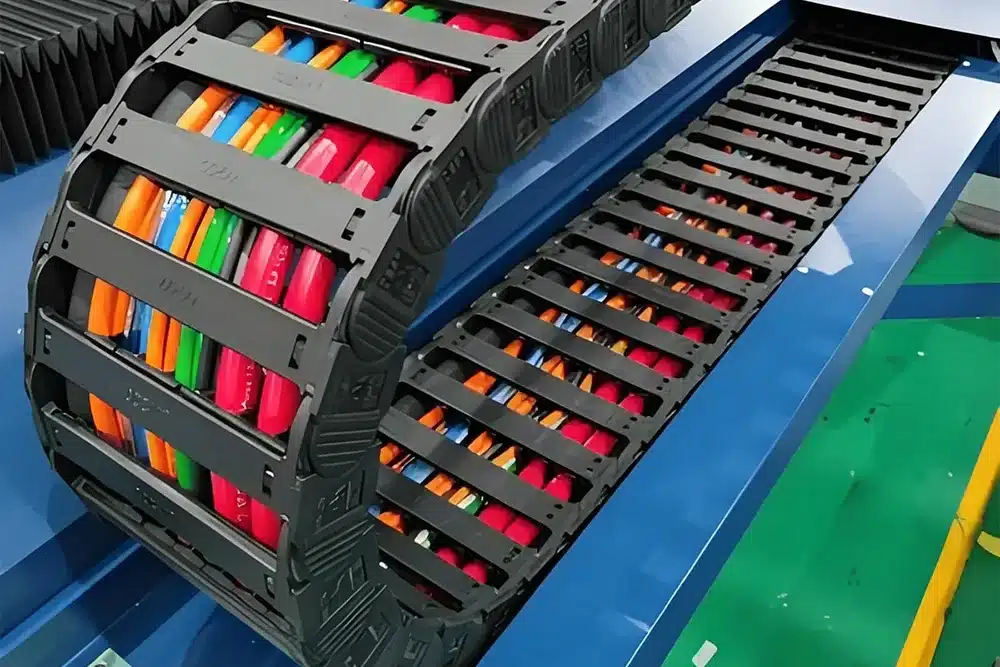
For safety-critical circuits and enclosed areas, modern factories, such as those in robotics, material handling, food processing and more, are adopting halogen-free cables. Innovative flexible designs are available to meet dynamic applications needs while keeping pace with sustainability and safety requirements.
Design and Specification Considerations When Moving from PVC to Halogen-Free
Recognize That Halogen-Free ≠ Fire-Resistant
In contrast to the true fire resistant cables, cables with LSZH properties are excellent in low smoke and low toxicity but cannot provide circuit integrity when exposed to direct flames. Include the appropriate type – reaction-to-fire or circuit integrity for emergency systems.
Update Specifications Beyond “PVC Equivalent”
Make clear requirements based on standards like IEC 60754 (halogen acid gas), IEC 61034 (smoke density), IEC 60332 (flame spread), and the appropriate CPR classes. Use clear terminology; exact specifications guarantee optimal performance of the cables.
Consider Mechanical Characteristics and Installation Practices
Halogen free compounds may be more flexible and tough than PVC. Follow the recommended bend radius, pulling tensions and protection from sharp edges or harsh environments when installing to ensure long term integrity.
Build a Risk-Based Adoption Strategy
Use halogen free products in enclosed areas, areas with lots of people, and where electronics are used. The phased approach – using LSZH where it makes the most sense, and PVC elsewhere – allows for a balance between safety, cost and practicality.
The choice of cable materials is a critical one that will have a significant impact on safety, reliability and the cost of ownership of the cable over many years. We specialize in the manufacture of high performance and reliable halogen free cables suitable for industrial automation, robotics and infrastructure application at Hulk Electric (Dongguan) Co., Ltd. Our custom solutions offer flexibility, durability, and complete compliance with international standards to assist in your shift to more safe and reliable systems.
Let us know your project’s parameters and we’ll help you develop a halogen free cable solution just for you.