Also known as LSZH or HFFR designs, custom halogen-free cables are cables with a smoke-free and zero-halogen rating that deliver enhanced fire resistance. When they need custom constructions for industrial automation, rail or data centers or building projects, however, the material and geometries are very different from the standard catalog offerings. Even if a cable design is well-intentioned, it can fail to perform as expected or meet compliance standards without adequate prototype testing and fire tests, potentially resulting in cable compliance failures, mechanical problems or additional costs.
We’ve seen at Hulk Electric, where we’ve been supporting OEMs and system integrators around the world for more than 15 years, that structured prototyping and targeted testing can convert exciting custom LSZH cables into a reliable plant-ready product. This is a guide on the action steps to validate performance early and reduce risk of full deployment.
Why Prototype and Fire-Performance Testing Matter for Custom Halogen-Free Cables
Halogen free cables do not have one universal “LSZH” label, but rather they must satisfy a range of performance requirements including smoke density, acid gas emission and flame propagation. The variables introduced by custom designs, such as special shielding, stranding and application-specific jackets, cannot be fully forecasted by standard supplier datasheets.
Material declarations without prototype validation sometimes are not followed by what happens during the audit or after installation. Early testing can help refine the product by detecting problems such as too much stiffness in drag-chain or too much smoke in bundled applications before going into full-scale production. This method reduces technical risks, safety risks and commercial risk in projects where there is an enclosed area or high occupancy.
Building the Right Prototype Plan – From Lab Cables to Pilot Installations
A staged prototype approach offers a clear transition from idea to proven performance.
Lab-Scale Prototype Cables
You should initially make some short runs, normally of 50-200 meters, with your target conductors, LSZH/HFFR compounds, shielding, and jackets. These samples can be used to make initial material compatibility checks, as well as process tuning during the extrusion process and initial fire-behaviour assessments. In this case it is important to consider manufacturability and compliance and not mechanical durability.
Functional and Environmental Prototypes
Install pre-series cables in representative equipment (robotic cell, control panel, conveyor, etc.) to check routing, bend radius, termination quality and EMC performance. Test in expected conditions, such as temperature variations, humidity, oil exposure or continuous motion, to confirm that the custom halogen-free construction is equal or superior in mechanical properties to PVC alternatives.
Pilot Installations
Use limited circuits in one controlled area (production line, data-center rack etc.) for real-time monitoring. Gather installation ease, maintenance access and any signs of degradation early in the installation. This is the step that will take you from lab to reality, in preparation for larger-scale rollout.

Fire-Performance Test Methods Engineering Teams Should Require
Request clear test reports on the construction of the particular custom cable.
Smoke Density – IEC 61034
This test measures the amount of light that passes through a smoke generated through the burning of cable. LSZH targets are specified at ≥60 – 70% transmission, to ensure visibility during evacuation and to safeguard sensitive electronics. Results have a direct impact on the selection of the compounds to be used in a jacket in an enclosed area.
Halogen Acid Gas – IEC 60754 or Equivalent
Measures the acid gas and conductivity of combustion products. Low values help prevent nearby metal structures and equipment from corroding—important in data centers, control rooms, etc. If the first prototypes are found to be above the limits, then custom fillers or blends of polymers may require adjustment.
Flame Spread – IEC 60332 (Single and Bundled)
Assesses the spread of flame up a single cable and ladder. Compliance prevents fire from moving quickly on cable trays. Bundled testing is particularly crucial for custom designs because changes in the level of protection and diameter impact performance.
Project-Specific Fire Codes
Other standards like EN 45545-2 may be required if the project is a rail, tunnel or public building. Test prototypes in accordance with the end-application’s regulatory requirements.
Mechanical, Electrical and Environmental Tests – Beyond Fire Behaviour
A fire performance is not a guarantee for long-term reliability.
Mechanical and Flex-Life Tests
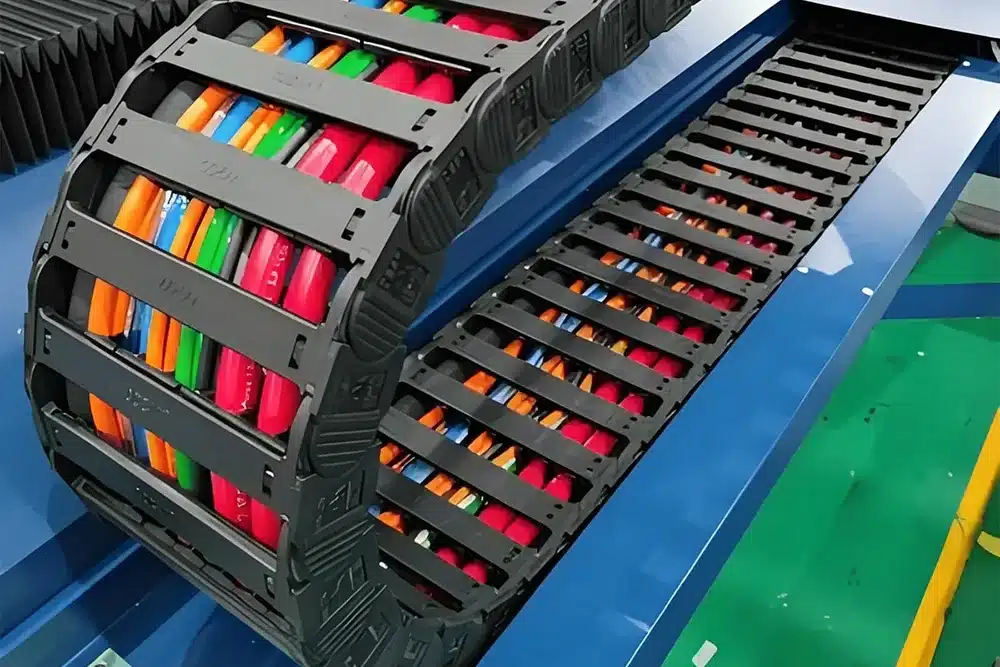
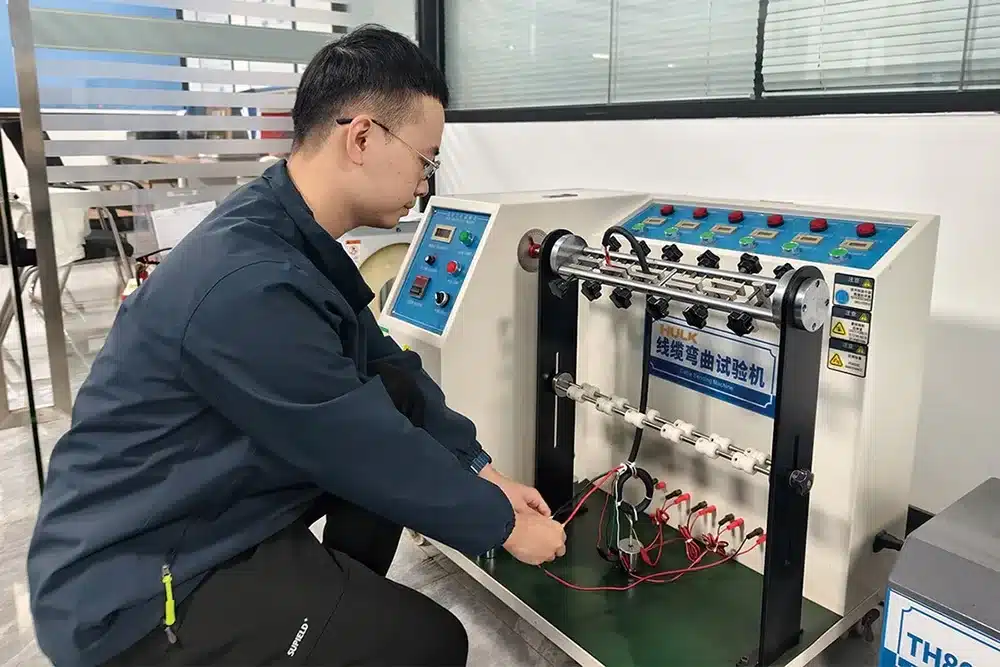
Mineral fillers may make LSZH compounds stiffer. Perform drag-chain cycling, torsion, repeated bend, tensile and abrasion testing to match your cyclist’s needs. Confirm: Custom halogen-free cables will pass the required number of cycles without cracking the jacket or fatigue of the conductors.
Electrical and EMC Tests
Verify insulation resistance, dielectric strength and Hi-Pot. If the data or fieldbus types are used, check the impedance, attenuation and crosstalk to confirm that the signal integrity is preserved after using halogen-free materials.
Environmental and Aging Tests
Perform temperature cycling, humidity and chemical resistance, accelerated aging. These provide insight into the performance of custom jackets in washdown areas, outdoor environments, or high-temperature zones over the years.
Interpreting Test Results and Updating Specifications
Compare prototype data with PVC baseline and project requirements. The acceptable compromises could be a marginally stiffer initial stiffness with a vastly improved fire performance. If unacceptable results like close to traditional cables or mechanical wear early, it should be a clue to revising the compounding or to adjusting the geometry.
A Practical Rollout Strategy – From Prototype to Plant-Wide Deployment
- A Prototype to Plant-Wide Rollout Strategy
- Understand the value of halogen-free performance in critical high-risk areas such as enclosed control rooms, data centers, tunnels.
- Create and test designs for use in those areas.
- Install and test pilot circuits for a specified period of time.
- Integrate approved information into corporate cable specifications and supplier specifications.
- Roll out to comparable zones in sites.
- Expand into lower risk areas after complete validation of overall benefits.
A pragmatic approach that strikes a balance between safety enhancements and implementation.
Our decades of experience with halogen-free and high-flex cables, in-house testing facilities, and custom compounding expertise enable engineering teams to take their projects from prototype to confident deployment at Hulk Electric. Discuss your project requirements, we’ll help you with customized LSZH solutions with full validation.