While the change of design from PVC to halogen-free cable constructions brings many benefits in terms of safety and environment, it is essential to carefully consider the trade-offs in performance. Often called as LSZH (Low Smoke Zero Halogen), halogen-free cables help to reduce toxic smoke and corrosive gases in fire situations, which is a critical requirement in industrial automation, robotics and control applications. Hulk Electric is a company with more than 20 years of experience in the manufacturing of high-performance industrial cables and we can assist your manufacturer in making these transitions without compromising reliability, while adhering to progressively tougher safety standards.
This guide explores the issues to consider when engineers and designers are converting their machine wiring, based on practical experience with servo systems, robotic arms, and automated production lines.
Why Teams Are Re-Engineering Machines Away from PVC
PVC-sheathed cables have a long history of use in industrial equipment, where they offer high mechanical strength, affordability and are inherently fire resistant. PVC does produce dense black smoke and the resulting corrosive hydrochloric acid gases, however, they can pose danger to fire personnel, damage sensitive electronics and make fire extinguishing efforts difficult.
Advanced polymer compounds provide low-smoke, zero-halogen performance in halogen-free alternatives. This represents a trend towards more industries requiring sustainability, regulatory compliance, and safer work environments. The intent is obvious, but not necessarily the means to do so without considering several tradeoffs in the process.
Fire-Behaviour Gains vs Flame-Retardancy and Material Limits
Safety Gains from Halogen-Free Constructions
Halogen Free cables have significantly lower smoke density, sometimes as much as 80% less than PVC, which means there is better visibility in the event of a fire and minimized risk in cabinets which are enclosed or in high occupancy areas. They do not generate corrosive gases, are ideal for protecting metal structures, sensors and electronics in applications such as servo drives and fieldbus networks.
Flame-Retardancy Challenges in Halogen-Free Materials
Unlike many halogen-free compounds, PVC has inherent flame resistance, while many other halogen-free compounds have to be loaded with flame retardants. This can impact overall performance, which might necessitate re-validation of fire behaviour in system level tests. Specialists such as hulk electric equate with these demands in modern formulations but the designer has to ensure these are met, especially the IEC 60332 for flame propagation.
Mechanical and Handling Trade-Offs
Flexibility, Bend Radius and Routing
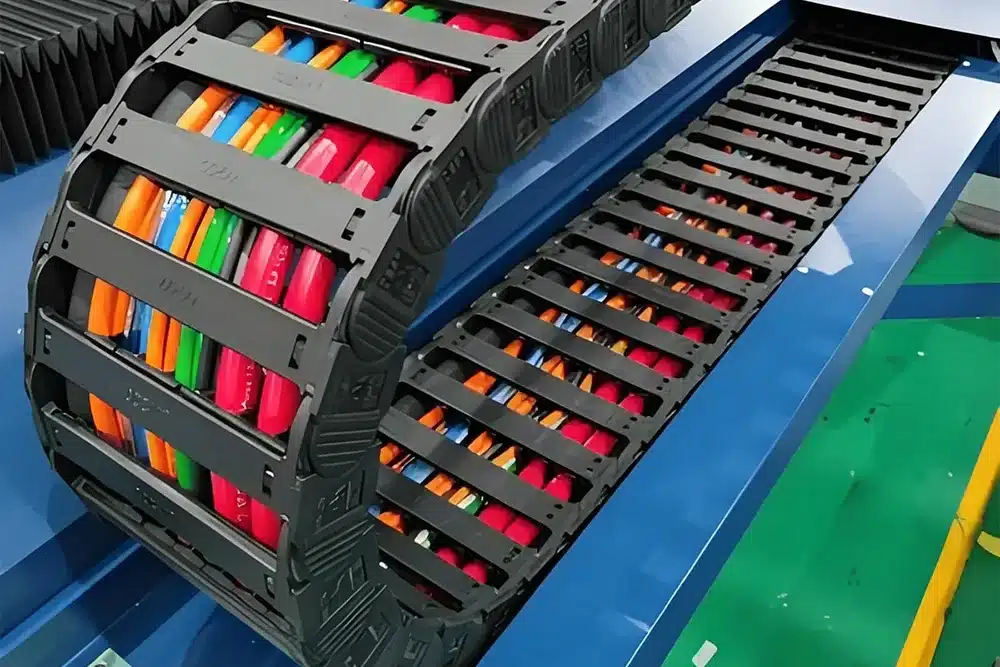
Halogen-free cables may be stiffer in terms of their “stuffiness” in some instances, which may result in a different bend radius for drag chains or in a tighter space between a machine. This affects routing in high flex applications such as robotic torsion cables or linear motion systems. With advanced high flex halogen-free, however, excellent cycle life can be achieved if they are properly specified.
Wear, Abrasion and Environmental Resilience
Not every halogen free is sacrificed in durability; some constructions made using TPE or PUR even perform better in terms of abrasion resistance and oil tolerance than PVC. We engineer cables for Hulk’s robot and servo that resist mechanical stress, vibration and temperature changes without affecting the halogen-free profile.
Electrical and Performance Trade-Offs
Insulation, Dielectric and High-Voltage Behaviour
The so-called ‘modern’ halogen-free insulants provide good dielectric properties, and can be as good as PVC in both volume resistivity and high voltage work. Insulation resistance and leakage currents (appropriate to voltage and environment) should be re-tested for all retrofits.
Transmission Characteristics and EMC
Jacket and filler changes have a small impact on capacitance and impedance for Industrial Ethernet, PROFINET or EtherCAT cables. In longer runs or industrial environments with noise, shielding and geometry might need to be optimized to maintain signal integrity. These are all taken into account when designing the fieldbus and Ethernet lines of the cabling for HULK.
Manufacturing, Availability and Cost Trade-Offs
Processing and Production
The use of halogen free compounds might require longer extrusion times or different processes, which could impact custom harness lead times. It is especially important for complex geometries for sensor or actuator cables.
Cost and Supply Chain
The price of halogen-free cables is usually higher than for PVC cables, depending on the performance level and quantity. Smart conversions take into consideration more than just initial cost—fire protection, cost savings measured by insurance, and compliance benefits are all taken into account. By using its own manufacturing approach, Hulk can reduce expenses by producing custom halogen-free solutions efficiently.
Design and Validation Implications for Existing Machines
“No Drop-In Replacement” Reality
True drop-in replacements are not common, as conversions typically require engineering modifications to compensate for the differences in flexibility, thickness or flame behavior. If you consider it a full redesign, then you will achieve success in the long run.
What Needs Re-Qualification
Key areas include:
- In dynamic applications, cable routing and bend performance.
- EMC and signal integrity testing
- Thermal cycling and flame-retardancy at the system level.
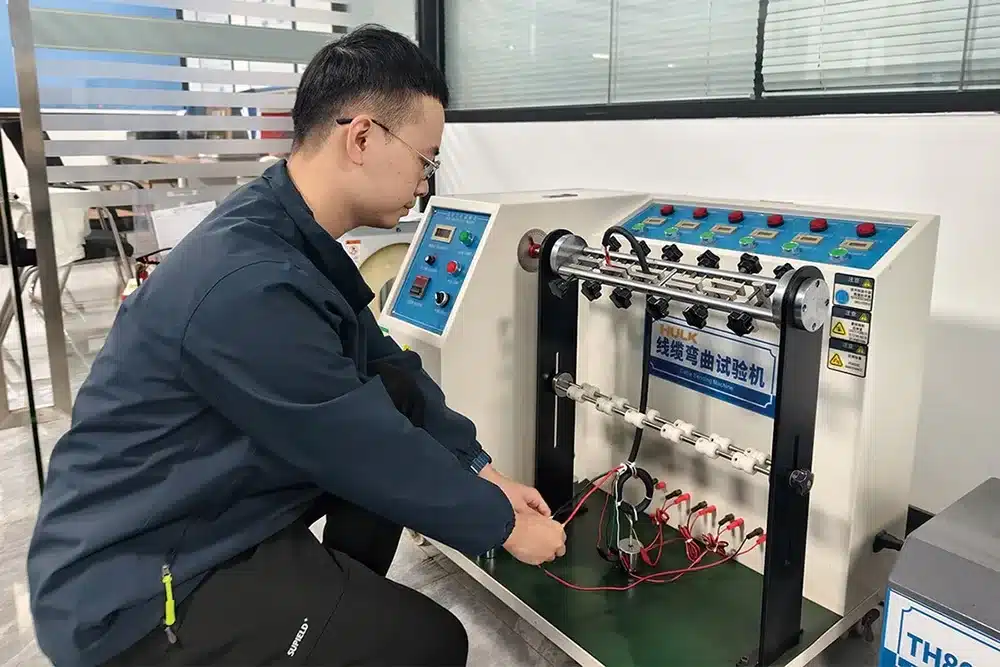
- Ability to resist fatigue during movement and in environment
Practical Conversion Strategy for Machine Designers
Begin by dividing your machine into risk zones, with the highest safety risk zones being the places where you’ll want to use halogen-free cables, such as inside a robotics or control panel. Collaborate with the trusted supplier that you know like Hulk Electric to choose optimized constructions like our high flex halogen-free servo or robot cables.
Submit information on your application (viscosity, temperatures, motion cycles, certifications) for personalised recommendations. Conduct prototypes and trials and include relevant IEC tests in design standards. Coordinate conversions with platform updates for easier implementation.