Selecting the correct cables for a custom application is more than just asking for “halogen-free” in a standard RFQ; it’s a decision that depends on the specific application, environment, and cable standards. These cables are essential in high-risk industrial automation, robotics and infrastructure applications for the production of minimal smoke and no corrosive halogen gases when in combustion – protecting people, equipment and sensitive electronics. However, many engineering departments find themselves regretting lax specifications and settling for less than optimal performance, compliance or expensive rework.
At Hulk Electric, we have more than 15 years of experience in the manufacturing of high-quality industrial cables, including halogen-free and high-temperature varieties, and have been serving various OEMs and system integrators from 30+ Countries. This guide addresses exactly what to include in your RFQs to ensure that suppliers provide cables that comply with safety codes, and are able to meet the actual mechanical needs of the work.
Why Custom Halogen-Free Cables Need More Detail Than Standard RFQs
The term “Halogen-free” and “LSZH” is abstracting the performance and not the recipe. Broad requests can have varying interpretations from supplier to supplier, depending on the compounds they have available and their experience. A generic RFQ typically leads to assumptions that affect flex life, shielding effectiveness or suitability for long-term reliability in dynamic applications such as drag chains or robotic arms.
The typical standard cable RFQ will include the following basic elements: Voltage Rating, AWG, and Jacket Color. It is necessary to give deeper guidance on compound, fire behavior testing, mechanical endurance, environmental resistance, and customization range for custom LSZH cables. Specifications aid manufacturers, such as Hulk, in developing solutions that are specifically aimed at the problem.
Defining LSZH Performance – Fire, Smoke and Halogen Content
What LSZH Must Mean for Your Project
Designed to produce little smoke and no halogenated gases in the event of a fire, LSHZ cables are ideal for conditions where visibility is a significant concern and corrosion is a risk in high occupancy or confined areas.
Parameters that need to be specified are:
- Smoke density (IEC 61034) e.g. minimum light transmission (typically ≥60-70%).
- For acid gas emission and conductivity, according to IEC 60754 or equivalent GB/T 19666 standards, halogen content limits are provided.
The measurable criteria are clearly written and will help ensure that the cable is a low-smoke zero-halogen cable, instead of being described as such.
Engineering “Must-Haves” for Custom Halogen-Free Cable RFQs
Electrical Design – Core Performance
Provide detailed electrical requirements:
- The conductor is the AWG size/range, solid or stranded, bare or tinned copper or alloy.
- Core configuration: Number of cores, twisted pairs, power vs data, impedance and capacitance requirements (particularly for Industrial Ethernet, PROFINET or Servo cables).
Mechanical and Motion Requirements
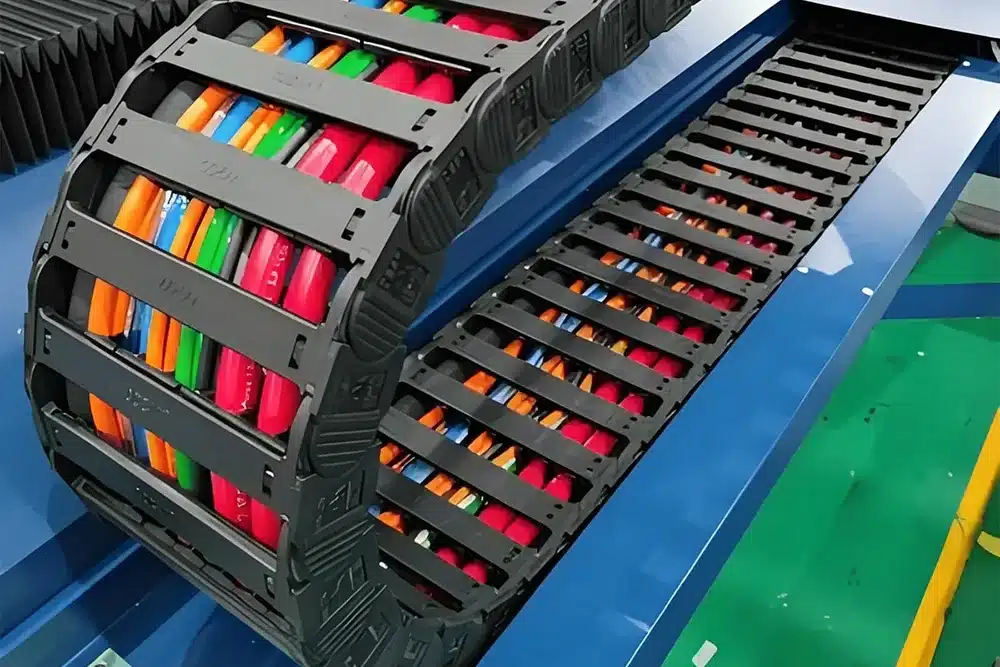
Industrial cables are typically subjected to continuous movement. Define:
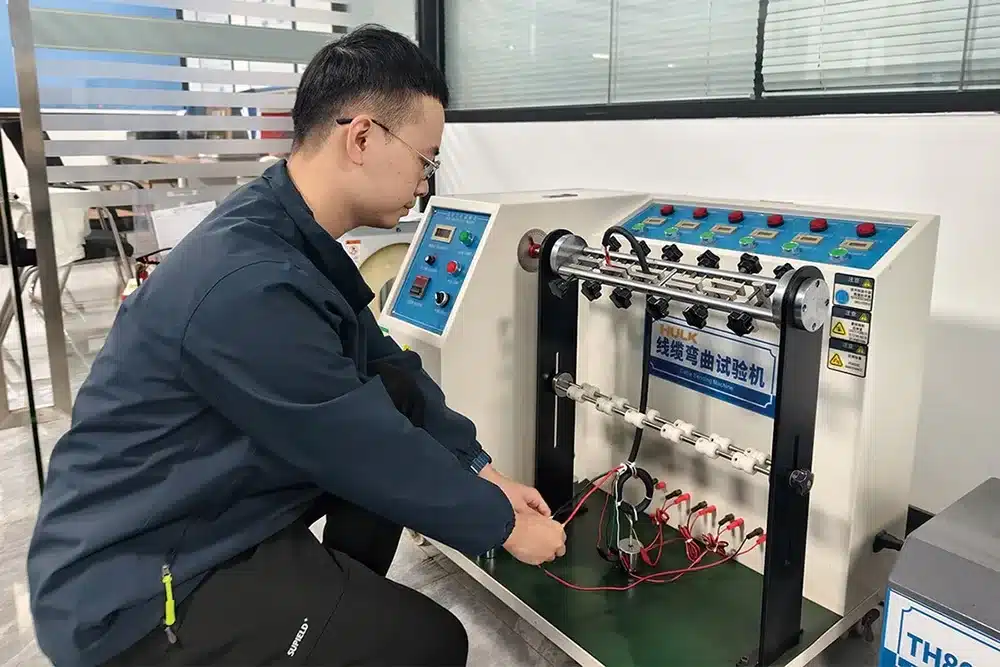
- Flex life (such as 5-10 million cycles for drag chains) and minimum bend radius.
- Torsion specs (e.g., multi-axis robots with ± 180°/m).
- Environmental requirements: Oil, chemical, UV, temperature range (-60°C to +200°C for some silicone hybrids) and IP rating requirements.
Details of the behavior of halogen-free compounds differ from PVC; this makes it possible to make the right material and construction choices.
Materials, Shielding and Armour – Choices to Spell Out
Insulation and Jacket Compounds
Indicate preferences for thermoplastic or thermoset LSZH/HFFR compounds. Thermosets may have excellent high temperature or high stress properties. Refer to any requirements for thin-wall designs, or for greater chemical resistance.
Shielding and Armour Strategy
Clearly describe:
- Shielding architecture: Braided, foil, individual pair shields, or overall shield for EMC protection.
- Armour options: Steel wire, tape or non-metallic for extra mechanical protection in abrasive or buried applications.
These choices directly impact signal integrity and durability in automation systems.
Compliance and Testing – Defining “OK” Upfront
Standards, Certifications and LSZH Compliance
List required standards:
- Fire and LSZH: IEC 62821 series, IEC 60332, IEC 61034, IEC 60754.
- Industry certifications: UL, CE, TÜV, RoHS, REACH, CCC, and Sector specific (e.g., EN 45545-2 for rail).
Testing Requirements
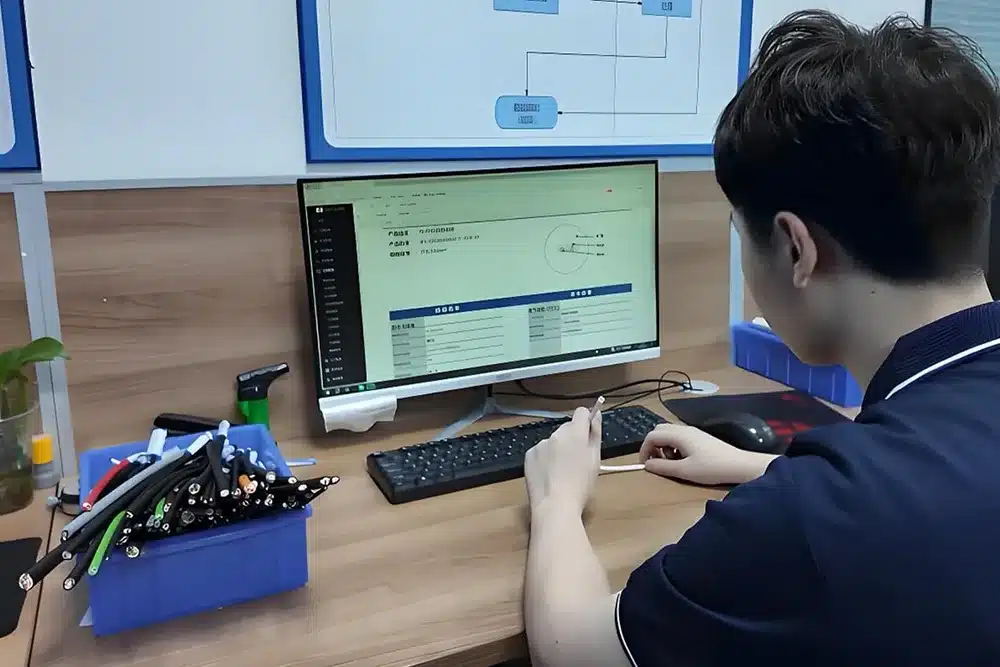
Set electrical performance, fire behavior, flex/torsion endurance and mechanical property verification tests. This means that there are no unwanted shocks at an incoming inspection or third party audit.
Custom vs “Configured” – Scope and Commercial Reality
Explain the degree of customization:
- Branding only, printing and colours, packaging.
- Adjustments to configuration (connectors, lengths).
- Complete redesign (new compounds, geometry, performance level).
Indicate Prototype/Production quantities, timelines and ask suppliers to include assumptions in their quote. This transparency streamlines development and avoids hidden costs.
Practical Checklist for Engineering Teams
When you’re ready to send your next cable RFQ, here are a few key factors to keep in mind:
- Areas of Application & Environment — Sector, motion type, fire risk (ability), chemicals, temperature.
- Electrical Design — Conductors, cores, impedance, shielding needs.
- Mechanical Demands — Flex/torsion cycles, bend radius, abrasion resistance.
- Specific smoke density, halogen limits and test standards: LSZH Performance.
- Materials & Construction — Insulation & Jacket Type, Shielding, Armour.
- Compliance & Testing — Certifications and verification procedures that must be followed.
- Commercial Details — Customization scope, volumes, timeline, assumptions.
This approach yields cables that perform reliably out of the box, allow easier certification and lowers TCO.
Our factory is 15,000㎡ with professional team, we are specialized in custom industrial flexible cables, such as halogen free, high flex, servo, robot, high temperature silicone flexible cables. We have extensive UL/CE/TÜV/ISO 9001:2015/RoHS/REACH certifications and we can design customized LSZH solutions with fast sampling.
Tell us your project requirements and we’ll offer you samples and expert recommendations that suit your needs and requirements.