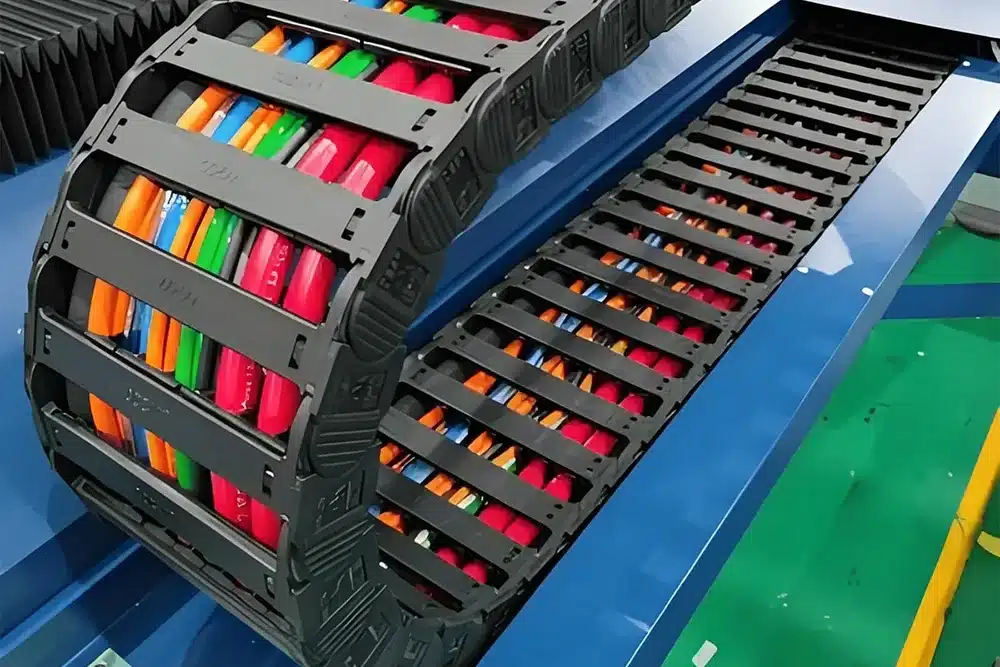
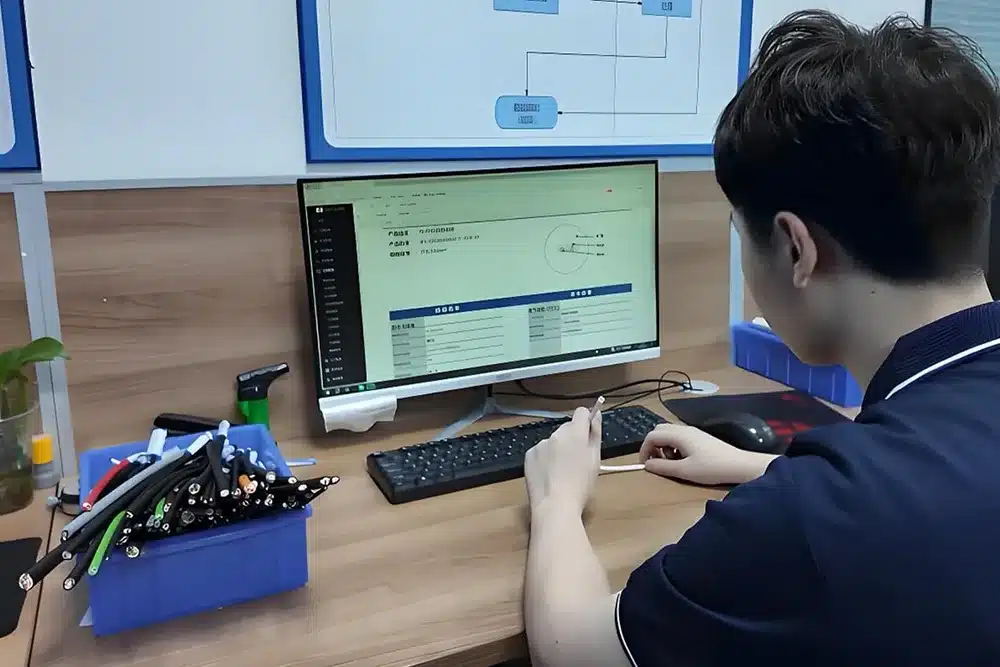
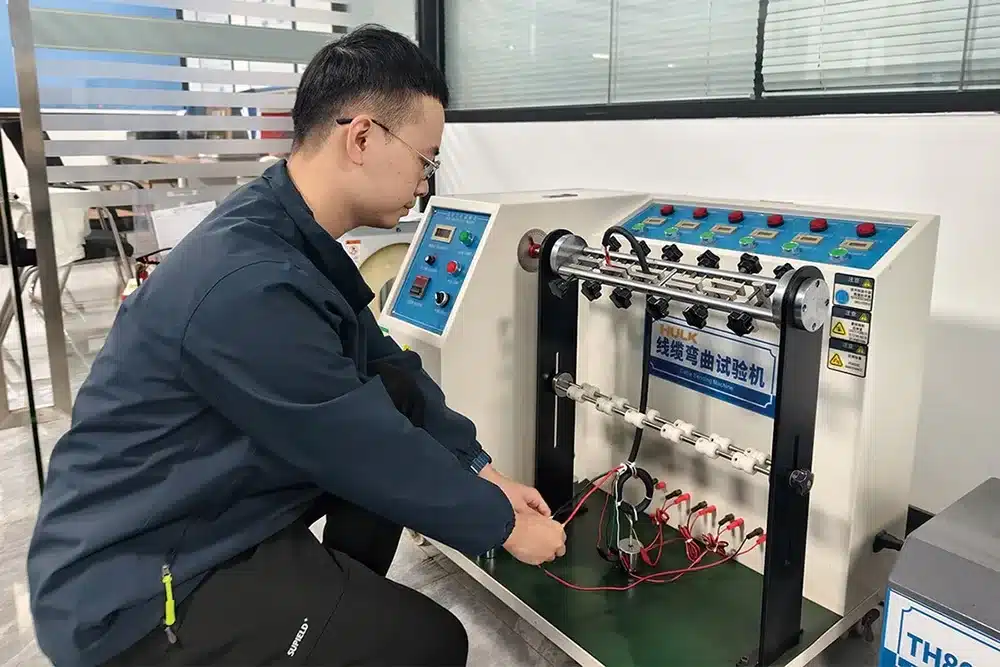
For engineers tasked with creating systems that meet the intersection of fire safety, high-temperature performance, and reliability, the right choice of flame resistant silicone cables is essential. They are cables that integrate the thermal stability of silicone with formulations that help to slow down flame spread, emit less smoke and are less toxic which are essential in industrial automation, robotics and building installations.
Knowledge of the standards and test methods aids in compliance, personnel and equipment protection, and can save the expense of failure during an audit or incident.
Why Flame Retardancy and Safety Matter in Silicone Cable Design
Their inherent flexibility and high temperature resistance make silicone cables the ideal choice for use in high-temperature environments, with ratings extending as high as +200°C. But for applications such as an industrial automation system, servo system, robotics or control cabinets, fire risk needs more than just thermal performance. When flame-retardant characteristics are needed to either prevent propagation or to help preserve circuit integrity, the hazard of smoke or halogens becomes significant.
The ability to withstand high temperatures is good in base silicone rubber but the flame retardancy and low-smoke zero-halogen (LSZH) properties depend on the type of compound formulation, jacketing and shielding design. These are to be confirmed with rigorous, standard testing only and not taken for granted based on material properties.
What “Flame-Retardant Cable” Actually Means
Flame-retardant vs fire-resistant vs LSZH
Cables are designed to reduce or prevent the spread of flame after the initial source has been removed. Fire resistant cables are designed to keep electrical connections working under a specific amount of time under fire. In a fire, LSHZ cables have a lower smoke emission and are non-halogen or have low levels of halogen gas, which enhances visibility and decreases corrosion and toxicity hazards.
The smoke and flame resistance can go hand in hand, with silicone insulated cables often being capable of meeting both standards, making them suitable for hard-to-please applications in which Hulk Electric cables are installed.
Basic flame-retardant criteria in test standards
Most standards consider a cable to be flame-resistant if it can be ignited when tested, but will extinguish rapidly; will not grow char; and will not drip flammable particles that could ignite nearby combustible materials. These criteria prevent the cable from causing fire escalation in tray installations or densely wired areas.
Key Flame Test Standards Engineers Should Know
UL VW-1 Vertical Wire Flame Test (UL 1581)
The UL VW-1 is an acknowledged vertical flame test for wires and cables in North America. A burner uses a flame to treat a vertically hung sample several times for 15 seconds each. The cable should be capable of self-extinguishing in a short time, tending to burn only part of an indicator flag, and not ignite a flag of cotton that is located below the flag. This is a performance that many of Hulk’s UL recognised silicone cables are capable of and can even surpass.
IEC 60332 vertical flame tests (single and bunched cables)
The IEC 60332-1 and 60332-2 are designed to test individual cables, and the 60332-3 series tests bunched cables for vertical flame spread. Cables are subjected to carefully controlled 1kW flame or propane burners. Requirements are related to limited flame travel distance and self-extinguishing properties – important for industrial cable trays and robotic applications.
IEEE and other tray/ladder fire tests
Bundled cables are burned through intense ribbon burners in the IEEE 383 and other vertical tray tests. These emulate actual installation environments, and are significant for larger industrial and building installations where several cables are installed in parallel.
Smoke, Toxicity and LSZH Standards for Silicone Cable Systems
Smoke density and light transmission (IEC 61034)
This test is used to determine the smoke obscuration in 3 m³ chamber through light transmittance. LSZ cables should be kept clear of the path for better visibility, aiding in emergency response in closed industrial or public areas.
Halogen gas release and toxicity (IEC 60754 and related)
The corrosive evaluation of halogen gas emissions is in IEC 60754. Silicone rubber is halogen free and with the right LSZH compounds, cables can be produced to satisfy strict low emission demands for eco-friendly and safety-driven installations.
Combining silicone insulation with LSZH sheaths
The result is high temperature tolerance with excellent fire reaction. It is especially useful for servo motor cables, robot torsion cables, industrial Ethernet and applications where reliability in stress cannot be compromised.
Flame Test Methods for Silicone Rubber Materials
UL94 and small-scale silicone flammability tests
UL94 is a classification system that uses horizontal and vertical burning. Vertical ratings (V-0, V-1, V-2) measure after-flame time, dripping and total burn length—the first step before doing full cable testing for silicone compound performance.
Oxygen index and other material-level tests
Oxygen index test is used to measure the minimum oxygen level required for combustion. The higher the number the better the flame retardant properties. Materials are further characterized by other tests such as glowing wire or burning rate tests.
What Engineers Should Consider When Specifying Flame-Retardant Silicone Cables
Match cable certifications to application and region
Always use cables that are explicitly certified (UL, IEC, CE, TÜV) for your market and application. Hulk Electric has extensive certifications in place to enable worldwide projects.
Distinguish between material flame ratings and cable system tests
The silicone compound should have a good UL94 rating, but this isn’t enough. Full cable assembly testing (VW-1, IEC 60332, etc.) will confirm in real-world performance data for conductors, shielding and jackets.
Prioritize LSZH and circuit integrity where safety is critical
For control panels, emergency systems or high-density automation use low smoke, low toxicity, proven fire-resistant silicone cables.
Practical Checklist – Using Flame Standards and Tests to Improve Safety
- Determine the appropriate flame-retardant, fire-resistant or LSZH silicone cable constructions for your project.
- Verify that selected cables are compliant for the required tests (UL VW-1, IEC 60332-1/2/3, etc.).
- Test for LSZ compliance in terms of IEC 61034 and IEC 60754 if smoke and toxicity are a concern.
- If you are asking a question, ask for written test reports and third-party certifications, instead of relying on claims.
- Ensure that cable selection is part of overall system safety practice – routing, protection and installation.
With in-house testing, 35+ international certifications, and decades of experience in industrial automation globally, our team at Hulk Electric (Dongguan) Co., Ltd. is equipped to engineering silicone cables that meet the highest standards in order to suit your specific requirements, and are even available with flame-retardant and LSZH options. Speak with our team to discuss your project specifications and get tailored recommendations to improve safety and efficiency.