The correct selection of cable in industrial plants in high temperature areas (around furnace, ovens, heating elements, engine bays, hot ducts) ensures insulation integrity, minimises downtime and contributes to safety. Traditional PVC cable products tend to wear out quickly in this situation, while silicone cable products can have a broad operating temperature range and flexibility. Plant engineers and maintenance personnel can use this high temperature cable selection guide to determine when silicone cable is the best choice over PVC, XLPE, PTFE and other cables.
Overview of Common High-Temperature Cable Insulation Materials
There are various types of insulation materials that have different temperature and environmental requirements. These are matched to your plant to guarantee reliability and cost-effectiveness.
PVC and XLPE – Where Their Temperature Limits Sit
The PVC cables generally can be used in the areas up to 70-105℃ and are not suitable for hot areas. Common applications of XLPE are power distribution, where moderate heat is coupled with good electrical properties, and the performance is typically rated at 125 – 150°C. Both are weak in extreme temperatures and situations where flexibility in the face of thermal stress is important.
Silicone Rubber – Wide Temperature Range and Flexibility
Silicone rubber cables are ideal for use in a wide range of temperatures, from -60°C up to 180–200°C continuous and even higher for short periods of time. Excellent flexibility and electrical stability over this range, suitable for use in moving near heat sources.
PTFE, PFA and Other Fluoropolymers – Extreme High-Temperature and Chemical Resistance
PTFE and PFA insulated wires are better able to withstand the harshest of environments with continuous operation up to 250-260°C and beyond, offering a superior chemical resistance. They are more expensive, and may be stiffer, so use them only for jobs that require the maximum performance.
Understanding Temperature Ratings – Continuous vs Peak
It is important to know these ratings in order to select the proper products, not simply because of the maximum exposure they can handle.
Continuous Operating Temperature for High-Temperature Cables
Continuous operating temp is defined as the long-term performance, which is not significantly degraded. In silicone cables, this can be as low as -60°C and as high as +180-200°C, which is significantly higher than PVC and regular XLPE, and is less expensive than fluoropolymer in the mid to high temperature ranges.

Short-Term Peaks and Equipment Hot Spots
Temporary highs are created by start up cycles, oven cleaning or process spikes. In many plants, silicone cables may be able to withstand short-term exposures of 250–300°C, depending upon the formulation. Use thermal imaging to know where these hotspots are to avoid over- or under-specifying.
When a Silicone Cable Is the Right Choice for Your Plant
Silicone cables are particularly effective in situations where temperature, flexibility, and durability are all important.
Continuous Temperatures Above 90°C and Up to ~180–200°C
With continuous exposure at levels above PVC, but not yet “extreme fluoropolymer”, silicone rubber cable for high temperature industrial equipment provides the right balance. Oven furnace commonly used in steel mill.
High-Temperature Zones with Movement or Tight Routing
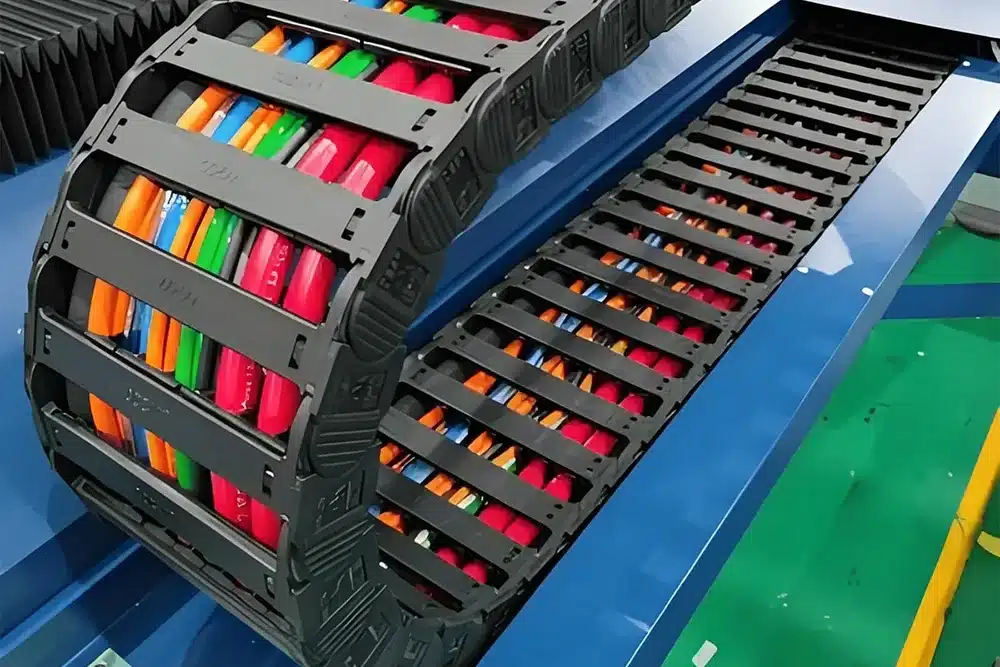
Silicone remains flexible even when hot, ideal for applications that require mobility, such as with moving parts near the oven or compact heating modules. This minimizes stress failures that are often experienced with stiffer options.
Harsh Environments with Heat Plus Moderate Chemicals/Weather
Silicone provides excellent resistance to ozone, UV, moisture and many industrial atmospheres. It works well in high-temperature applications outdoors or semi-externally and is useful in other applications where there are no extreme chemicals as the main concern.
When Silicone Cable Is Not Enough – Choosing Other High-Temperature Options
Silicone is not all-knowing; understanding its limitations means avoiding its misuse.
Extreme Heat Beyond Silicone’s Continuous Range
PTFE/PFA or special wires are more suitable for furnace interiors or specific process lines for continuous temperatures above ~ 200–250°C.
Superheated Steam and Certain Chemical Conditions
Silicone is not the best choice for use with superheated steam (hotter than ~ 130°C) or with highly aggressive chemicals; fluoropolymers may be better.
Cost-Driven, Lower-Temperature Installations
In regions with temperatures that remain below 90-105°C, PVC or XLPE can be deemed as performing sufficiently at a lower cost. When silicone is used, it needs to be over specified because that increases unnecessary costs.
Step-by-Step High-Temperature Cable Selection Framework
Use this practical procedure to guarantee success.
Step 1 – Map Temperature Conditions in Your Plant
Record continuous and peak temperatures at each location using a process data record, thermal imaging or measurements.
Step 2 – Define Mechanical and Environmental Constraints
Evaluate movement, vibration, routing tightness, moisture, UV and chemical exposure.
Step 3 – Match Insulation Material to Conditions
- The continuous temperature resistance is ≤90°C, either with PVC or XLPE.
- 90–150°C and moving = use XLPE or silicone
- Approximately 150–200°C with flex → Silicone cable
- High temperature/extreme chemicals → PTFE/PFA

Practical Examples – Where Plants Successfully Use Silicone Cables
The value is proved through real-world applications.
Furnaces, Kilns and High-Temperature Processing Lines
Silicone cables will not crack when flexibility is required near furnaces and kilns, and they will maintain performance up to 180-200°C continuously.
Heating Equipment, Ovens and Industrial Appliances
Silicones are perfect for the internal wiring of ovens and heaters because they are heat resistant and don’t burn or smoke when operating.
Engine Bays, Mobility and Outdoor High-Temperature Runs
Silicone’s flexibility and weather resistance is used for engine compartments and outdoor runs.
Checklist – Confirming a Silicone Cable Is Suitable for Your High-Temperature Application
Use these questions prior to completing specs.
Technical Questions to Validate Silicone Cable Choice
- Is there a continuous temperature between ~90°C and 180-200°C?
- Are silcon’s tolerances high enough for short-term peaks?
- Does flexibility or dynamic movement need to be required adjacent to heat?
- Moderate harshness of the environment (heat + moisture/UV) but no extreme chemicals?
- Is there an appropriate certification (UL, CE, IEC, etc.)?
Working with Suppliers to Avoid Under- or Over-Specification
Provide manufacturers, such as Hulk Electric, with detailed information regarding temperatures, mechanical requirements and environmental data. We have a team of experts to offer custom solutions for high temperature silicone cables for optimum performance and compliance.
Hulk Electric (Dongguan) Co., Ltd specializes in cables made of high-temperature silicone, suitable for high-temperature environments. Fully certified and customisable, we can help plants choose and implement the most appropriate solutions for long-term reliability.