The main conduit in industrial automation and robotics systems that ensures accurate and dependable movement. Inadequate cable selection and installation can cause unintended motion, damage to equipment or serious safety incidents. For more than 15 years, Hulk Electric has delivered high-flex, servo, robot and torsion resistant cables to a multitude of plants across a wide range of cable motion applications that have helped them reduce these risks with engineered cable systems.
The selection of the appropriate actuator cables goes beyond mere connectivity; it’s about incorporating safety into each cycle. This guide includes important safety issues to consider, potential failure points and good design practices that assist engineers and safety teams in creating systems that limit hazardous failures while ensuring uptime.
Why Actuator Cabling Is Safety-Critical
In the robotics, CNC, material handling and automated assembly lines, actuators are the driving force behind the necessary movements. In the event of a failure, the consequences are from production stops up to dangerous unintended motion and risk to operators.
Consequences of Actuator Failure
With a single cable failure, an unexpected extension or retraction of an actuator may result in pinch points, collisions or loss of control. In high speed robotic arms, this could result in a sudden change in velocity or position with potentially serious results for those nearby and for the equipment.
Cabling as Part of the Safety Chain
A properly-cabled system can be designed for fail safe so that if there is a loss in power or a signal is lost, the system stops motion. Our robot torsion cables and servo motor cables have been designed with high-cycle flexibility and shielding to ensure signal integrity even when bent and twisted continuously.
Common Hazard Mechanisms Linked to Actuator Cabling
A lot of incidents are caused by cabling problems, affecting control signals or power supply.
Noise and Misrouting Causing Malfunction
Electromagnetic interference (EMI) is an issue when routing actuator control cables with high-voltage power lines. This noise may affect the signal and cause the actuator to behave erratically or start the machine unnecessarily. It is crucial to ensure proper separation and shielded cables.
Wiring Changes and Live Work
Adjustments on live systems may lead to a risk of electric shocks, short circuit or false command. Never touch actuator cabling without lockout/tagout (LOTO) being used.
Overloads, Wrong Wire Size and Poor Protection
If the size of the cable or its flexibility is too low, then in dynamic applications it will succumb to fatigue, overheating, or insulation failure. This causes intermittent connections or complete failure which causes a disruption in safety circuits.
Safety-Oriented Actuator and Cabling Design Principles
Get a comprehensive risk assessment of project motion paths, loads, and potential failure modes at the beginning of each project.
Start with Movement and Hazard Analysis
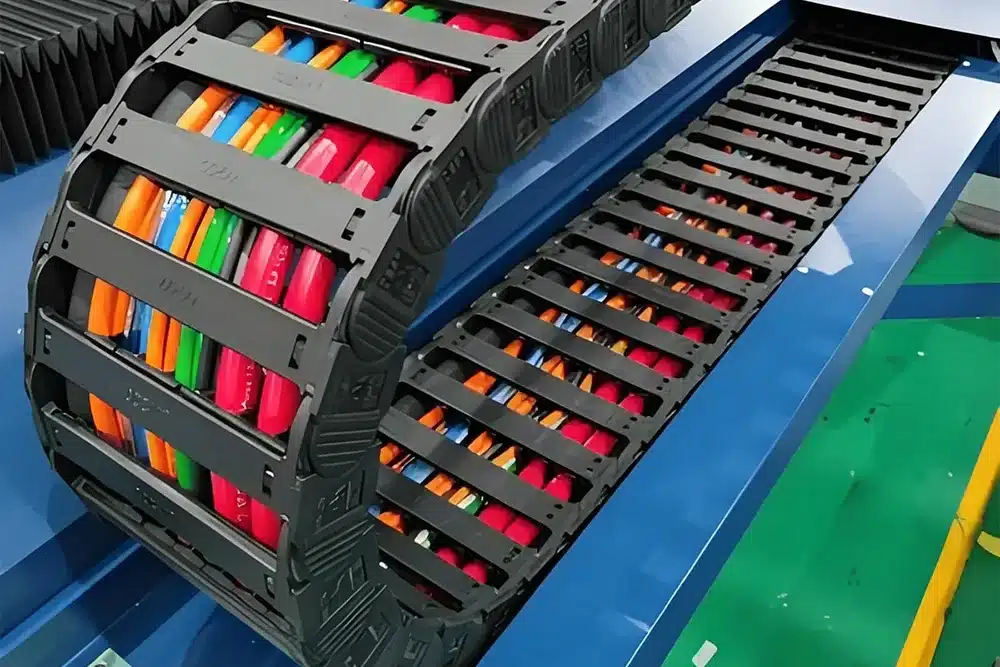
Assess pinching points, distances to travel and stalling. Choose cables designed to withstand the specific mechanical demands – our high-flex cables are strong in linear drag chains that last millions of cycles.
Make the Safe State De-Energized
Make sure that actuators move to a safe, stopped state in case of loss of power or fault detection. The safety signals are not compromised with reliable cabling.
Prevent Unexpected Start-Up
Include Safety Torque Off (STO) and Safe Brake Control (SBC) features. Our industrial Ethernet or fieldbus cables are suitable for dual-channel wiring for reliable communication.
Wiring and Routing Practices to Avoid Unintended Motion
Good cabling conditions drastically minimise risk.
Separate Actuator Cables from High-Voltage Lines
Separate physically and use grounded and shielded constructions. Hulk’s servo and motor wiring includes special EMI protection for use in heavy EMI control cabinets.
Turn Off Power and Respect Lockout/Tagout
Don’t skip safety procedures. Quality cables, with sturdy connectors, ensure integrity during repeated maintenance.
Verify Polarity, Ratings and Connector Locking
Match the specifications of the cable with the voltage, current and environmental requirements. Secure connectors keep the signal from becoming loose and causing unnecessary movement.
Safety Circuits and Cabling for Actuators
Safety circuits require good physical connections.
Dual-Channel Safety Wiring
Provide multiple paths to avoid single wire failure compromising the system. This is backed up by consistent performance of our cables under torsion and flex.
Integrating STO/SBC and Safety Relays
It is important that dedicated cabling paths can withstand mechanical damage. The hulk high-temperature silicone variants are suitable for extreme conditions and maintain the reliability of the circuit.
Safe Motion Testing and Service Access
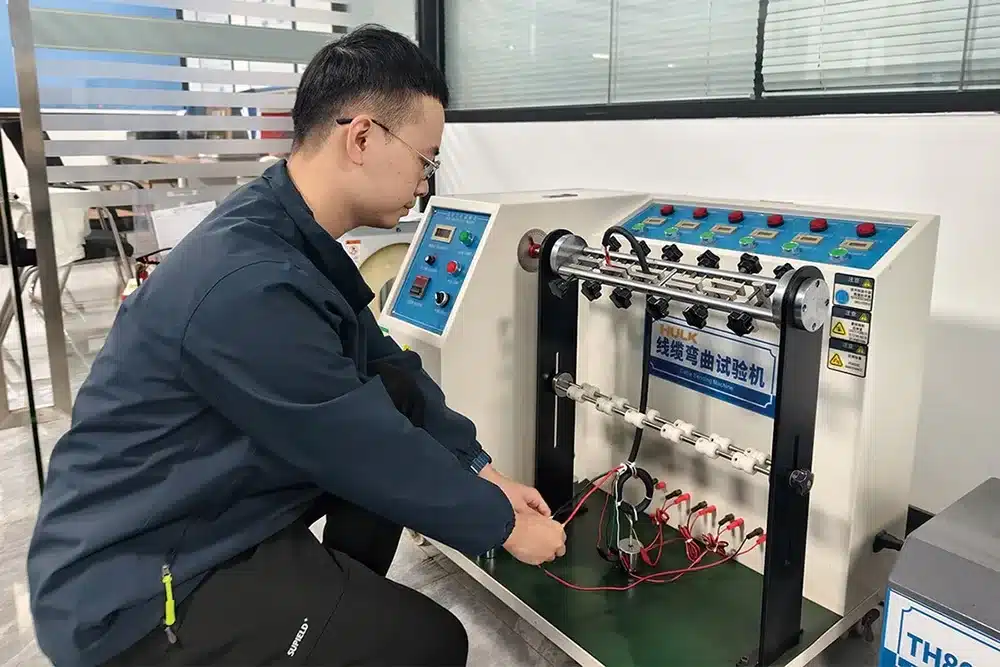
Apply full load cycles and fault simulations to validate installations. The documented performance helps to establish long term safety.
Environmental and Mechanical Safety Considerations for Actuator Cables
Every day, real-world conditions put the test of the cable to its durability.
Vibration, Impact and Physical Damage
Cables in dynamic applications experience continual motion. Our robot and torsion cables are engineered to resist the degradation of signal or mechanical fatigue in 3D motion.
Flammable and Explosive Environments
Select cables that are approved for use in hazardous environments and meet applicable standards, and are halogen-free and flame-retardant.
Grounding and Overcurrent Protection
Electrical hazards are avoided by grounding and properly-sized conductors. Hulk cables have UL, CE and other international certifications providing global safety compliance.
Example Scenarios
Unexpected Actuator Movement During Maintenance: If a cable is reconnected, without STO and when it is not properly LOTO, it can energize the actuator. This can be avoided by implementing fail-safe cabling and dual-channel designs.
False Command: Control cables that run parallel to power lines cause false commands. The problem is solved with high-flex cables protected in a shield and routed apart from other cables.
Design and Maintenance Checklist – Safe Actuator Cabling
Design Checks:
- Completed motion hazards risk assessment?
- Flex cycles, torsion and environmental rated cables?
- Correct separation/shielding in place?
Wiring and Safety Circuit Checks:
- Dual-channel if necessary?
- Accurate ratings, locked connectors and correct polarity?
Maintenance and Validation Checks:
- All work done with LOTO?
- Documented regular inspections and full safety function testing.