Today’s industrial automation environment is an intensely competitive market with many OEM machine builders transitioning away from manual, traditional panel wiring to modular sensor cable assemblies. This change simplifies design, assembly and maintenance and enhances reliability in harsh conditions. As a manufacturer of high-flexibility sensor and actuator cables for more than 15 years, Hulk Electric can assist OEMs with a smooth transition to custom cables that meet high performance standards.
Knowing when and how to switch can minimize wiring mistakes, shorten installation time and facilitate scalable machine designs that are reliable when used continuously.
From Traditional Panel Wiring to Modular Assemblies – What Changes?
There are two very different ways to wire sensors and actuators in OEM vehicles, traditional panel wiring and modular sensor cable assemblies.
Traditional Panel Wiring – Pigtails, Terminal Blocks and Home-Runs
In traditional configurations, the machine builder uses individual pigtail sensors, field terminations, and many conductors to return them to a single location, such as panel terminal blocks or I/O cards. This technique requires a lot of manual labor, color coding each device’s terminations, and subsequent screw tightening. Although common, it can result in dense panels, expensive labor, and assembly and commissioning risks due to human error.
Modular Sensor Cable Assemblies – Pre-Configured Connectivity
Modular sensors and actuator cable assemblies are cables that have standardized connectors (typically M8 or M12) that connect to sensors, junction boxes, or I/O modules. These ready-to-install solutions offer a high-quality cable and reliable connectors that significantly reduce the wiring complexity of industrial automation systems, guaranteeing signal integrity.
What Modular Sensor Cable Assemblies Bring to OEM Machine Designs
The advantages of modular assemblies are tangible throughout the machine life.
Faster Installation and Less Wiring Error
Modular designs enable technicians to use a secure plug-and-play connection rather than hand terminate each wire. This cuts down on the amount of time required to wire an installation, and decreases the risk of wiring mistakes that could lead to safety hazards or system downtime for automated systems. When run for high volume OEM production, the time can add up very rapidly.

Cleaner Machine-Side Wiring and Easier Troubleshooting
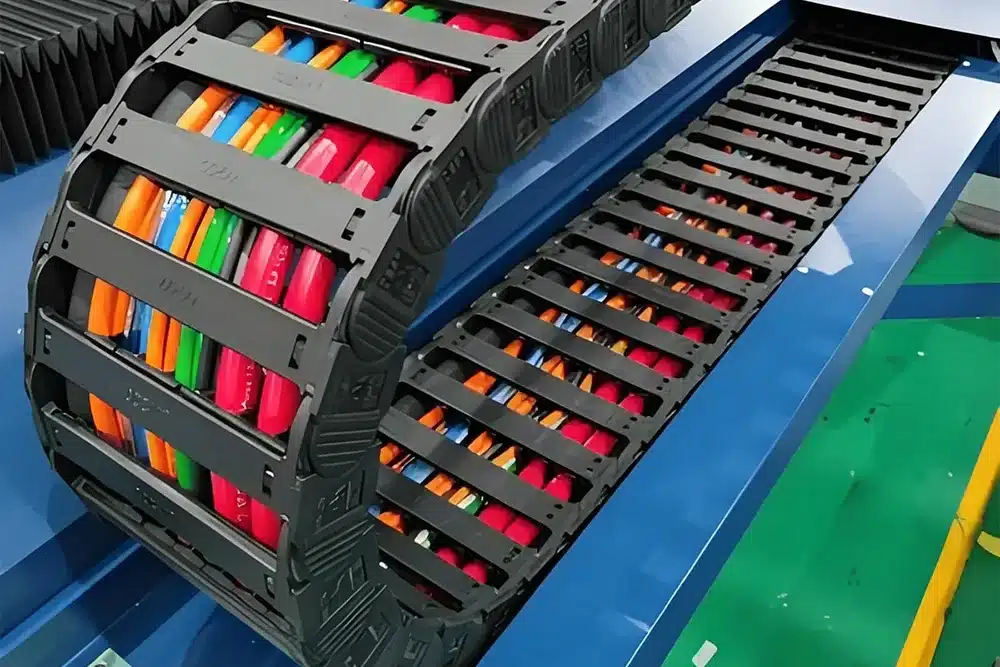
Employing pre-assembled cables with predetermined lengths keeps the routing of these cables organized on machine-side cable trays or drag chains. This results in cleaner layouts for improved visual inspections, faster troubleshooting and less clutter around moving components such as robotic arms or conveyors.
Planning the Transition – Mechanical and Electrical Design Steps
Adopting a new machine demands careful machine architecture redesign.
Decide Where to Use Junction Boxes and IO Modules
Move away from a centralized sensor network with all sensors connected to the main panel, and to field-mounted junction boxes and distributed I/O modules. Local sensors are linked through short cordsets and there are fewer trunk cables from the local sensors back to the control cabinet. This will decrease the density in the panel and make the overall wiring much simpler.
Define Connector Standards Across the Machine
When using connector families such as M8/M12, you can be assured of compatibility and reliability, as there is standardization. Correct coding will ensure that mis-mating does not occur, and will aid in assembly and future machine design expansion for OEMs.
Rethink Cable Routes and Harnesses
Modular assemblies require very careful consideration of the cable path, such as drag chain compatibility for high flex applications. Here, however, the high-flex sensor cables of Hulk are up to the task, with their outstanding torsion/bending capabilities for machine movements.

Specifying Sensor Cable Assemblies Instead of Loose Wires
Engineers must be aware of the application specific parameters when the selection of assemblies is made.
Length, Shielding and Connector Types
Use accurate lengths to match machine layout and sufficient EMI shielding around motor drives. The type of connectors must be compatible with the IP ratings and environmental requirements.
Jacket Materials and Machine-Side Conditions
Protected areas require only PVC jackets, but machine exposure to oils, abrasion or flexing requires durable PUR constructions. Hulk’s sensor cables are designed for such harsh environments, guaranteeing a long life.
Connector Coding and Error Prevention
Coded connectors minimize wiring errors during manufacture and field installation, improving system quality.
Moving Terminations Out of the Panel – Junction Boxes and Quick-Connect Systems
This shift in the architecture is at the heart of the transition.
Junction Boxes and Quick-Connect Sensor Cable Boxes
The field junction boxes with quick-connect technology eliminate many panel terminations and provide a quick and reliable IP67/IP68 connection, which is possible without any special tools.
Panel Impact – Fewer Terminal Blocks and Less Sub-D Wiring
This leaves the control panels leaner and with fewer points of failure – which saves space and makes documentation easier.
OEM Production and Supply Chain Considerations
Selecting Cable Assembly Suppliers
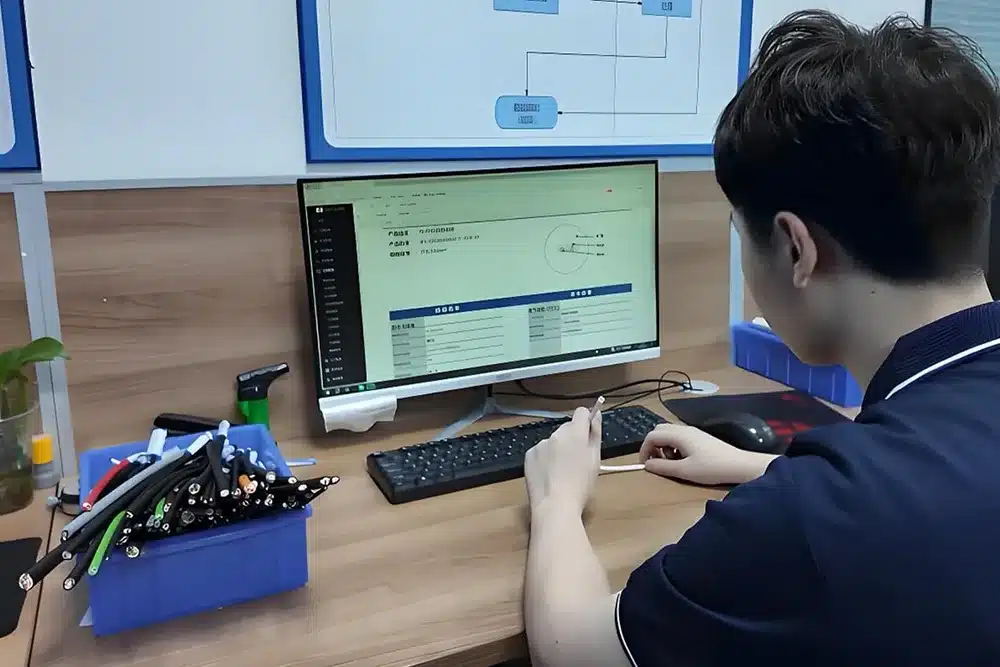
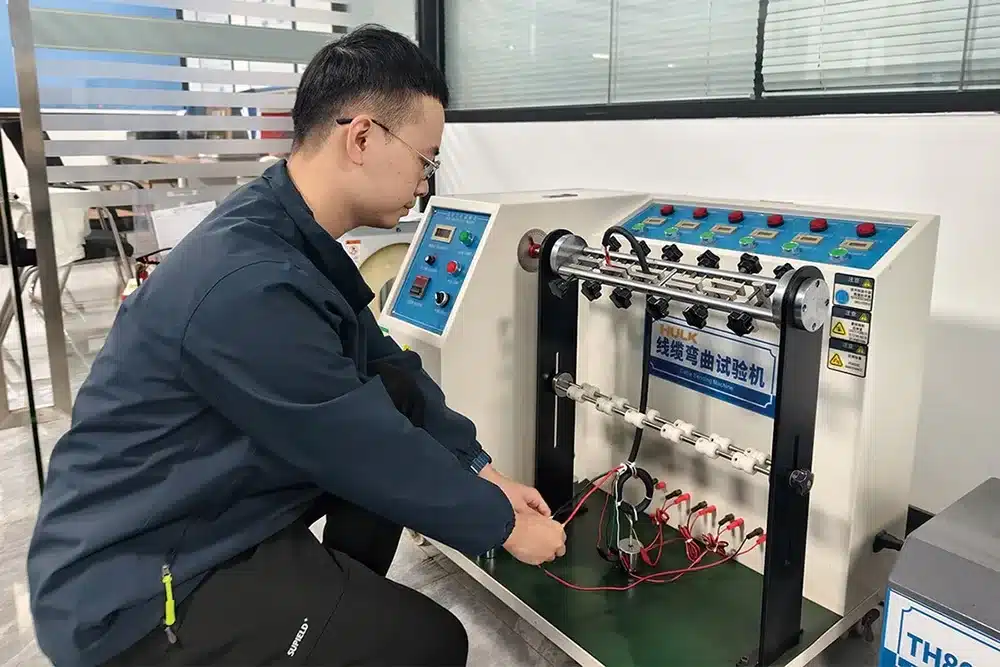
Select partners that have proven good quality systems, broad product lines, and knowledge of custom sensor cable solutions. All processes at Hulk Electric are certified to be of ISO 9001 standard and the extensive testing guarantees consistency of performance.
Aligning Assembly Design with OEM Manufacturing
Your suppliers can provide you with assemblies that fit into your production process with accurate BOMs, drawings, and specifications.
Practical Examples – How OEMs Benefit from Modular Sensor Cable Assemblies
Compact Machines and Robot Cells
Modular high-flex cables help prevent cable wear in torsion applications in space-constrained robot cells, and allow for clean layouts.
Multi-Sensor Arrays and IO Modules
If the machine has multiple sensors, it is advisable to plan its wiring in a modular fashion for efficient implementation and scalability.
Retrofit and Service Benefits
Standardized assemblies accelerate maintenance and retrofits, minimizing end user downtime.
Transition Checklist – Are You Ready to Move to Modular Sensor Cable Assemblies?
- Located the junction box locations and sensor clusters?
- Machine has common connectors and common pinout?
- Assessed environmental conditions for proper jacket and shielding?
- Coordinated with a trustworthy supplier of custom high flex sensor cables?