Sensor and actuator cables are the lifelines of industrial automation, ensuring reliable communication between machines. While a standard sensor cordset is acceptable for basic applications, many require more: a custom sensor cable designed for performance, durability and reliability.
For more than 20 years, Hulk Electric has engineered high-flex sensor and actuator cables for challenging environments, and have helped many OEMs and integrators take products beyond off-the-shelf to solve actual field problems. This guide will identify the differences and provide some real world examples to make the decision-making process easier.
Standard Cordsets vs Custom Sensor Cables – What’s the Difference?
Knowing what the basic is is useful for identifying where customization is truly adding value.
What Counts as a Standard Sensor Cordset?
Standard sensor cordsets are available as catalog items with molded connectors, standard pin configurations (e.g. M8 or M12), standard length and standard jacketing (e.g. PVC). These are available on the same day, are cheap and perform well in simple replacement or prototype applications, which are usually in a controlled environment. These are the first options to consider for many maintenance requirements or simple PLC sensor connections.
What Is a Custom Sensor Cable or Custom Cordset?
Custom sensor cables are designed to meet precise specifications, such as a specific length of cable, even PUR jacketing for oil resistance, additional shielding, flexible custom stranding and a combination of connectors. They can combine multiple parts into a single assembly, optimize for torsion or high cycle motion and adhere to stringent industry certifications. Here, Hulk’s high-flex cables, sensor and robot skills come in handy.
When Standard Cordsets Are Enough – The Baseline Case
Not all applications will need custom work. Many common situations call for standard options.
Controlled Environments and Common Connectors
Catalog cordsets offer an economical solution for signal transmission in clean control cabinets, in indoor assembly lines where there is less movement, or in standard temperature ranges. They are all standardised which means they can be easily sourced and replaced during downtimes.
Budget, Availability and Time-Critical Work
Standard sensor cordsets are the best bet when lead time is a critical factor or when quantities are low. They are able to support immediate repairs, field retrofits, and even early stage prototyping when needs are still developing.
When Your Application Has Unique Routing or Length Requirements
Projects frequently have to be tackled with a custom solution because of physical limitations.
Unusual Routing and Precise Lengths
There are few machines that will fit into a compact space or have a complex cable routing path that will correspond with a standard fixed length. Too much slack can cause abrasion or EMI problems; too little will cause earlier fatigue. These issues are eliminated with custom lengths and bend optimized designs that help boost overall system reliability.
Practical Example – Long Sensor Array with Tight Constraints
Imagine a multi-sensor array of an automatic material handling unit. There were many standard cables which needed splicing and additional junctions, which meant failure points and signal degradation. Clean signal integrity over the entire run and installation ease was achieved by using a custom sensor cable, with the correct length, number of twisted pairs and low capacitance.
Harsh Environments Where Standard Cables Fail Early
This is one of the most common triggers for going custom.
Oil, Abrasion, Movement and Outdoor Exposure
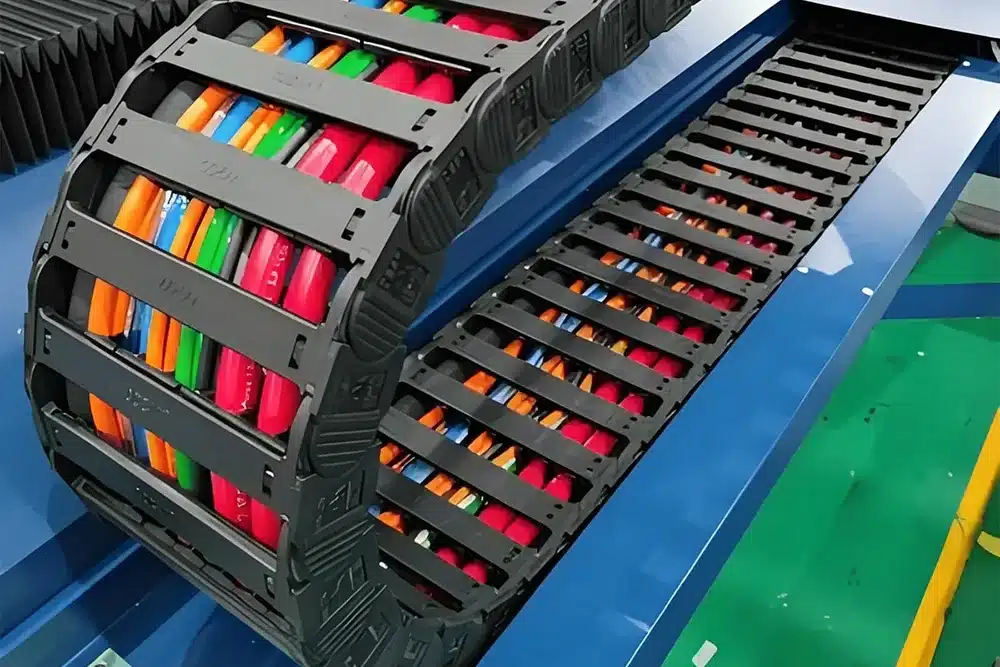
Standard PVC cordsets degrade quickly when exposed to cutting fluids, repeated flexing, or vibration. Custom designs allow PUR or halogen-free jackets, reinforced braiding, and high-flex stranding tailored for drag chains or robotic torsion.
Example – Machine-Side PUR Sensor Cable
On a high-speed packaging line with constant oil splash and mechanical stress, standard cordsets lasted only months. Hulk engineered custom PUR-jacketed sensor cables with optimized shielding and strain relief, extending service life dramatically and reducing unplanned maintenance.

High Performance and Signal Integrity Requirements
When precision matters, custom engineering protects data quality.
Sensitive Measurement, High-Speed Data and EMI
Standard cables may lack the shielding or conductor geometry needed for low-noise analog signals or high-speed industrial Ethernet. Custom options incorporate foil + braid shielding, specific impedance control, and twisted-pair configurations to maintain integrity in noisy environments.
Regulatory Compliance, Safety and Specialized Standards
Certifications can dictate the need for custom builds.
Custom sensor cables can be produced to meet UL, CE, RoHS, REACH, and other requirements while using materials that minimize off-gassing or withstand extreme conditions required in food, automotive, or outdoor applications.
Consolidation and Assembly Efficiency in Complex Systems
The scale is simple.
Custom Molded Cordsets for Easier Installation
Custom solutions reduce the assembly time and potential errors in multi-sensor configurations by integrating connectors, splitters and exact wiring into one assembly.
Production Volume and Lifecycle Cost Considerations
The costs of custom upfront may be offset by reduced total ownership costs for medium to high volumes.
Practical Field Examples – Where Custom Sensor Cables Made the Difference
In addition to the cases mentioned, we have solved problems where 3D torsion cables are needed with collaborative robots, vision system with clean signal runs and AGV material handling with continuous flex demands. In each case, early involvement with Hulk’s engineering team resulted in cables with better performance than generic cables.
Decision Checklist – Standard Cordset or Custom Sensor Cable?
Consider such questions:
- Are there harsh conditions in the environment (oil, abrasion, extremes of temperature, high flex cycles)?
- Are routing, length or signal requirements not met by catalog?
- Do certain certifications or material characteristics have to be used?
- If production quantity can justify the decrease in assembly but increase in reliability?
If you replied “yes” to multiple, it’s probably a better long-term solution to have a customized sensor cable.
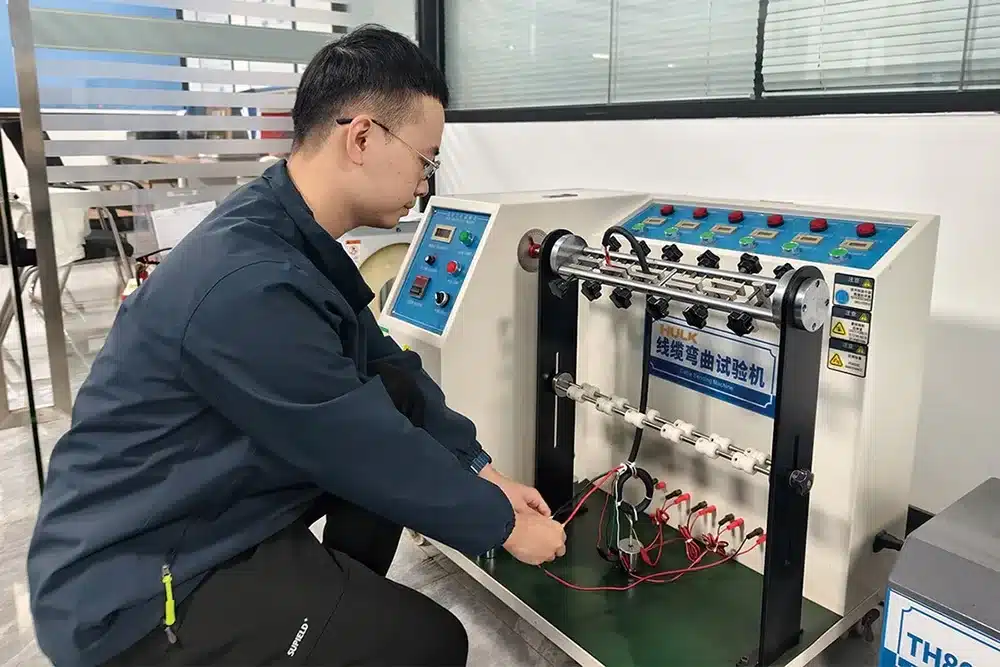
The right approach is a compromise between the need for immediate needs and lifecycle performance. We manufacture our sensor and actuator cables in our 15,000㎡ factory, which has full customization capabilities, strict and rigorous quality test process, and world-class certifications, at Hulk Electric (Dongguan) Co., Ltd. Provide details of your application (Product type, movement cycles, environment & compliance requirements) and our team will suggest or create the best solution to provide reliable and high performance connectivity.