Selecting the suitable sensor cable jacket is often the difference between having a successful plant and having a lot of headaches on the plant floor. The problem is usually not in the conductors or sensor itself, but rather in the outer jacket of the sensor cable which fails repeatedly. In industrial applications, PVC, PUR and TPE are the main cable jacket materials used for sensor cables. This guide details their differences in their practical flexibility, durability, chemical resistance, temperature ranges and usefulness in specific applications to help engineers and maintenance personnel make informed decisions.
What a Sensor Cable Jacket Actually Does
The first line of defence of the cable in industrial environments is the outer jacket. It protects the insulated conductors and shielding from mechanical, chemical, moisture, oil, abrasion and temperature effects; and affects flexibility and installation characteristics. Jacket selection is a “bandaid” solution that often results in failure due to the jacket problem, but is diagnosed as the sensor or PLC problem.
Separation of Functions – Insulation vs Jacket
The conductor insulation is used for electrical isolation and voltage ratings. The jacket, however, will deal with external threats and mechanical requirements. A 300V rated cable can have electrical characteristics but may not work mechanically if the jacket is not suited to the environment. This is important when planning your sensor cable in dynamic or exposed applications.
Key Jacket Performance Dimensions
- Essential in drag chains and moving machinery is flexibility and flex life.
- Abrasion and notch resistance: Resists chips, sharp edges and constant rubbing.
- Machining, food processing, chemical plants require oil, chemical and washdown resistance.
- Temperature range: cold storage through to hot areas such as beside motors or outside.
- UV, weather, and ozone resistance: Important for outdoor sensors and AGVs.
- Halogen content and fire behaviour: Impacts safety and compliance.

PVC Sensor Cable Jackets – General-Purpose Workhorse for Stable Conditions
In controlled environments, PVC (Polyvinyl Chloride) jackets have been a popular option for sensor cables because of their cost-effective performance.
Core Properties of PVC in Sensor Applications
PVC provides solid moisture resistance, reasonable abrasion performance, and compatibility with many common oils, acids, and cleaning agents under moderate conditions. Typical temperature ranges run from about -10°C to 70°C, though it stiffens noticeably in colder environments and softens when heated. Many PVC formulations offer flame retardancy, but they contain halogens that produce corrosive smoke when burned.
Where PVC Sensor Jackets Work Well
PVC performs well in low-motion or static environments, especially indoors, like in packaging equipment, assembly lines, control cabinets and dry process facilities. PVC provides good performance and cost competitiveness when cable runs remain in trays or conduits and experience little flex and temperature fluctuation. One of the most common is the use of photoelectric sensors in a climate controlled packaging hall in which cables are not moving.
Limitations and Failure Patterns of PVC Jackets
PVC doesn’t work well on products that are flexing continuously, dragging, in extreme refrigeration, under heavy oil or with strong chemicals. Typical problems are cracking under cold weather conditions, swelling or softening in oil-filled machine bays and rapid wear in moving use. It is time to upgrade, not replace, the same PVC cable, when these failures occur.
PUR Sensor Cable Jackets – Tough, Flexible Workhorse for Oily and Dynamic Environments
PUR (Polyurethane) jackets are a favored upgrade in today’s automation and are used to improve performance for sensor cables that are subjected to motion and contamination.
Core Properties of PUR
PUR is highly abrasion resistant, notched, oil and chemical resistant, and has good low-temperature flexibility, and is frequently halogen free. The temperature range is generally from -40℃ to 80℃, and there are also many grades that can be self-extinguishing. It is elastic and doesn’t crack when bent over and over again.
Ideal Use Cases – Motion, Drag Chains, Oils and Coolants
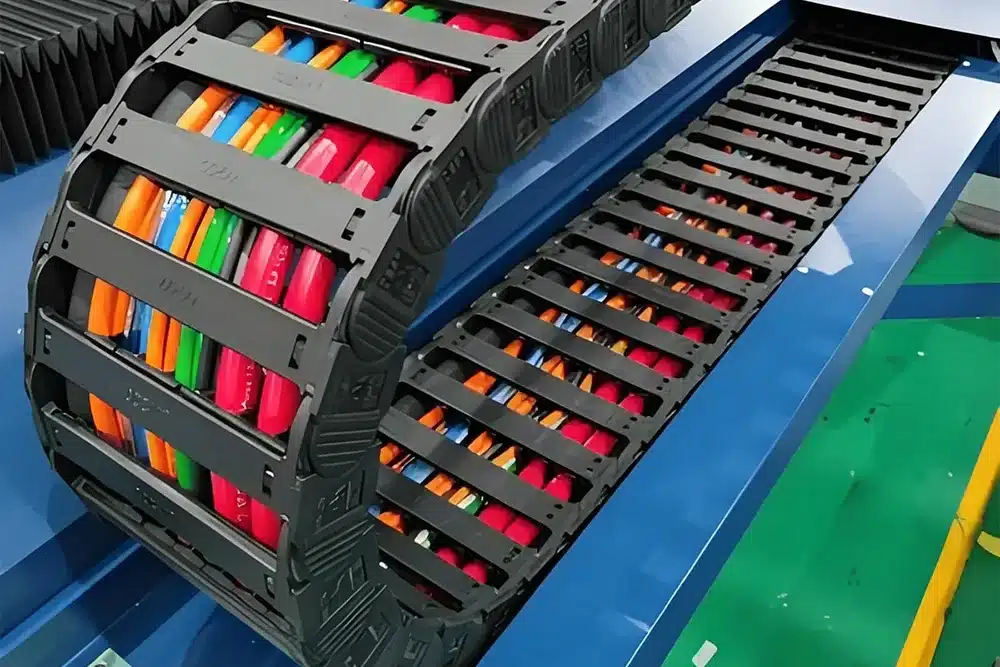
PUR sensor cables are suitable for use in cutting fluids, coolants and mechanical wear in machine tools, robotic arm and conveyors exposed to those. PUR’s durability is a definite advantage for proximity sensors used on CNC machines that have a cable passing through a drag chain. It is the practical upgrade to PVC when there is a need to have the material used in a dynamic or oil-rich industrial environment.

Limitations and Considerations with PUR Jackets
PUR is more expensive and easier to work with than PVC. It can be rubbery in very high temperature, and has improved cold performance than PVC, but not always comparable with TPE. Reserve PUR for applications where such properties are appropriate, not for every application.
TPE Sensor Cable Jackets – High-Flex, Wide-Temperature Performer for the Toughest Conditions
TPE jackets (Thermoplastic Elastomer) provide high quality performance in extreme applications that combine requirements for sensor cables.
Core Properties of TPE in Sensor Cables
TPE offers excellent flex and high mechanical endurance, temperature resistance up to 125°C and down to -50°C or below, broad range of oil, chemical, UV and ozone resistance, halogen-free formulations, and superior processes for recycling. Often superior flex cycle performance to the other 3 materials, and is suitable for millions of cycle of movement.
Where TPE Jackets Are Justified
Adopt TPE for fast conveyors, outdoor AGVs, robotic arms in freezers or outdoors exposed parts and IP69K washdown applications for aggressive cleaning. Outdoor material handling equipment or deep-freeze warehouses are good examples of where TPE can be used for the ability to withstand environmental damage and remain flexible over a broad temperature range.

Cost and Specification Considerations
TPE is more expensive and has to be specifically specified to ensure that standards are met. Only use for applications where its flex, temp, and environmental properties are truly needed; record reasons for maintenance.
Comparing PVC, PUR and TPE for Common Industrial Sensor Scenarios
The cable should be made of the same material as the cable’s motion profile and surrounding environment.
Fixed Indoor Sensors vs Dynamic Machine Wiring
PVC is usually satisfactory with static photo electric sensors in packaging cells. But the same sensor type that goes through a drag chain or flexing bracket typically requires PUR or TPE based on the number of cycles and contaminants.
Washdown, Food/Beverage and Chemical Exposure
PVC will perform well in basic washdown, whereas PUR will perform best with frequent aggressive cleaning and oils. For systems in the most extreme temperature ranges typically found in food and beverage lines, TPE is often the most suitable material.
Outdoor, Cold Storage and UV Exposure
PVC can often become stiff and crack when exposed to the elements or in cold storage. PUR is a good option to enhance the picture, but TPE is better for outdoor level sensors or freezer conveyors because of its superior UV, ozone and extreme temperature resistance.

Halogen Content, Fire Behaviour and Regulatory Considerations
More and more, fire safety and environmental rules are determining the types of jackets chosen.
PVC vs Halogen-Free PUR/TPE in Fire-Sensitive Areas
PVC’s halogen content leads to dense corrosive smoke during combustion. Formulations of halogen-free PUR and TPE are more desirable, lowering the risk, in tunnels, enclosed control rooms, and fire-coded facilities.
Flame Retardancy, UL and Other Standards
Numerous PUR and TPE grades are UL and regional flame retardant, as are special PVC blends. It is advisable to check the exact jacket formulation before assuming that a generic “industrial” cable will meet the compliance requirements for your project.
Practical Selection Checklist – Choosing PVC, PUR or TPE for Your Sensor Cable
Follow this cable checklist when designing or troubleshooting common cable problems.
Key Questions for Engineers and Buyers
- What are the key questions that Engineers and Buyers must ask themselves?
- Are you installing a static installation, intermittent or a drag chain motion?
- What will the oil, coolants, chemicals, or cleaning materials come in contact with the cable?
- What is the coldest and warmest temperature (with washdown and/or cold storage)?
- Inside, outside or in the UV?
- Are there any halogen free or flame retardant requirements?
- Are there expectations for service life and flex cycles?
For mild indoor use, wear PVC suits that protect from static. PUR is suitable for dynamic industrial applications with oils. TPE is used to solve extreme situations such as motion, temperature or environmental conditions.
Common Mistakes When Choosing Jacket Material – and How to Avoid Them
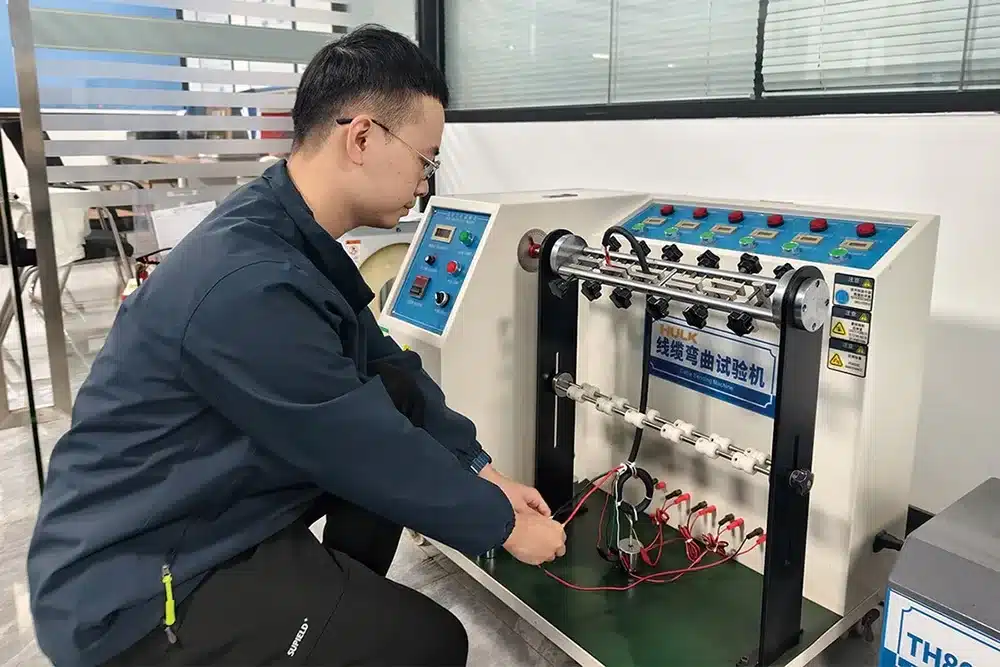
Typical mistakes involve specifying PVC chains in drag chains, specifying too high of cold stiffness, and overspecifying the expensive TPE when a PUR chain would be adequate. To avoid them, the actual situation should be carefully evaluated, previous manufacturer test data reviewed and then small-scale pilots should be conducted before rollout. Including application engineers early avoids the small cost of a big surprise later.
Understanding and choosing the right sensor cable jacket for the actual operating conditions results in a longer service life, less unexpected failures and lower TCO. We design high-performance sensor cables at Hulk Electric and optimize the PVC, PUR and TPE jacket for the automation challenges.