In high-speed automation and quality inspection systems, the performance of industrial cameras and IO-Link sensors often hinges on something many engineers overlook until problems appear: the cabling. Standard off-the-shelf cables work fine in simple setups, but real-world demands around bandwidth, distance, motion, and harsh environments frequently push them to failure. Understanding when a custom machine vision cable or specialized IO-Link sensor cable becomes necessary helps avoid dropped frames, mis-triggers, downtime, and costly troubleshooting.
This guide draws from practical experience supporting automation integrators and OEMs. It explains the limits of catalog cables and the key factors that make custom designs the smarter choice for reliable, long-term performance.
Understanding Machine Vision Cable Requirements – Bandwidth, Distance and Determinism
Machine vision systems rely on high data throughput and precise timing. Cable choice directly affects signal integrity, especially as resolutions and frame rates increase.
Data Rate and Interface Choice (USB3 Vision, GigE Vision, Camera Link, CoaXPress)
Different interfaces have distinct cable demands:
- USB3 Vision: Offers excellent bandwidth but struggles with distance. Consumer-grade USB cables often introduce errors beyond 2–3 meters due to signal degradation.
- GigE Vision: Supports longer runs (up to 100 m copper) and PoE, making it popular, yet high-speed multi-camera setups still benefit from custom industrial Ethernet cables with industrial shielding and low-loss conductors.
- Camera Link: Requires dedicated cables with strict length limits based on clock rates—typically 4–15 meters.
- CoaXPress: Delivers very high speeds over coax but demands precise impedance control and quality connectors.
When your application exceeds these standard limits, generic cables become a hidden source of instability.
Distance Limits and Signal Integrity
Longer cable runs increase attenuation and susceptibility to electromagnetic interference (EMI) from nearby motors, drives, or welding equipment. This leads to packet loss, jitter, or dropped frames that break determinism in inspection systems. Custom machine vision cables with optimized twisted pairs, enhanced shielding, and proper impedance matching maintain reliable performance where standard options fall short.

When Reliability and Determinism Make Custom Cabling Worth It
In production environments where even brief interruptions trigger rejects or line stops, robust cables are essential. Custom designs ensure consistent signal quality for unattended or high-value operations.
Environmental and Mechanical Factors – When Off‑the‑Shelf Cables Fail
Factory conditions quickly expose the weaknesses of office-grade cabling.
Temperature, Vibration and Industrial Environments
Extreme temperatures, oil exposure, and constant vibration demand jackets made from durable materials like PUR or TPE, along with robust internal construction. Thin consumer cables degrade rapidly in these settings.
Moving Cables – Drag Chains, Robot Arms and Dynamic Routing
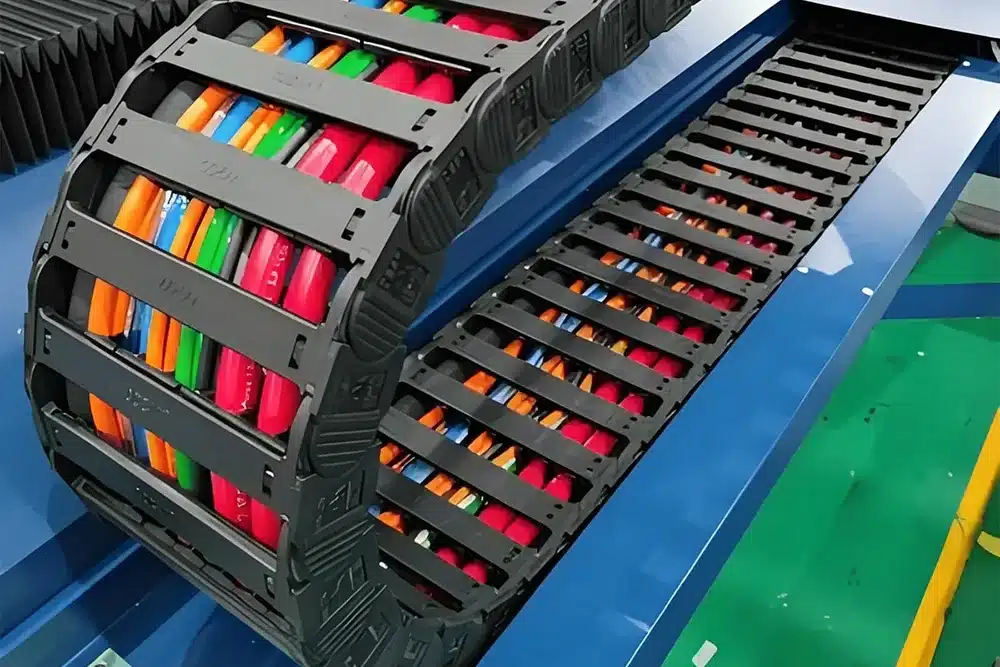
Cameras mounted on robot arms or traversing axes experience repeated flexing and torsion. Continuous-flex rated cables with specific stranding and strain relief—developed through rigorous high-flex cable engineering—are often required to survive millions of cycles without signal degradation.

Connector Reliability – Screw Locks, IP Ratings and Custom Breakouts
Secure M12 or camera-specific screw-lock connectors prevent accidental disconnects in vibrating environments. Custom harnesses and breakouts simplify integration with lighting, I/O, or PLCs while maintaining IP ratings for washdown areas.
IO‑Link Sensor Cabling – When Standard 3‑Wire Cables Are Enough and When They Are Not
IO-Link offers straightforward connectivity, but edge cases still call for customization.
IO‑Link Standard Wiring – 3‑Wire Unshielded Cables up to 20 m
The protocol is designed for simple unshielded 3-wire cables with M8/M12 connectors over distances up to 20 meters. This keeps most basic sensor networks simple and cost-effective.

When Custom IO‑Link Cables Become Necessary
Custom sensor and actuator cables become valuable in harsh environments (special jackets, higher IP), hybrid cables combining IO-Link with power or other signals, or runs near heavy EMI sources requiring shielding.
Harness Design for IO‑Link Networks in Machines
Custom harnesses that bundle and route multiple IO-Link lines efficiently reduce clutter and improve maintainability in complex machinery.
Specific Situations Where Custom Machine Vision Cables Are Necessary
Certain applications almost always require tailored solutions.
High‑Speed, Multi‑Camera Systems with Long Cable Runs
Multiple high-resolution cameras operating near full bandwidth over extended distances demand low-loss, heavily shielded custom cables to prevent data loss.
Harsh or Moving Environments – Robotics, Presses, Conveyors
Cameras on moving equipment need torsion-rated, high-flex cables with custom strain relief and protective jacketing—exactly the type of performance delivered by purpose-built robotics cable solutions.
Integrated Lighting and I/O – Hybrid Cables and Breakouts
Hybrid assemblies that combine data, power, triggers, and lighting connections in one clean package often require custom engineering for optimal timing and routing.

Designing Custom Cables for Industrial Cameras and Sensors – Key Parameters to Specify
Clear specifications lead to better outcomes—and working with experienced custom cable design services ensures those specifications translate into reliable, application-ready solutions.
Electrical Parameters – Interface, Data Rate, Length, Power
Define the exact interface, required speed, length, power delivery, and acceptable error rates. These determine conductor sizing, shielding, and impedance.
Mechanical and Environmental Requirements
Specify motion type (static/flex/torsion), bend radius, temperature range, exposure to oils/chemicals, and vibration levels to select appropriate materials and construction.
Connectors, Breakouts and Integration with Existing Hardware
Detail connector types, pinouts, and any custom breakouts to ensure seamless integration with cameras, lights, and control systems.
Reliability, Downtime and Total Cost – Why Cable Quality Matters
Consequences of Poor Cable Choices in Vision Systems
Intermittent failures waste engineering time and reduce overall equipment effectiveness (OEE). In critical lines, they can lead to costly scrap or safety issues.
When Spending More on Custom Cables Saves Money
Higher initial investment in quality custom cables often pays back quickly through reduced maintenance and fewer production stops.
Maintenance and Inspection Practices for Vision and IO‑Link Cabling
Regular visual checks, connector cleaning, and cycle-based replacements keep systems reliable. Well-designed cables make this easier.
Practical Checklist – Deciding Whether You Need Custom Machine Vision or IO‑Link Cables
Questions to Decide Between Standard and Custom Cables
- Does your interface, data rate, or length exceed standard cable recommendations?
- Is the application high-reliability with no tolerance for dropped frames or mis-triggers?
- Will the cable face motion, vibration, extreme temperatures, or harsh chemicals?
- Are hybrid or specialized environmental requirements present?
Information to Prepare for Custom Cable RFQs
- Interface details, data rate, length, and quantity
- Mechanical routing drawings and motion profiles
- Environmental conditions and connector requirements
- Expected runtime and reliability targets
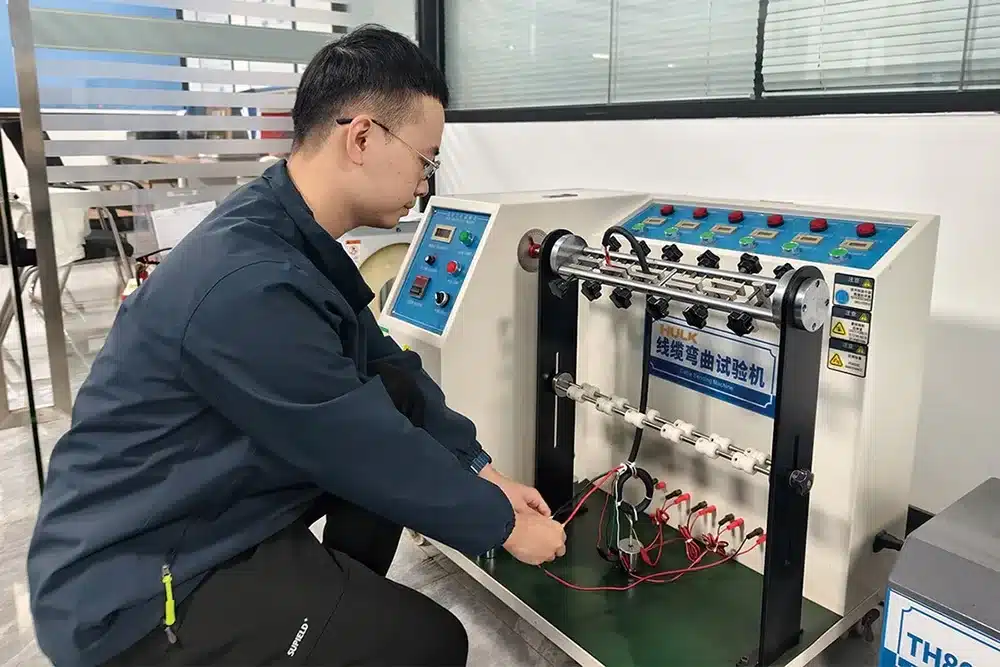
Selecting the right cable—standard or custom—directly impacts system uptime and long-term costs. At Hulk Electric, we specialize in high-flex, servo, robot, sensor, and industrial Ethernet cables, including custom-engineered solutions for machine vision and IO-Link applications. Our cables are built for demanding automation environments with full certifications and rigorous testing.
Share your project requirements—camera interfaces, lengths, motion profiles, or environmental challenges—and our team will help design and manufacture cables that deliver consistent performance. Contact us to discuss your next vision or sensor cabling project.