In the realm of industrial automation, robotics, and machine tool applications, where cable performance can make or break the success of projects, selecting the right custom cable manufacturer is paramount. The wrong supplier may lead to frequent field issues, delays in certification or rework on the redesign, and the right supplier will provide custom solutions that meet the rigorous demands of motion, environment, and regulations.
This guide provides engineers, QA teams, and procurement managers with some practical guidelines for evaluating potential partners to determine their technical depth, extensive testing, global certifications, and ability to work with them effectively.
Technical Capability and Engineering Support – Can They Really Design for Your Application?
The good custom cable manufacturers are more than just cable catalogues. They have the knowledge to transform the sometimes complicated requirements of applications into powerful, efficient cable designs.
Engineering Team, Experience and Industry Specialization
Check to see if the manufacturer has a specialized engineering staff that has worked on high-flex, torsion, servo and fieldbus applications. Question: Who is the Technical contact? What other similar robotics, CNC machines or material handling projects have they done? Industrial automation experience demonstrates their understanding of challenges faced in the field such as continuous flexing or EMI shielding.
Ability to Translate Application Requirements into Cable Designs
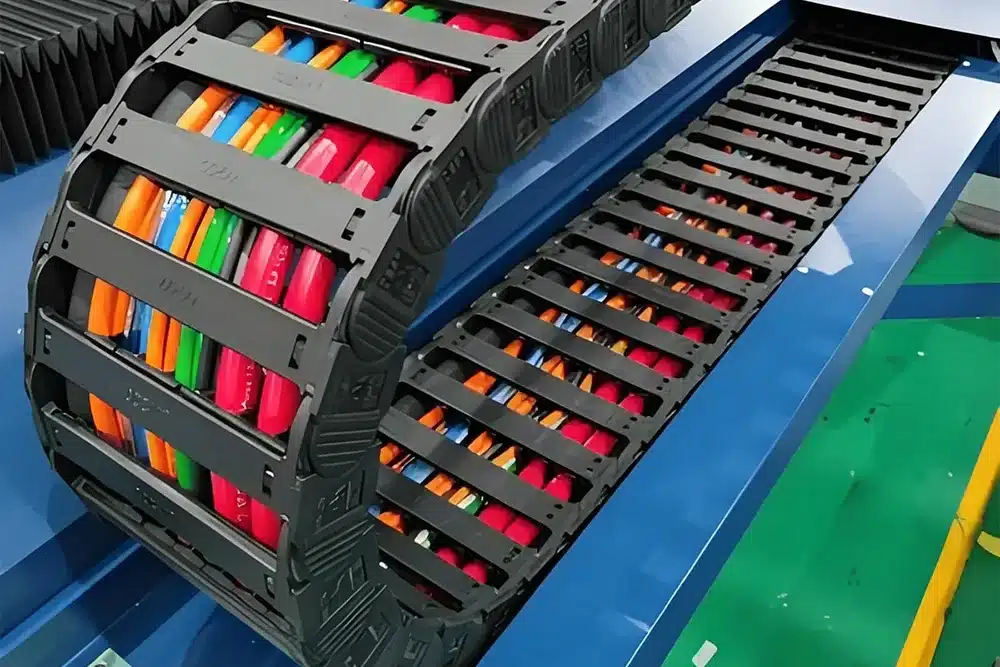
The first questions good partners ask are specific to your motion profile, electrical needs, environmental exposures (temperature, chemicals, abrasion), and target certifications. They should suggest specific conductors, shielding, jacket materials, and ratings not generic builds—true custom cable design capability. This is an early conversation that eliminates problems down stream in drag chains or robotic arms.
Design Tools, Prototyping and Iteration Processes
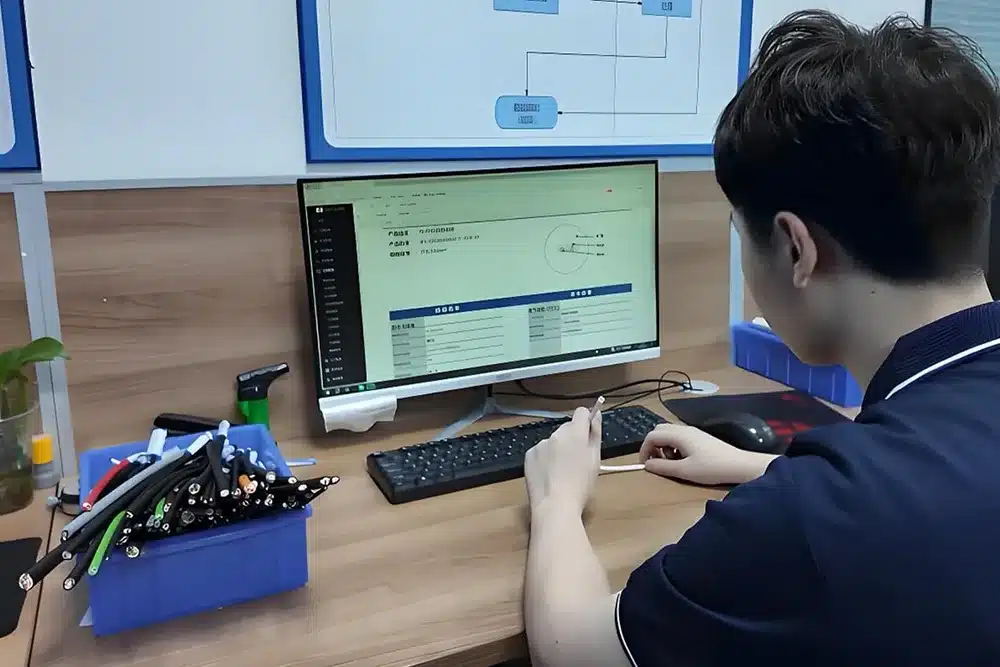
Ask about cross-sections, flex life simulation and structured prototyping. Good suppliers have open loops, frequent sampling (usually, 7-days) and build iterations prior to design freeze. This feature helps reduce risks in high-cycle applications and speeds up development.

Testing Capabilities and Quality Management – How Do They Prove Performance?
Performance claims should be supported by extensive and documented testing, not assumptions.
In-House Testing Capabilities and Typical Test Regimes
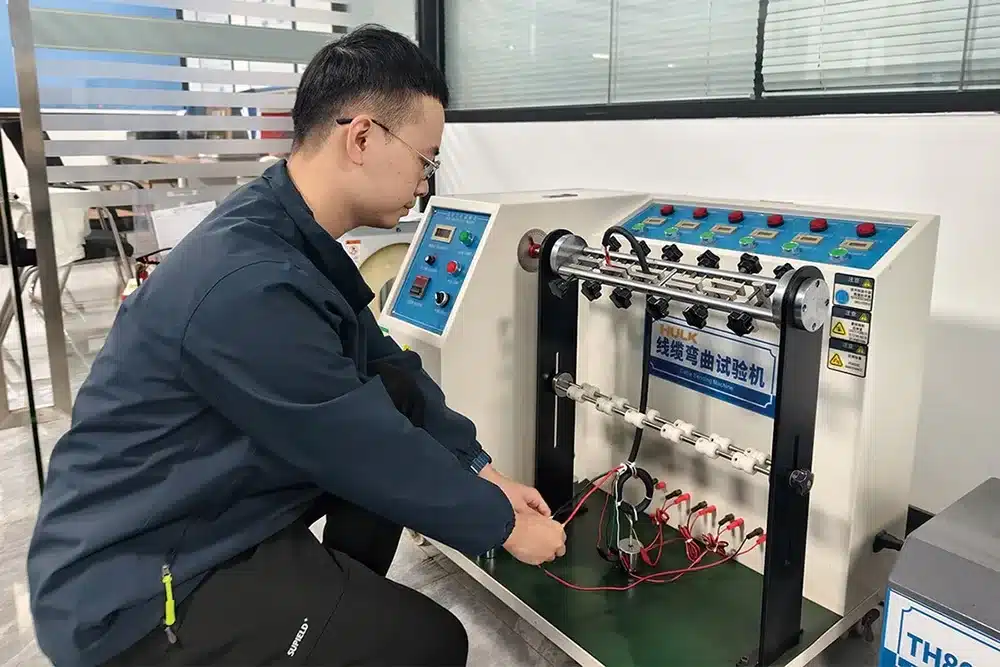
The top manufacturers continue to have laboratories with strong in-house testing capabilities covering electrical testing (continuity, insulation resistance, voltage withstand), mechanical endurance (flex life, torsion, bend radius), thermal cycling, and environmental exposure (oil, chemicals). Inquire about the tests that are standard for servo or robot cables, and if they simulate motion for a particular application. Very consistent data sets from >100,000 annual measurements offer real confidence in product durability.
Quality Management System and Process Control
While ISO 9001 is a minimum standard, look at how they put it into practice – controlled drawings, calibration, traceability and internal audits. While questions such as “How do you manage specification revisions?” can be markers of process maturity and potential for error in the production process.
Prototype, Pre-Production and Ongoing Production Testing
A first-article inspection, sample testing and statistical process control is expected throughout. Ask to see sample test reports to ensure prototypes are tested under full production conditions beforehand.
Certifications, Standards and Regulatory Compliance – Are They Aligned with Your Markets?
Compliance is required to avoid barriers to entry or liability in global markets, where it must be verifiable.
Product and System Certifications (UL, CE, IEC, VDE, etc.)
Check the UL/cUL, CE, TÜV, IEC and VDE marks for the types of cables you are using. Inquire about how they keep certifications up to date with certain families. Verify in official databases (for critical exports).
Environmental and Safety Compliance (RoHS, REACH, NEC/NFPA, etc.)
Verify policies with regards to restricted substances, flame ratings, and installation codes. Good suppliers offer robust declarations that are customised to suit your project requirements.
Documentation: Datasheets, Declarations and Test Reports
Detailed project-specific datasheets, declaration of conformity and test reports will be expected. If the documentation is ambiguous or contradictory, it’s a red flag.

Production Capacity, Lead Times and Supply Stability – Can They Deliver When You Need Them?
It doesn’t matter how good the technology is if the execution is not reliable.
Capacity, Lead Time and Flexibility
Talk about typical design, sampling (7 days), and production time, and how they apply to volume ramps. Reliable partners are flexible to accommodate for urgent requests and long-term scheduling without compromising the quality.
Material Sourcing, Inventory Strategy and Risk Management
Ask for information on materials and methods to prevent disturbances (conductors, compounds). Continuity is improved by stocking for recurring customers.
Traceability and Issue Response
Structured corrective action processes and batch level traceability are critical. Request past instances of them meeting with non-conformities with the customer and how they were addressed.
Communication, Project Management and Cultural Fit – Will Collaboration Be Smooth?
Often smooth work collaboration is the key to long-term success.
Technical Communication and Responsiveness
Assess the clarity, rapidity and technical expertise of responses in initial enquiries. If someone listens and questions appropriately, then there is good partnership potential indicated.
Clarity on Scope, Deliverables and Change Management
Request changes and milestones to be echoed in writing. This helps to avoid scope creep and poor expectations.
Transparency, Problem-Solving Attitude and Long-Term Partnership Potential
Seek suppliers who voluntarily provide data, identify potential issues early and offer suggestions. This way of thinking converts a vendor into a strategic partner.

Practical Evaluation Checklist – Questions to Use in RFQs, Audits and Supplier Meetings
Refer to this checklist when talking with suppliers:
Core Questions on Technical, Testing, Certification and Operations
- Technical: What are the other industrial custom projects you have worked on that are similar? What is your process for collecting and documenting requirements for an application? (Good Answer: Intake forms and case studies.)
- Testing/Quality: What are the common mechanical/ electrical tests? Could you provide us with some recent test reports and quality manuals? (Look for in-house capabilities and traceability.)
- Certifications: Which UL/CE/IEC/VDE marks are valid for the various cable families? What steps do you take to ensure continual adherence? (Verifiable and current.)
- Operations: What is your sampling lead time, production lead time? What do you do with traceability and non-conformities? (Explain processes with examples)
Red Flags and Positive Signals When Evaluating a Manufacturer
Red flags: Blurred testing information, unwillingness to provide documentation, delayed technical responses, lowest price quotes without supporting data.
Positive signals: Questions about your application that are being asked proactively, clear information about your test data, authentic project references and suggestions that show that they are knowledgeable about the field.
Thoroughly assessing a custom cable manufacturer on these aspects ensures that you’ll have partners who provide you with reliable, compliant cable solutions that will enhance the performance of your equipment over the years.
It is a very detailed evaluation, which we welcome at Hulk Electric (Dongguan) Co., Ltd. OEMs in the fields of automation and robotics rely on us for fully custom high-flex, servo, robot and high-temperature silicone cables, with our 15,000㎡ facility, 150+ professionals, in-house testing center running 150+ test types annually, 35+ certifications (UL, CE, TÜV, IEC, VDE, RoHS, REACH), and Toyota Production System discipline. Tell us about your application and we will give you clear data, samples and engineering assistance that is suited to your needs.